
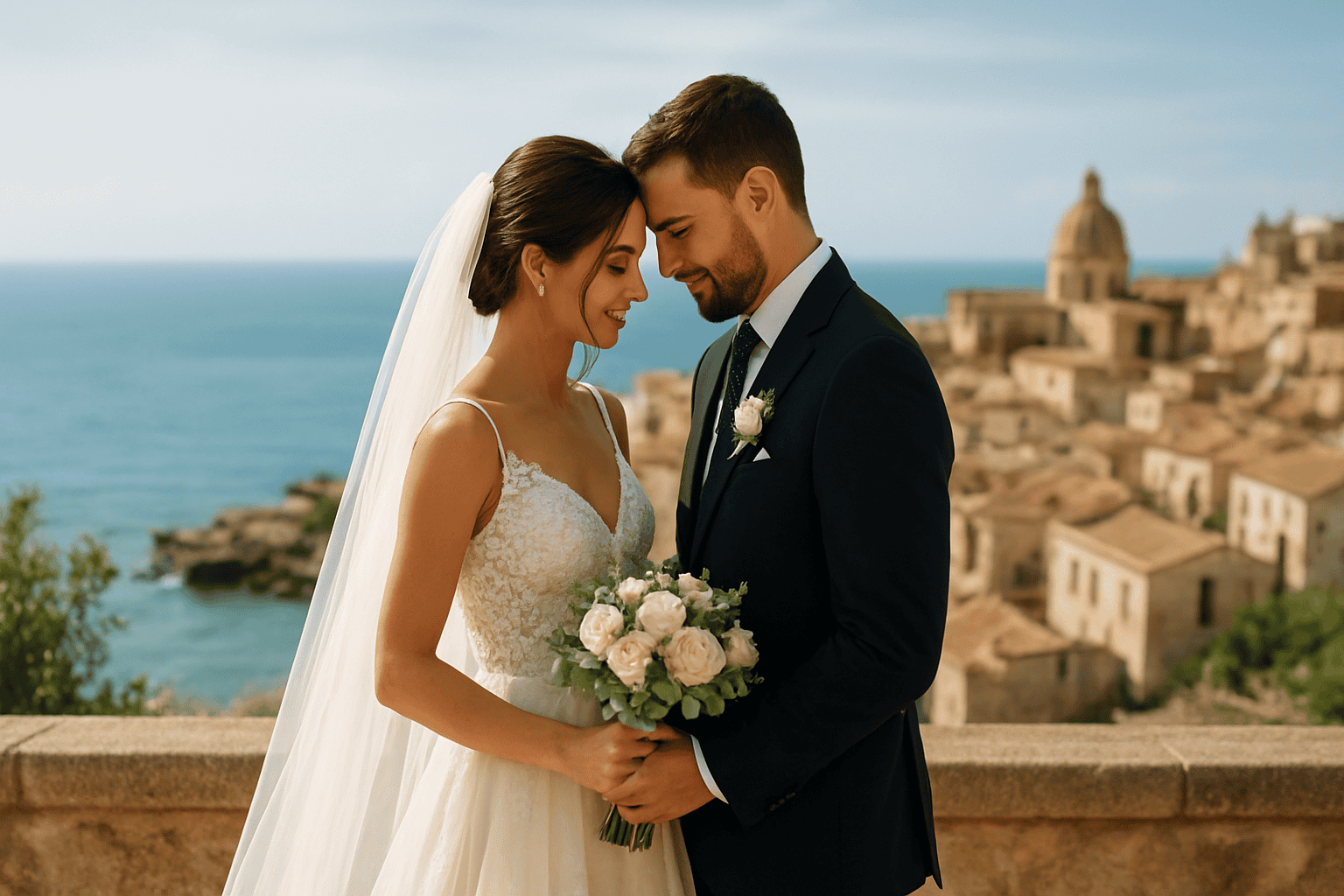
How to Organise a Wedding in Sicily from Another Region
Planning a wedding in Sicily from another region: where to start
Designing a wedding in Sicily while living in another region is a fascinating idea, but it requires method. Distance can become an advantage if you set a clear path: choose an area, define priorities, build a network of reliable suppliers, and plan targeted inspections. The secret is to turn organization into a sequence of simple decisions, avoiding “jumping” from one topic to another.
Even before thinking about style, clarify three guiding elements:
- Desired period (even just as a window of weeks).
- Type of experience that you want to offer guests (intimate, convivial, elegant, informal).
- Level of management: do you want to coordinate everything independently or do you prefer professional support?
If you are considering support, you can explore the approach and services on this dedicated page and understand which activities are worth delegating when the planning happens remotely.
Choosing the right area: eastern Sicily, western Sicily, or the islands
Sicily is not “one” location: it is a mosaic of landscapes, atmospheres, and logistics. If you live far away, choosing the area is a strategic decision because it affects travel times, vendor availability, and guest management.
How to find your way without endless site visits
To narrow it down, consider these practical criteria:
- Connections: airports and the most convenient routes for most guests.
- Season: some areas are at their best in certain periods (climate, wind, light, crowds).
- Style of the place: sea, countryside, art cities, villages, volcanic views.
- Hospitality: availability of hotels, historic residences, solutions for groups and local transport.
A good method is to create a shortlist of 2–3 areas and compare them with a simple table (pros/cons). If you need inspiration to build a concept consistent with the territory, you’ll find prompts and ideas in this guide.
Wedding venues in Sicily: what to ask when you’re far away
When you can’t visit right away, choosing the venue must be based on complete and verifiable information. This is where many couples waste time: beautiful photos, but few operational details. Instead, you need a precise checklist.
Checklist of (practical) questions to ask right away
- Which spaces are included and in which time slots?
- Is there a plan B real and pleasant in case of uncertain weather?
- How does the access logistics work (parking, shuttles, loading/unloading)?
- Are there limits on music, setups, or hours? (If it’s not clear, check the product sheet or in the venue’s documentation.)
- Which suppliers are in-house and which external ones are allowed?
- How many people can be hosted comfortably in the different areas?
Also ask for a recent video, preferably with a “walk-through” shot from the entrances to the main areas: it helps you understand distances, slopes, narrow passages, and lighting points.
Pay attention to details that you can’t see in photos
Remotely it’s easy to underestimate aspects that affect the guests’ experience. Check:
- Evening lighting and availability of electrical outlets.
- Acoustics in the reception areas.
- Shaded areas and comfort during the hottest hours.
- Service spaces (backstage, support areas, supplier area).
If you want support comparing venues and in the “technical” reading of the spaces, you can take a look at this page to understand how the selection is managed when the couple lives out of the region.
Realistic timeline: how to plan a wedding in Sicily from a distance
Distance is not an obstacle if the timeline is built intelligently. The rule: few trips, but well planned. Instead of doing frequent site visits, focus decisions on key moments and prepare everything before the visits.
The “batch decisions” method
Organize the process into logical blocks:
- Block 1: area + location + date (or date window).
- Block 2: catering/banqueting + photography + music.
- Block 3: design (flowers, table setting, lighting) + stationery + details.
- Block 4: guest logistics + transportation + day-of timing.
Each block should end with final decisions, avoiding constant second-guessing. If it helps, you can set up a recurring call with a single point of contact and centralize documents and confirmations in a shared folder.
Site visit: what to do in 24–48 hours
When you’re finally in Sicily, make the most of the time with a tight schedule:
- Visit the venue at different times (daylight and evening atmosphere, if possible).
- Tasting or meeting with the caterer, if already selected.
- Meeting with the florist and lighting manager to understand volumes and critical points.
- Mini tour of accommodation facilities for guests.
Bring with you a list of “decisions to finalize” and a list of “open questions”: going home without answers means extending timelines and increasing stress.
Local suppliers vs suppliers from your region: how to decide
One of the most delicate choices is figuring out whom to hire in Sicily and whom to bring from outside. There’s no universal rule: it depends on the type of event, the style, and the logistical complexity.
When it’s worth focusing on local professionals
Local suppliers have an advantage: they know the pace, seasonality, venues, and practical solutions. In general, they’re ideal for:
- Floral setups and decorations consistent with the context.
- Local logistics and transportation.
- Services that require constant presence in the days leading up to the event.
When it makes sense to bring a “trusted” team
If you already have a professional who knows your tastes well, bringing them can ensure continuity. It can be especially useful for creative or coordination roles, as long as the organization is sustainable and well integrated with the local area.
A balanced approach is to create a mix: single point of direction and carefully selected local suppliers. If you want to understand how selection and coordination are managed, you’ll find an overview in this in-depth article.
Guest logistics: travel, accommodation and welcome in Sicily
When the couple lives out of the region, often many guests have to travel too. Logistics isn’t a detail: it’s part of the experience. A wedding in Sicily can become a small trip, pleasant and well organized, if you share information in advance and simplify the choices.
How to make everything easier for guests
- Clear communications: dates, area, how to get there, recommended timing.
- Accommodation solutions: offer options in convenient areas, with alternatives for different styles.
- Transport: consider shuttles or meeting points, especially if the venue is isolated.
- Welcome: a small guide to the area (digital or printed) helps everyone enjoy the trip better.
If you’re planning a wedding weekend, consider informal moments before or after the event: they lighten the wedding day and create connections among guests arriving from different places.
Style and setups: how to maintain consistency even from a distance
The most common risk, when organizing from afar, is adding up ideas picked here and there without a single thread. The solution is to define a concept and use it as a filter: every choice must “speak the same language”.
Palette, materials and atmosphere: a practical guide
To build consistency, work on three levels:
- Colors: choose a main palette and a secondary one.
- Materials: ceramics, glass, linen, wood, metals… few, but recognizable.
- Atmosphere: romantic, Mediterranean, minimal, scenic, contemporary.
Ask suppliers for a mini moodboard with images and samples. If an element isn’t available or it’s not clear how it will be made, check the product sheet or request real photos of similar setups.
Lighting and details: the difference between “nice” and “memorable”
In Sicily natural light is the star, but in the evening everything changes. Plan lighting as part of the design: pathways, tables, party area, photo spots. Even small details (signage, stationery, seating chart) become tools to guide guests without confusion.
Wedding day coordination: how to avoid unexpected issues when you live far away
Distance weighs most of all when the event comes to life. That’s why it’s essential that, on the wedding day, there is an operational direction: someone who keeps timings, vendors, and spaces aligned, while you enjoy the day.
The schedule: simple, shared, updated
An effective timeline isn’t an endless document: it’s a clear sequence of moments with assigned responsibilities. It should include:
- Vendor arrival times and access.
- Set-ups and technical checks (audio, lights, stations).
- Key moments: ceremony, toast, cake cutting, party.
- Guest management: welcome, transfers, any shuttles.
Share it with all the vendors involved. If there are doubts about what’s included in the services or how on-site assistance is handled, check the product sheet or ask for a written summary.
Plan B: not just weather
When we talk about Plan B, we immediately think of rain, but unexpected issues can also be logistical: delays, changes in light, variations in spaces. Plan alternatives for:
- ceremony and aperitif;
- photo set;
- entertainment and music;
- managing children or guests with specific needs.
Documents, payments and communications: how to manage everything in an orderly way
Organizing a wedding from another region means managing many conversations and files. Order here isn’t “bureaucracy”: it’s peace of mind. Set up from the start a simple system that reduces mistakes and forgetfulness.
Useful tools (without complicating your life)
- Shared folder with contracts, quotes, floor plans, mood boards.
- Single document with vendor contacts and operational notes.
- Calendar with deadlines and calls already scheduled.
Centralizing communications prevents important information from being left in different chats. If you prefer a guided flow, consider a point person who gathers requests and turns them into actions, especially in the final weeks.
Useful links for organizing a wedding in Sicily
To dive deeper and help you navigate choices and priorities, here are some useful internal resources to consult during planning:
- Ideas and inspiration for a wedding in Sicily
- Wedding planning and coordination services
- Contacts and information request
Frequently asked questions on how to plan a wedding in Sicily from outside the region
Below you will find answers to the most common questions: from choosing the area to managing site inspections, all the way to coordinating the day of the event.
Do you want to plan your wedding in Sicily without stress and with clear direction? Discover the ChiaraB Events universe and let yourself be guided in choosing the venue, suppliers and style: visit the dedicated section and request to be contacted to build a tailor-made project together.
FAQ
How do I choose the area of Sicily if I can't do many site visits?
Narrow it down to 2–3 areas by evaluating connections, season, landscape style, and accommodation availability. Then request updated videos of the venue and a call with whoever manages the spaces to clarify logistics and a plan B.
How many site visits are needed to organize a wedding in Sicily from outside the region?
Often just a few trips are enough, as long as they are well planned: one to choose the location and set the main decisions, and one closer to the date to confirm setups, timing, and operational details with suppliers.
Is it better to choose local suppliers or bring them from your own region?
It depends on the type of service. Local suppliers are often more practical for logistics and setups tied to the area; bringing a trusted team can help for creative or directing roles. A balanced solution is to combine a single point of coordination with selected local suppliers.
How to manage the logistics for guests arriving from out of town?
Prepare clear communications on how to get there, where to stay, and recommended timings. Consider meeting points and shuttles if the venue is isolated, and create a small local guide to make the guests' experience easier.
What must not be missing in the wedding day timeline?
A shared schedule with suppliers' arrival times, technical checks (audio/lights), key moments of the day, and management of guests' movements. It is also useful to include operational alternatives for any unforeseen events, not just weather-related ones.
How can I maintain stylistic consistency in setups when I organize remotely?
Define a concept with palette, materials, and atmosphere and use it as a filter for every choice. Ask for moodboards and samples, and when a detail is not clear request real photos or check the product sheet.
From the blog
 Tips
Tips
Wedding Ideas: Trends and Tips for a Perfect Wedding
Organizing a wedding today means choosing among endless possibilities without losing sight of what really matters: telling your […]
Read more Tips
Tips
Getting married on Lake Garda: the perfect wedding between water and mountains
Between luminous shores, stone villages, and mountain profiles that change color with the sun, getting married on Lake Garda […]
Read more Tips
Tips
Getting married at the Tonnara di Scopello - History and Charm of a Unique Location
Tonnara di Scopello: a wedding venue between history, sea, and stone Choosing to get married at the Tonnara di Scopello means […]
Read more