
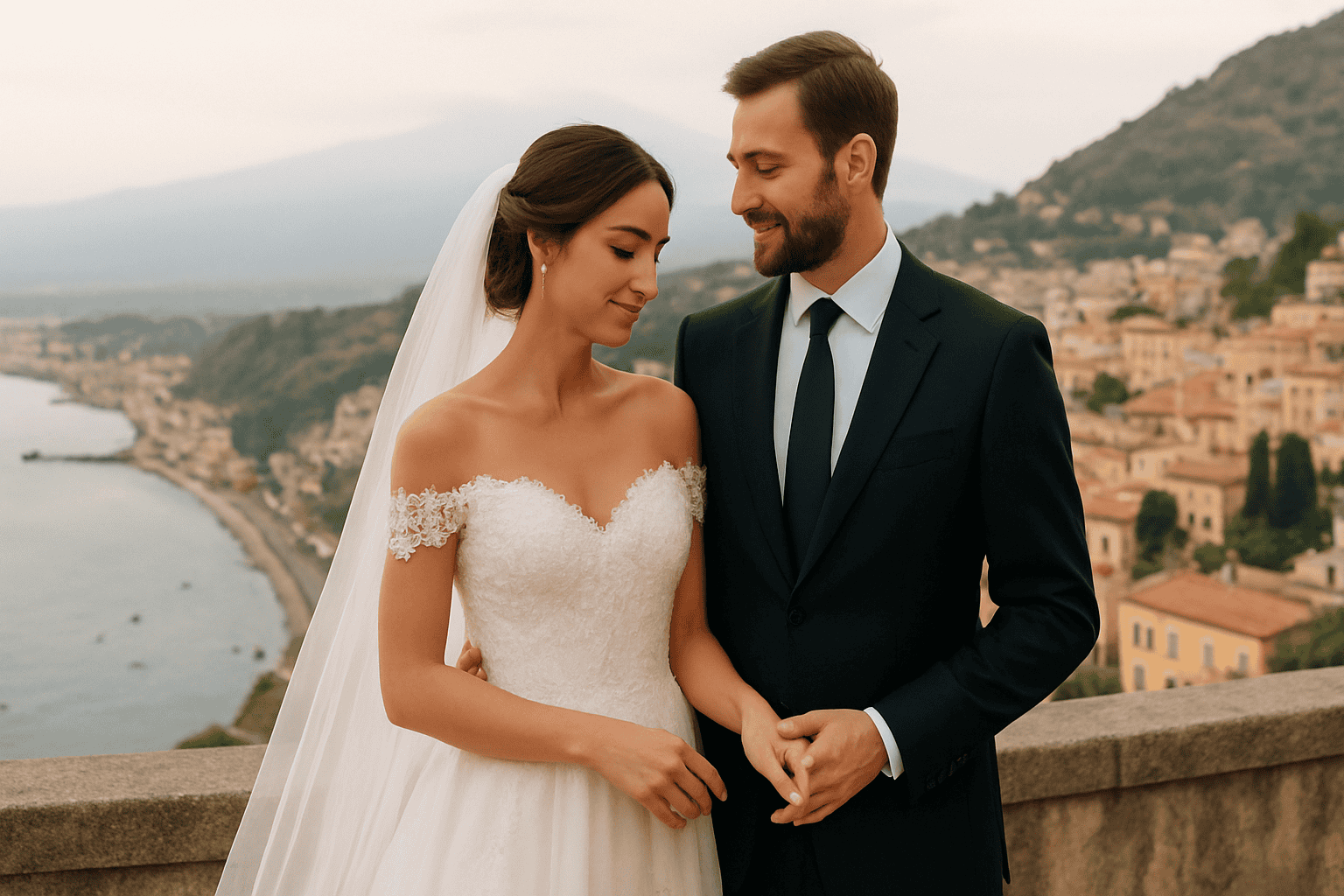
Weddings in Sicily for Foreigners - What to Know
Weddings in Sicily for foreigners: why the island is a natural choice
A wedding in Sicily it's not just a location: it's a complete experience made of landscapes, light, flavors, and traditions that intertwine with surprising ease. For those coming from abroad, the island offers a concrete advantage: in a few kilometers you can go from the sea to the villages, from vineyards to baroque architectures, creating an event with different settings without complicating logistics too much.
Sicily appeals to international couples because it allows you to create a wedding authentic yet customizable: you can choose a symbolic ceremony on a sea-view terrace, a reception in a baglio, a dinner in a Mediterranean garden, or a spread-out weekend across multiple places. All of it with a warm atmosphere that guests often remember more than any detail.
If you’re starting to gather ideas, you can explore inspiration and services in the section Wedding in Sicily and save what resonates most with your style.
How to plan a destination wedding in Sicily without stress
When couples live abroad, the difference between a smooth project and a tiring one is clarity of the process. The point isn’t to do “everything,” but to make the right choices in the right order, leaving room for creativity only when the foundation is solid.
Define the style of the event (even before the location)
Before you fall in love with a venue, clarify the wedding’s identity: elegant and formal, intimate and relaxed, contemporary, traditional, boho-chic, minimal. This helps you avoid costly course changes in terms of time and coordination.
A simple way is to choose 3 guiding words (for example: bright, Mediterranean, timeless) and use them as a filter for every decision: flowers, palette, table setting, music, outfits, stationery.
Create a realistic timeline for those living abroad
Remote management works when the timeline includes buffers and check-in moments. Generally, it’s useful to plan:
- a first selection phase (concept, area, period);
- a definition phase (venue, main vendors, schedule);
- a refinement phase (details, guest logistics, rehearsals);
- an operational phase (arrivals, welcome, wedding day, day after).
If you want to understand how the overall direction is managed, you can also read how a wedding planner in Sicily works and which steps make the process more streamlined.
Manage communication with international guests
A destination wedding it's also a small group journey. To avoid confusion, it is useful to centralize information: schedules, dress code, meeting points, transport suggestions, any extra activities. Many couples choose an event website or a digital guide, so every guest finds what they need without having to ask a thousand times.
At this stage, the keyword is simplicity: little information, clear, up-to-date.
Documents and bureaucracy: what to consider (no surprises)
For weddings in Sicily for foreigners, the paperwork side can vary depending on citizenship, residence, and the type of ceremony chosen. Precisely because the scenarios differ, the best strategy is not to improvise: gather the basic information (passports, marital status, any previous marriages, etc.) and decide right away whether you want a civil, religious, or symbolic ceremony.
In many cases, those coming from abroad prefer a symbolic ceremony in Sicily and handle the formal aspects in their own country. Others, instead, want the ceremony in Sicily to be the official one as well. The choice depends on personal and practical priorities.
The practical advice is: always check the updated requirements through the competent channels and with whoever is supporting you in the organization, because procedures and timelines can change.
The best areas of Sicily for a wedding: atmospheres and settings
There is no single “best area” in absolute terms: there is the right area for your story. Here are some areas often chosen by international couples, with their respective vibes.
Taormina and the Ionian coast: views, elegance, light
Ideal for those who dream of a wedding with an iconic view and a refined atmosphere. Here, events with an elegant feel work well, with attention to detail and a more “riviera-like” pace. Perfect if you also want to offer guests a quality stay, between the sea, walks, and evenings out.
Val di Noto: baroque, gardens, scenic beauty
For those who love grand architecture, theatrical squares, and a bright, romantic Sicily. It’s a strong choice for weddings with a curated aesthetic, photography as the star, and a narrative that blends history and contemporaneity.
Palermo and surroundings: energy, culture, contrasts
A more urban and vibrant Sicily, perfect for those who want a mix of art, markets, historic palaces, and authentic atmospheres. It also works well for wedding weekends with multiple events: welcome, guided tour, informal dinner, wedding day.
Islands and archipelagos: intimacy and a sense of escape
If you want an intimate wedding, with few guests and a strong sense of “elsewhere,” the islands can be the solution. Here the key word is logistics: transportation and overnight stays must be planned carefully to ensure comfort and punctuality.
Wedding venues in Sicily: how to choose the right one
The venue is the container, but also a main actor. For foreign couples, choosing well means avoiding unexpected issues and building an experience consistent with the concept.
When you evaluate a venue, consider:
- Plan B: truly beautiful and functional alternative spaces, not “emergency” ones.
- Flow of the day: ceremony, aperitif, dinner, party must have a logical flow of movement.
- Privacy: exclusive use or sharing spaces with other guests/events.
- Schedules and music: limits and possibilities, to plan a party without frustrations.
- Accessibility: distances, parking, any shuttles, ease for elderly guests.
If you want an overview of styles and settings, you can consult wedding venues in Sicily and compare the options based on your idea of the day.
Seasonality and weather: choosing the period wisely
Sicily has a generous climate, but each period has a specific character. The choice is not only about “what the weather will be like”, but also the light, the crowds, the availability of services, and the guests’ experience.
Some couples look for long days and late sunsets; others prefer milder temperatures and a calmer pace. In any case, it’s useful to plan the event with a Mediterranean logic:
- shaded spaces and relaxation areas;
- unhurried timing, without overloading the schedule;
- attention to guests’ comfort and hydration;
- a weather plan consistent with the style (not a fallback).
For a more practical orientation on periods and organizational choices, you’ll find ideas in when to get married in Sicily.
Guest experience: welcome, transport, and wedding weekend
A wedding for foreigners in Sicily often becomes a trip with the people you love most. Taking care of the guest experience means increasing everyone’s peace of mind, including yours: fewer last-minute questions, more smiles, more presence.
Welcome moment: the first memory matters
An informal aperitif, a welcome dinner, or a simple toast can make the difference. It helps guests get to know each other and get into the Sicilian mood. No need to overdo it: it’s enough to create a moment warm and well-organized.
Transport: making easy what could get complicated
When guests move around in a place they don’t know, clarity is everything. Consider shuttles, meeting points, and simple schedules. If there are multiple locations (ceremony and reception in different places), coordinating transfers becomes an integral part of the plan.
Extra activities: Sicily to experience, not just to photograph
Many couples include light experiences: a visit to a village, a tasting, a boat trip, a day at the beach. The goal is not to fill the agenda, but to offer pleasant options, especially for those coming from far away and staying several days.
Civil, religious, or symbolic rite: which ceremony to choose
The ceremony is the emotional heart of the event. For international couples, the choice of rite often depends on personal wishes, practical possibilities, and the desire to give the day a precise meaning.
- Symbolic ceremony: maximum creative freedom, personalized texts, tailored timing, great emotional impact.
- Civil ceremony: a more institutional setup, with elements that can be customized within the permitted limits.
- Religious ceremony: tradition and spirituality, with specific rules and practices depending on the faith.
Whatever your choice, it’s helpful to build a ceremony that speaks about you even to those who don’t know the local language and traditions: a brief introduction, a bilingual booklet, clear officiating help everyone feel part of the moment.
Setups, flowers and design: Mediterranean elegance without excess
In Sicily, nature often does half the work: light, colors, vegetation, stone, ceramics. The secret is not to “cover up” the setting, but to engage in dialogue with it.
Some principles that work well:
- Coherent palette with the venue (sea, countryside, Baroque, city).
- Materials that evoke local craftsmanship, without turning everything into folklore.
- Signage and stationery readable even for foreign guests.
- Lighting designed for the evening: it creates atmosphere and enhances the spaces.
If you’re considering a more contemporary or more traditional mood, it can be useful to compare ideas and inspirations in the section wedding setups.
Menu and conviviality: making guests feel “in Sicily”
Food, in Sicily, is a language. For a wedding with international guests, the key is to balance authenticity and accessibility: offer local flavors, explaining them simply, and provide alternatives for dietary needs.
To make the experience more inclusive:
- provide a clear description of the courses (also in English);
- choose a service pace that doesn’t weigh down the evening;
- take care to pair it with moments of entertainment, so dinner stays dynamic.
Many guests mostly remember the feeling: convivial tables, unhurried timing, music that accompanies without intruding. That’s what creates that sense of a “perfect evening” even for those who came from far away.
Music and entertainment: creating a party that brings different cultures together
When guests come from different countries, music becomes a bridge. The goal isn’t to please everyone with an endless playlist, but to build a progression: welcome, emotion, energy.
A structure that often works:
- ceremony: essential, intense tracks, well placed;
- aperitif: light mood, conversation at the center;
- cake cutting: iconic moment, recognizable music;
- party: mix of international hits and local touches, without forcing it.
If you want, you can also include a “signature” moment (a song that tells your story, an unexpected entrance, a more energetic set) to give the party a clear identity.
Photos and video: how to enhance Sicily without forced poses
Sicily is photogenic, but the difference is in how it’s told. A good service isn’t a sequence of postcards: it’s a narrative made of looks, details, atmospheres.
To achieve a natural result:
- plan realistic timing for the couple, without taking hours away from the guests;
- choose moments with favorable light (especially for outdoor portraits);
- consider locations with different spaces, so the storytelling is richer;
- share your style (editorial, reportage, classic) with the creative team.
If you’re building an overall vision of the event, it can also help to consult ideas for an elegant wedding in Sicily.
Practical checklist for foreign couples: what to decide first
When everything seems possible, the priority is to decide what unlocks the rest. Here’s an essential checklist, especially useful for those organizing from abroad:
- Time of year and duration (wedding day only or wedding weekend).
- Area of Sicily based on flights, travel, and atmosphere.
- Type of ceremony (symbolic/civil/religious).
- Overall style and approximate budget to align choices.
- Location with a credible plan B.
- Key suppliers (catering, photo/video, music, design).
- Guest experience (transportation, info, welcome).
Once these points are set, the details become enjoyable: no longer “problems to solve”, but creative choices.
Useful links to plan your wedding in Sicily
To explore further and build a coherent vision, here are some internal resources that can help you navigate choices and inspirations:
- Destination wedding in Italy: guide for international couples
- Wedding planning services
- Ideas and inspiration for symbolic ceremonies
Do you want to turn Sicily into your “place of the heart” for an unforgettable weekend? Discover the approach and style of ChiaraB Events: a tailor-made project, designed for international couples who want a well-planned, authentic, stress-free wedding, from the first idea to the last toast.
FAQ
Is it possible to organize a wedding in Sicily while living abroad?
Yes: with a clear timeline, alignment calls, and a single point of coordination for suppliers and logistics, remote organization can be smooth. It is useful to centralize information and decisions in a single shared document.
What is the difference between a symbolic, civil, and religious ceremony in Sicily?
The symbolic ceremony offers maximum creative freedom; the civil ceremony follows an institutional structure with possibilities for customization; the religious ceremony depends on the rules and practices of the faith. The choice should be made based on your priorities and practicality.
Which areas of Sicily are best suited for a destination wedding?
It depends on the style: Taormina the Ionian coast for views and elegance, Val di Noto for baroque scenery, Palermo for cultural energy, islands for intimacy and a sense of escape. The best choice is the one consistent with the desired logistics and atmosphere.
How is the logistics of international guests managed?
It’s worth creating a digital guide with schedules, maps, dress code and contacts; simplify travel with clear meeting points; consider shuttles if the ceremony and reception are in different locations. The goal is to reduce last-minute questions and increase comfort.
What to consider in a wedding venue in Sicily?
Beyond aesthetics, check the plan B, the flow of spaces between the moments of the day, privacy, accessibility, and possibilities related to music and schedules. If a detail is not certain, check the product sheet or the venue information.
How can you make the wedding understandable even for guests who don't speak Italian?
It helps a lot to plan a clear flow for the ceremony, a bilingual booklet or guide, and simple signage. It is also useful to include English descriptions on the menu to highlight local flavors without creating confusion.
From the blog
 Tips
Tips
Wedding Ideas: Trends and Tips for a Perfect Wedding
Organizing a wedding today means choosing among endless possibilities without losing sight of what really matters: telling your […]
Read more Tips
Tips
Getting married on Lake Garda: the perfect wedding between water and mountains
Between luminous shores, stone villages, and mountain profiles that change color with the sun, getting married on Lake Garda […]
Read more Tips
Tips
Getting married at the Tonnara di Scopello - History and Charm of a Unique Location
Tonnara di Scopello: a wedding venue between history, sea, and stone Choosing to get married at the Tonnara di Scopello means […]
Read more