




Welcome dinner on the Coast: format, menu and location for the pre-wedding
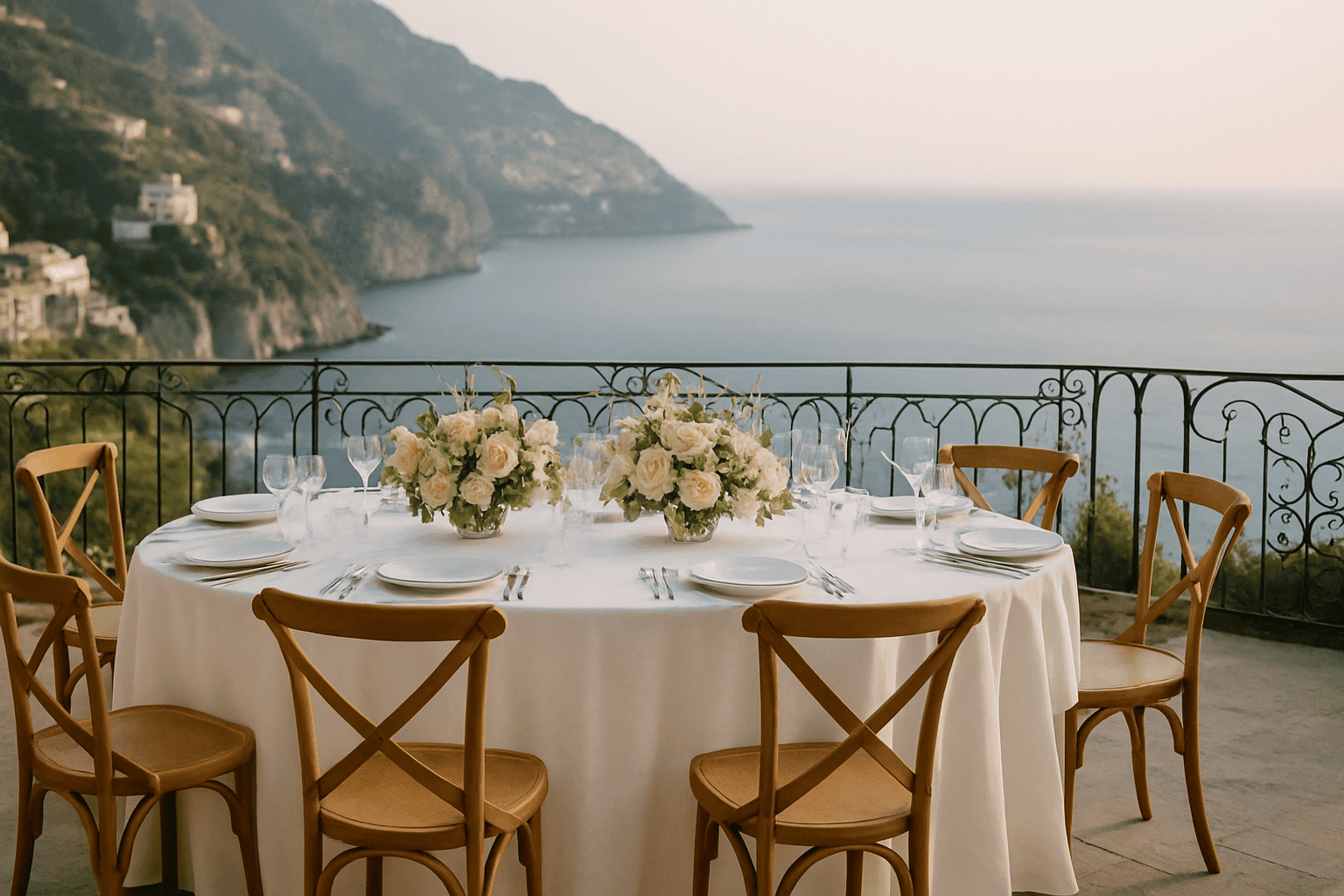
Organising a welcome dinner in the Amalfi Coast means kicking off the wedding weekend with a moment that is not “just a dinner”: it is the first chapter of the story, the passage where guests get into the mood, understand the style of the event, and begin to truly experience it guest experience. In the context of a destination wedding, this appointment has an even stronger value: it helps bring together people coming from different cities and time zones, breaks the ice, and creates authentic connections before the main day.
The pre wedding dinner in the Coast can be intimate and sophisticated, convivial and Mediterranean, scenic and “wow”, or essential but very refined. The difference is made by precise choices: format, menu, location, and logistics. In this guide you will find a clear structure to plan everything in order, avoiding the most common mistakes and maximizing the unique context of the Amalfi Coast.
Welcome dinner Amalfi Coast: objective, style, and timing of a well-designed pre-wedding
Objective and style: luxury, intimate, destination (without forcing)
The welcome dinner serves to welcome e orient. It is the ideal moment to:
- introduce the couple and families naturally;
- thank the guests for the trip and their presence;
- anticipate the tone of the wedding (elegant, relaxed, glamorous, traditional, contemporary);
- create a first “strong memory” linked to the place.
In the Amalfi Coast, the style can take different directions, all coherent if guided by a direction: dinner with sea view at sunset, Mediterranean table among lemons and ceramics, cocktail dinner with gastronomic islands, or a more formal seated dinner. The important thing is not to overlap the welcome dinner with the wedding: it must be complementary, not a replica.
What to expect in terms of timing and logistics
A pre wedding dinner works when it respects the rhythms of those arriving. In the Coast, transfers can take longer than expected, and guests often need a window for check-in, shower, and a bit of decompression after the trip. A typical structure (to be adapted) includes:
- welcome with drinks and small bites;
- welcome moment (a brief toast, a few words, possible presentation of the weekend);
- dinner with a pace not too long;
- after dinner soft (music, dessert corner, digestifs) for those who want to continue.
In practice, the goal is to offer a smooth evening, with invisible logistics: clear transfers, realistic schedules, and a plan that takes into account traffic, access, stairs, elevators, and meeting points.
Step-by-step planning of the pre wedding dinner in the Coast
Realistic timeline (from 12 to 2 months)
Effective planning starts early, especially if the wedding weekend falls during a highly sought-after period. A useful outline:
- 12–10 months before: definition of the concept (style, formality, atmosphere), choice of area/country of reference, initial selection of location and accessibility check.
- 9–7 months before: key supplier block (catering/food service, beverage, music), first draft of transfer logistics.
- 6–4 months before: menu and evening flow definition, study of mise en place and lighting, confirmation of transport plan, draft of guest communications.
- 3 months before: finalization of timing, collection of dietary requirements, seating arrangement definition (if planned), confirmation of location technicalities (spaces, power, time limits).
- 2 months before: run-of-show, confirmation of numbers, welcome details (welcome moment, signage, hostess), weather plan B.
If some information is uncertain (for example availability of alternative spaces or equipment), check the product sheet or in the location/supplier documentation: on the Coast, operational details vary greatly from one context to another.
Essential supplier checklist
You don’t always need “all” the suppliers you imagine: you need the right mix for your format. Generally, for a well-managed welcome dinner, consider:
- Location (or restaurant) with coherent spaces and manageable access;
- Food & beverage (internal catering or external catering, depending on the context);
- Setup (tables, seating, textiles, mise en place, flowers, candles/lights);
- Audio for music and microphone for the toast (even minimal but reliable);
- Transport (shuttles, drivers, pick-up point coordination);
- Coordination on-site for timing, welcome, and handling unforeseen events.
On the Coast, perceived quality often comes from “silent” details: warm light in the right spot, smooth beverage service, audio that doesn’t disturb but accompanies.
Guest and transfer management: the point that makes (or breaks) the evening
The welcome dinner is the first test of your organization. To prevent guests from arriving tired or disoriented, set a simple logic:
- a meeting time clear (not “around 8 PM”);
- a pick-up point easy to find (main hotel or central square);
- arrival windows if there are many guests, to avoid queues;
- a contact person (hostess or coordinator) to manage the flows.
If the location involves particular access (stairs, walking sections, elevators, piers), tactfully inform in advance: when people know what to expect, they experience everything better and more lightly.
Budget and priorities for a welcome dinner on the Amalfi Coast
Main items to consider
Without going into figures, the items that most often impact a pre-wedding dinner are:
- catering and beverage (quality, service, pairings, open bar or selection);
- location (any exclusivities, dedicated spaces, logistics);
- setting up (tables, seating, textiles, flowers, lighting);
- entertainment (live music or DJ, acoustic set, soft performance);
- transportation and guest coordination;
- plan B (coverings, indoor spaces, technical adaptations).
The point is not to “spend more,” but to choose what must be memorable and what can remain essential.
Where to invest to maximize the scenic effect (without excess)
On the Amalfi Coast, the natural scenery is already an asset. To amplify it elegantly, it often works to invest in:
- lighting: candles, warm light points, discreet strings, enhancing the view;
- coherent and refined mise en place, without overloading;: coherent materials, clean palette, well-measured artisanal details;
- service rhythm: a smoothly flowing dinner is more “luxury” than an excess of elements;
- a signature moment: a toast with a view, a dessert corner, a small local surprise.
If you want a high guest experience, think like a guest: what will they remember? Often they will remember how they felt, not how many things there were.
Mistakes that increase costs (and lower perceived quality)
- Too long format: more hours does not mean more value; it means more complexity.
- Beautiful but inconvenient location: if access is difficult, everything becomes more expensive (and stressful).
- Setups not proportional to the space: filling “by force” creates visual chaos.
- Late guest communications: last minute changes on times and pick-up generate inefficiencies.
Cost control starts from design: define the flow first and then the details, not the other way around.
Plan B and risk management for a pre-wedding dinner on the Coast
Weather: credible alternatives, not “makeshift solutions”
The Coast is beautiful, but the sea air and weather changes require a real Plan B. A good Plan B should not “save” the evening: it must maintain the style. Evaluate:
- indoor space with a coherent atmosphere (not a bare fallback);
- elegant and well-integrated coverings;
- alternative layout already designed (tables, passages, music area);
- temperature/wind management, especially on the terrace.
If a location offers weather options, ask to see real photos or verify operational details: check the product sheet or in the provided documentation.
Permissions and constraints of the location: what to clarify immediately
Each location has its own rules: hours, music volumes, supplier access, limits for candles or setups, waste management, loading/unloading. To avoid discovering constraints close to the event, clarify in advance:
- times start/end times and setup/breakdown times;
- usable spaces (and which ones not);
- weather plan and capacity of alternative spaces;
- music policy and need for dedicated audio;
- technical accesses for catering and suppliers.
This information is not “bureaucracy”: it is the basis for a smooth coordination.
Contracts and deposits: clarity on what is included
To avoid misunderstandings, it is useful that agreements and confirmations are aligned on:
- what is included the location (furnishings, basic lighting, staff);
- what is extra (setups, audio, additional spaces, special services);
- modification conditions (number of guests, schedules, weather);
- payment terms and confirmation methods.
If a point is not explicitly stated, ask for it to be put in writing. A high-level guest experience also comes from a smooth production.
Guest experience: welcome, transportation, and communications that make everyone feel “at home”
Welcome moment, activities and hospitality
The welcome dinner is the perfect occasion to include micro-elements of hospitality that make a difference, without turning the evening into a rigid program. Some ideas (to be adapted to your style):
- welcome drink with a brief story of the territory (no lessons, just atmosphere);
- smart seating: tables that encourage conversations, mixing groups delicately;
- small touchpoints: curated menu, place card, a welcome message;
- moment of thanks essential and sincere (2 minutes, not 20).
If you want to include a pre-dinner activity (for example a brief panoramic moment or an aperitif at an iconic spot), make sure it doesn’t drain energy: the goal is to have everyone arrive at dinner relaxed.
Transportation, shuttles, parking: how to avoid stress and delays
On the Coast, logistics is part of the experience. For smooth management:
- reduce variables: fewer travel options = less confusion;
- allow margins between pick-up and event start;
- communicate dress code and shoes if there are walking sections or stairs;
- organize the return with clear times and a simple meeting point.
When guests don’t have to “figure out what to do,” they enjoy the evening. And this is where the guest experience truly becomes premium.
Clear directions and wedding website: the difference between elegant and chaotic
For a destination wedding, a wedding website (or a well-made information page) helps centralize everything: schedules, maps, contacts, weekend FAQs, practical tips. In the context of pre wedding dinner, it is useful to include:
- pick-up time and dinner start time;
- address and access directions;
- dress code and practical notes (evening wind, stairs, etc.);
- emergency coordination contact.
If you are building the entire weekend itinerary and want an overview, this guide on How to organise a weddingcan be useful, so you can integrate welcome dinner, ceremony, and side moments into a single coherent direction.
For those who want to contextualize this type of event within the broader framework of destination weddings, here is a Insight: Destination wedding (Wikipedia).
FAQ on the welcome dinner on the Coast: common doubts before choosing format and location
Here you will find quick answers to the questions that most often arise when planning a welcome dinner on the Amalfi Coast, with attention to logistics, atmosphere, and guest management.
Do you want a welcome dinner that opens the weekend with style and without stress? Tell me your idea of the atmosphere and the type of guests you want to welcome: together we can design a pre-wedding consistent with the wedding, taking care of format, timing, and guest experience in every detail, in line with the Chiara B Events approach.
FAQ
What is the difference between welcome dinner and menu tasting (rehearsal dinner)?
The welcome dinner is designed to welcome guests and start the weekend with a convivial moment; the menu tasting (rehearsal dinner) is often linked to a ceremony rehearsal and a smaller group. In a destination wedding, they can coincide, but it is useful to clarify the purpose, guests, and tone to avoid duplicating the wedding experience.
How long should a pre wedding dinner in the Amalfi Coast last?
Generally, it works well to have a contained and smooth duration: welcome, dinner, and a light after dinner for those who wish to stay. The ideal duration depends on transfers, guests' arrival times, and venue constraints: set a realistic timing and clearly communicate pick-up and return.
Better seated dinner or cocktail dinner for the guest experience?
The seated dinner promotes a more “classic” rhythm and structured conversations; the cocktail dinner is dynamic and facilitates socializing among different groups. The best choice depends on the number of guests, available space, and the style of the weekend: the important thing is that service and flows are well designed.
How to manage transfers and delays on the Coast without ruining the evening?
Reduce the variables: a single meeting point, a precise pick-up time, and a contact person to coordinate the flows. Include margins in the timing and provide an initial welcome drink so those who arrive on time can start experiencing without “waiting” for others.
What to include in the communications to guests for the welcome dinner?
Indicate times (pick-up and start), address and access, dress code and practical notes (stairs, walking sections, evening wind), as well as a contact for emergencies. A wedding website or an information page helps to centralize everything and improve the guest experience.
Is a weather plan B really needed for a welcome dinner with a sea view?
Yes: a credible plan B protects atmosphere and perceived quality. Consider a consistent indoor space or integrated covers, with an alternative layout already defined. If the location offers weather options, check details and conditions in the available documentation.
