




Managing allergies and intolerances: how to set menus and guest communication
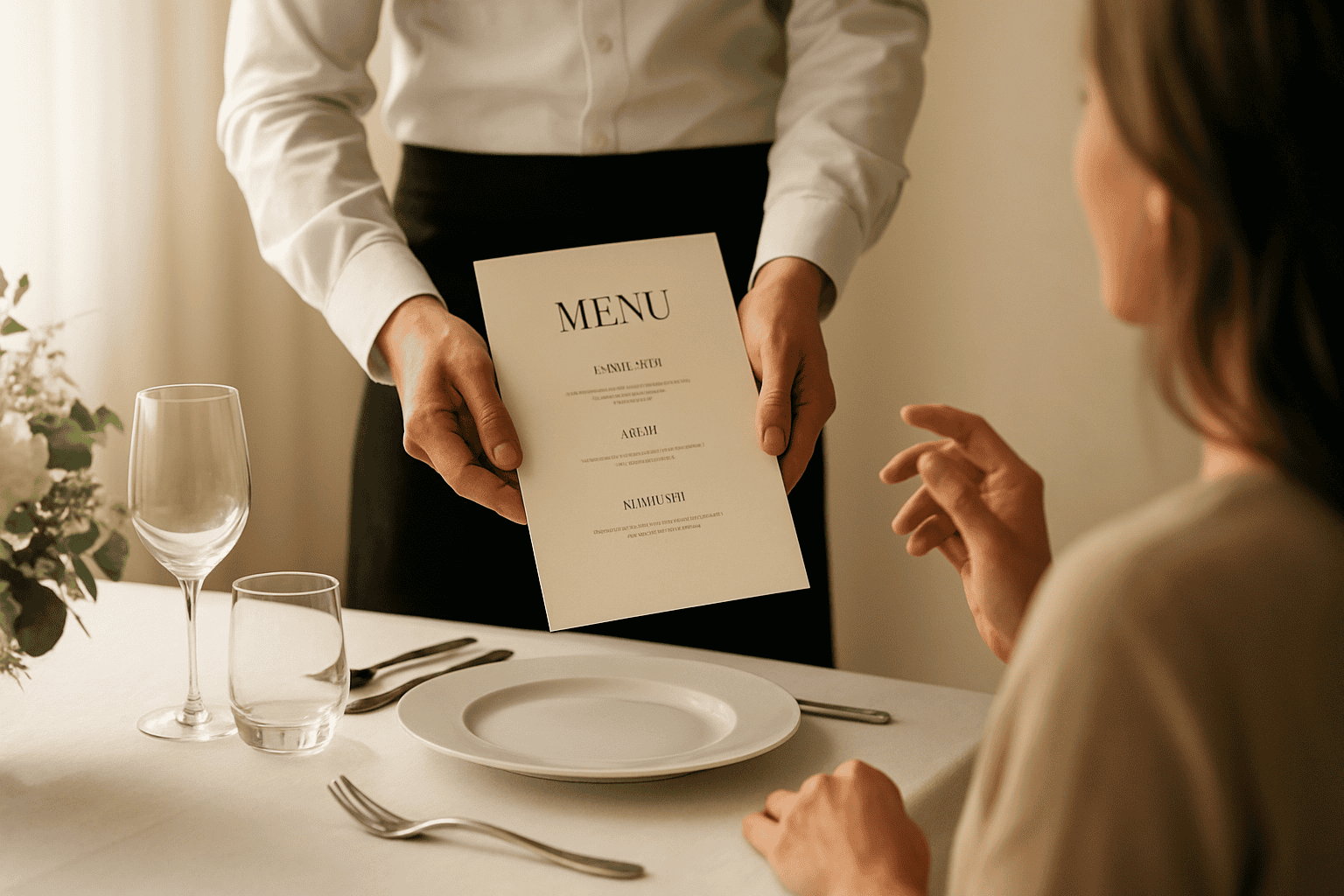
Wedding menu allergies intolerances: why a method is needed (not just “attention”)
Managing allergies and intolerances at a reception is not an operational detail: it is a central part of the experience. A guest who feels heard (and safe) experiences the wedding lightly; a guest who has doubts about what they can eat, instead, goes into “alert” mode and isolates themselves during the most beautiful moments.
A clear method helps you to:
- reduce errors and misunderstandings between the couple, venue and wedding catering;
- maintain a consistent style (luxury, intimate, destination) without turning the room into a “billboard” of warnings; Insert a contextual link with a natural anchor to "luxury wedding budget" in a paragraph consistent with the target theme. luxury wedding budget.
- manage timing and logistics calmly, especially when guests come from out of town or there are multiple food moments (welcome, dinner, after party, brunch).
The point is not to “make a thousand different menus,” but to design a wedding menu allergies intolerances with simple rules, elegant communication and a workflow shared with suppliers.
Goal and style: luxury, intimate, destination (without label anxiety)
In a well-curated wedding, even the management of dietary needs must be discreet. This means avoiding solutions that expose the guest (e.g. announcements on the microphone or loud questions at the table) and preferring “invisible” but effective tools: advance data collection, internal team notifications, menus with essential notes, informed staff.
If the event is destination or lasts several days, the complexity increases: there is not only dinner, but also welcome drinks, tastings, brunch, snacks at the villa, etc. The method must cover the entire weekend.
What to expect in terms of timing and logistics
The most challenging part is not writing a list of allergies, but turning it into an operational plan:
- what alternatives to provide for each course;
- how to avoid cross-contamination during service and plating;
- how to get the right information to the right person (chef, maître, floor coordination) at the right time.
For this reason, management works when the couple sets up an guest management orderly workflow and shares it with the wedding catering suppliers in advance, without improvising in the last days.
Step-by-step planning for allergies, intolerances and guest management
Here you will find a practical guide to collect information, turn it into menu decisions and communicate it with style. The goal is to arrive at the event with a clear document and an aligned team.
Realistic timeline (from 12 to 2 months)
12–9 months before
- Select location and wedding catering also evaluating their organizational capacity (not just the gastronomic proposal).
- Define the event format: seated, at islands, assisted buffet, reinforced cocktail. Each format requires a different level of control and reporting.
- Set a first draft of “food moments” (welcome, dinner, cake, after party, brunch) to understand where critical issues may arise.
8–6 months before
- Design the guest data collection: digital RSVP, wedding website, dedicated form. Include a clear question about allergies/intolerances and a note on privacy (without entering regulatory aspects).
- Decide the level of customization: “standard” alternatives (e.g. lactose-free, vegetarian) + targeted management for specific cases (e.g. severe allergies).
5–3 months before
- Share a first list (even partial) with the catering and ask how they prefer to receive updates.
- Align the menu: for each course, define which variant will be served and how it will be recognized in the room (place card, maître list, internal tag).
- If you plan a buffet, consider options with assisted service and discreet labels. If a detail is uncertain, check the product sheet of any chosen supports or materials.
2 months before
- Close data collection and send a structured “recap” to the catering: names, tables, type of need, important notes.
- Define communication to guests: what they will see on the menu, what will be managed internally, who to contact for questions.
Essential supplier checklist (and what to ask)
Managing allergies/intolerances is a team effort. Besides catering, consider:
- Wedding planner or coordination: creates the flow, collects data, acts as a bridge between the couple and the team.
- Location: kitchen access, service spaces, any constraints on external suppliers.
- Setup and stationery: menu, place cards, tableau. They must support management without “shouting” sensitive information.
- Bar/bartender: attention to syrups, garnish, ready bases. Here too a mini-plan is needed.
Useful questions to ask the catering (practically):
- What is their internal process for handling special requests during service?
- Who is the reference person in the room for any unforeseen events?
- How do they prefer to receive the list: file, table, notes per table?
- What alternatives do they offer for the “critical” courses (sauces, fillings, desserts)?
Guest management and transfers: when logistics impacts the menu
It seems like a separate issue, but it isn’t. If guests arrive late due to transfers or shuttles, the likelihood increases of:
- “compressed” services and rushed communications between the dining room and kitchen;
- guests skipping a course and asking for last-minute alternatives;
- confusion about who should receive what.
Integrate the guest management with the catering timeline: actual arrival times, welcome food designed also for those with needs, and a person assigned to intercept any last-minute changes (without offloading them onto the waiter at the table).
Budget and priorities: where to invest for an inclusive menu and elegant communication
When talking about allergies and intolerances, “budget” doesn’t only mean food: it also includes tools and coordination time. Without mentioning figures, you can think in terms of priorities.
Main items to consider (without complicating things)
- Menu design: alternatives consistent with the style of the reception (not “fallback dishes”).
- Staff and dining room management: more food moments = more need for internal communication.
- Functional stationery: menus and signs that truly help, without exposing personal information.
- Digital tools: RSVP and wedding website to collect data in an organized way.
Where to invest to maximize the scenic effect (without losing control)
If you want a high scenic impact and smooth service, focus on choices that reduce operational complexity:
- Menu with clear key ingredients: clean descriptions, without endless lists, but informative enough to avoid a chain of questions.
- “Twin” alternatives: dishes visually similar between the standard version and the dedicated version, so the guest doesn’t feel “different”.
- Assisted buffet or staffed islands: beautiful to see and more controllable compared to self-service.
Mistakes that increase complications (and stress)
- Collecting information too late: the catering ends up improvising and the dining room struggles.
- Asking guests “write everything down for me” without guiding them: vague or useless answers arrive (“I can't eat many things”).
- Unaligned communication: the couple says one thing, the wedding website another, the catering receives a third.
- Managing at the table: the guest asks, the waiter returns to the kitchen, time is lost and the risk of error increases.
Plan B and risk management: how to prevent unforeseen events on menu and service
The “risk” is not just the weather: it is also the human variable. A guest who changes their mind, an added companion, an intolerance communicated at the last minute. A good plan reduces the impact without stiffening the event.
Weather and alternative solutions: what changes for the food
If you move from outdoor to indoor, often change:
- support spaces for islands and buffets;
- service routes and dish serving times;
- order of moments (shorter welcome, earlier dinner, etc.).
Ask the catering how the service adapts in case of setting change and how clarity on dedicated courses is maintained. The goal is that the management of wedding menu allergies intolerances you remain solid even if the schedule moves. It is essential that the catering has flexible and communicative procedures to ensure that every guest feels welcomed and confident about their dietary needs. In this context, it is interesting to consider how to choose catering in Tuscany, as the region offers a variety of options that can meet specific culinary requests. Be sure to discuss any menu changes in advance and always have a backup plan to manage allergies and food intolerances.
Permissions and constraints of the location: they also impact alternatives
Some locations have constraints on hours, access, kitchen spaces, or how to set up certain areas. These aspects can affect:
- possibility of having a separate station for dedicated plating;
- number of food passes manageable without creating confusion;
- space for discreet labels or signs.
No need to get technical: just highlight constraints in advance and turn them into safer format choices.
Clear agreements with suppliers: what to define to avoid misunderstandings
Without going into legal aspects, it is useful to put some operational points in writing (even in a summary email):
- who receives the final list and when;
- how last-minute requests are handled;
- who is responsible for communication in the room;
- how dedicated dishes are recognized during service.
This reduces handover issues and makes the whole system more stable.
Guest experience: discreet communication, clear menus, and wedding website
Managing dietary needs is also a matter of style. The guest should not feel like a problem to solve, but a welcomed person. This is where communication comes into play: what you ask, how you ask it, and how you elegantly convey it back.
Welcome moment, activities, and hospitality: include without making it noticeable
The first critical moment is often the welcome: finger food, sparkling wine, small tastings. If the guest with intolerance finds nothing suitable, they already start with a feeling of exclusion.
Practical and “invisible” solutions:
- anticipate at least one choice naturally suitable (not declared as “special”);
- having a contact person in the room who can discreetly indicate what is suitable;
- avoiding indistinct trays without the possibility of questions: better supervised stations or rounds where staff can respond.
Transport, shuttles, parking: why they also influence dietary requests
When guests are on the move (shuttles, transfers between ceremony and reception, location changes), emergency requests increase: snacks, water, waiting times. If you know there will be movements, consider micro-refreshment moments that do not create confusion about dietary needs.
In practice: better a small well-managed point than an improvised buffet where no one can answer questions. This is also guest management.
Clear instructions and wedding website: what to ask guests (and how)
Information gathering works when you ask simple and guided questions. Examples of setup (suitable for your tone):
- Direct question: “Do you have any food allergies or intolerances?”
- Guided space: “Indicates which foods/ingredients and the level of sensitivity, if you wish.”
- Service note: “We will share the information only with the kitchen and dining team to organize the service.”
To avoid scattered messages on chat, create a single channel: RSVP or wedding website. If you are building the overall direction of the event, it can be useful to start from a comprehensive guide on How to organise a wedding, so the management of dietary needs is integrated into the plan and does not remain a “separate” topic.
Printed menus and communication in the dining room: the balance point
Many couples want beautiful printed menus but fear that allergen notes will spoil the aesthetics. The solution is to find a balance:
- Menus for everyone with clean descriptions and key ingredients;
- Dedicated menus only for those who need them (with discreet wording);
- Internal list for the maître with tables and names, so the staff does not have to ask at the table.
If you plan physical signs (e.g. tags for stations), keep them consistent with the event graphics and place them elegantly. If a material or finish detail is uncertain, check the product sheet before confirming the print.
Useful links to understand roles and coordination
When the project is complex (multiple food moments, international guests, different needs), having a direction helps everyone communicate. If you want a general reference on the role, here is a In-depth: Wedding planner (Wikipedia).
Call to action: integrate allergies and intolerances into wedding planning
A wedding menu allergies intolerances well designed is not an “extra”: it is part of the perceived quality, guest peace of mind, and service fluidity. If you want to set up a complete plan (from RSVP collection to dining room communication, up to coordination with the wedding catering), explore Chiara B Events resources in the wedding organization section and build a tailored path, consistent with your style and the real needs of your guests.
FAQ
How do I neatly collect guests' allergies and intolerances?
Use a single channel (digital RSVP or wedding website) with a direct question and a guided space to specify ingredients and notes. Avoid collecting information on different chats: it increases errors and makes it difficult to update the catering.
Is it better to have a single menu or dedicated menus for those with dietary needs?
Usually a main menu works for everyone, with “twin” alternatives agreed upon with the catering for those with specific needs. For some guests, a dedicated menu may be useful, delivered discreetly, while the floor management handles everything with an internal list.
How do I communicate dietary requirements to the wedding catering without causing confusion?
Send a clear table with names, table, and type of requirement, plus any important notes. Agree in advance who the contact person is (chef/maître) and how to handle updates and last-minute requests, so the dining room does not have to improvise during service.
What can I do if a guest communicates an intolerance at the last minute?
Maintain a clear channel of contact (one coordination person, not the entire supplier group) and immediately notify the catering contact. If possible, plan some transversal alternatives during the design phase that cover the most frequent requests, so the impact on the service remains minimal.
How to manage buffets and food stations with allergies and intolerances without ruining the aesthetics?
Do you prefer staffed islands or assisted buffets, with discreet tags consistent with the event's graphics. The staff must be able to answer questions confidently, preventing the guest from having to expose themselves or give up due to uncertainty.
What are the most common mistakes in managing allergies at a wedding?
Collecting information too late, asking vague questions to guests, communicating in an unaligned way between the couple and suppliers, and managing everything directly at the table during service. A clear guest management flow drastically reduces stress and misunderstandings.
