
How to Organize a Symbolic Wedding in Italy
What is a symbolic wedding (and what makes it different)
A symbolic wedding in Italy it is a ceremony built around the couple’s meaning: vows, rituals, music and words are chosen to tell your story. It is not a rigid formula: it can be intimate or spectacular, on the beach or in a villa, with a few guests or with a full celebration. The central point is creative freedom: every element – from the entrance to the readings – is designed to move and engage.
This option is often chosen when you want a personalized celebration, when you want to make room for family or cultural traditions, or when you prefer to separate the administrative part from the party. To define the right approach, it helps to clarify from the start what you want guests to feel: intimacy, lightness, solemnity, surprise.
How to organize a symbolic wedding in Italy: the essential outline
To avoid confusion and last-minute decisions, it’s best to set a clear outline. There’s no need to fill every minute: a fluid structure is better, with moments to breathe.
1) Define the concept and tone of the ceremony
The concept is the common thread. It can come from a place, a season, a color, a shared passion, or a memory. The tone, instead, concerns the style: more classic, more informal, more spiritual, or more ironic. When concept and tone are consistent, everything else – setups, music, texts – becomes simpler.
- Keywords (3-5): e.g., Mediterranean, essential, elegant, bright.
- Palette and materials: choose a few recurring elements.
- Guest experience: arrival, waiting, ceremony, toast, party.
2) Choose the location and time of day
The location affects logistics and atmosphere. Consider accessibility, shaded areas, a plan B, and the possibility of personalization. The time of day changes perception: light, temperature, guests’ energy. A sunset rite, for example, requires careful direction for lighting and timing.
For inspiration and practical solutions, you can explore ideas for outdoor ceremonies and compare them with more controllable indoor options.
3) Choose the officiant, texts, and structure of the rite
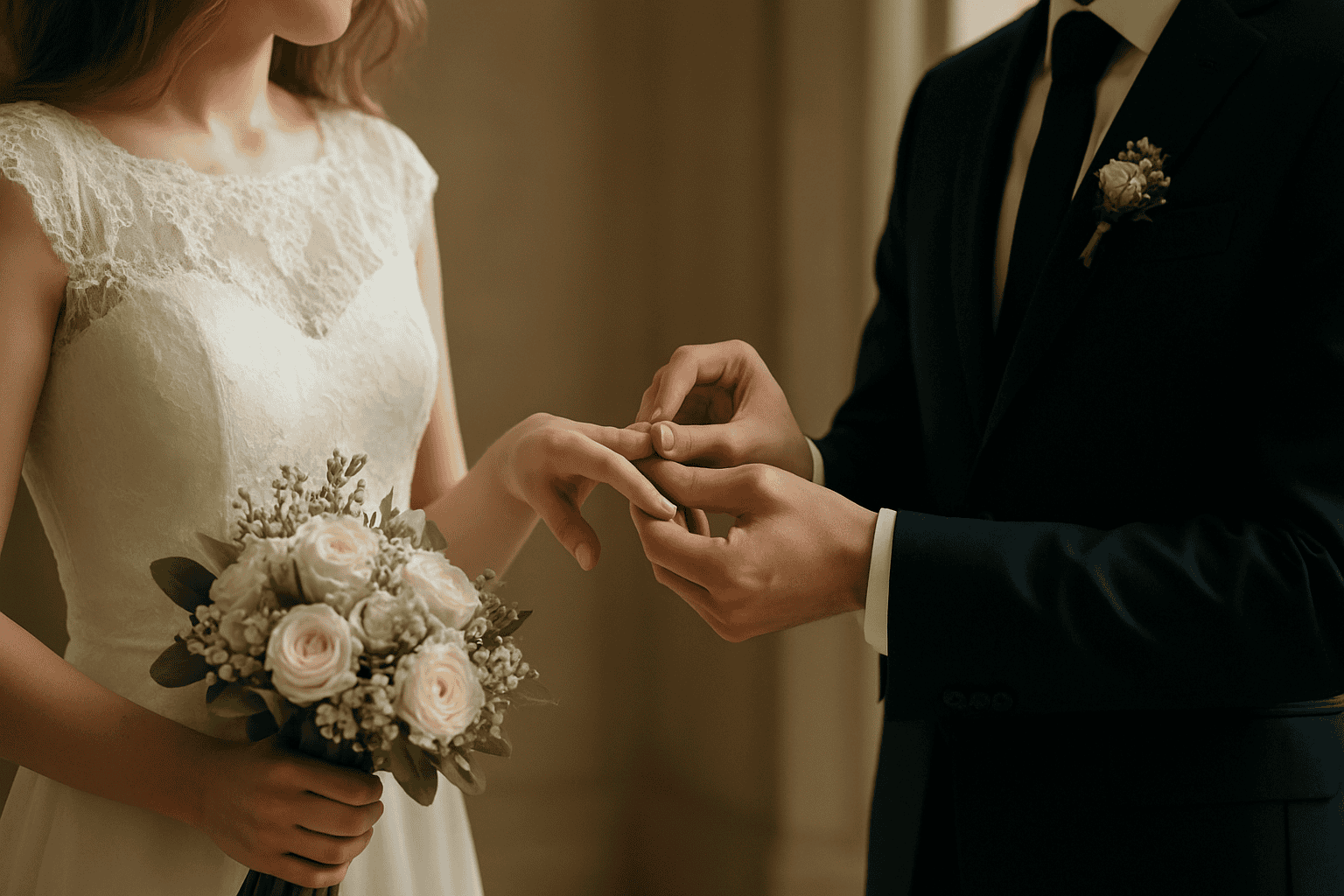
In a symbolic wedding, the voice leading the ceremony makes the difference. It can be a professional or a loved one: what matters is that they can manage rhythm, emotions, and timing. The typical structure includes welcome, the couple’s story, vows, exchange of rings (if desired), a symbolic ritual, signing on parchment (optional), closing, and exit.
To build authentic texts, start from concrete episodes: a trip, a courageous choice, an everyday detail that represents you. If you want a guide, consult prompts for vows and readings and adapt them to your voice.
4) Music and sound: the detail that changes everything
Music is emotional direction: it accompanies transitions, supports silences, avoids dead time. Create a mini outline with 4 moments: entrance, central passage, signing/ritual, exit. If the location is large or windy, consider an adequate audio setup; if you have doubts about compatibility and accessories, check the product sheet the available solutions.
A useful reference is also the guide to ceremony music, to choose songs and timing without stress.
Symbolic rituals for the ceremony: elegant and meaningful ideas
Rituals are the heart of a symbolic wedding: they shouldn’t be chosen because “that’s what you do”, but because they resemble you. Better one, well explained and well integrated, than three rushed gestures.
- Sand ceremony: two (or more) colors that come together in a single container, perfect if you want to involve children or family members.
- Light ritual: lighting a shared candle from two flames, ideal for an intimate and collected moment.
- Handfasting: ribbons or cords that wrap the hands during the vows, very scenic and photogenic.
- Time capsule: letters to open in the future, with a symbolic object; it works well if you love storytelling.
- Ceremony toast: short and well-crafted, great for lightening the mood and involving guests.
If you want a refined effect, take care of the presentation: a dedicated small table, a fabric consistent with the palette, a card with a couple of lines of explanation. Details – if well balanced – make the ritual understandable even to those who don’t know it.
Setup for a symbolic wedding: arch, seating and coordinated details
The setup isn’t just aesthetics: it’s functionality (visibility, flow, comfort) and visual consistency (photos, video, overall impression). Start from three points: officiant area, entrance aisle, guest seating.
Arch or backdrop: how to choose without weighing it down
A floral arch or a textile backdrop defines the space and helps framing. If the location already has an important view, choose a light structure; if instead the background is neutral, you can go bold with volumes and textures. The goal is to frame the couple, not compete with them.
Seating arrangement and the guests’ experience
The classic row arrangement always works, but it’s not the only option. A semicircle arrangement makes the ceremony more engaging; a “U” arrangement increases intimacy and makes photos easier. Also consider access for people with reduced mobility and an aisle wide enough for the entrance.
To learn more, you can read ceremony setup ideas and adapt them to your space.
Timing and coordination: how to avoid unexpected issues on the day of the ceremony
A symbolic wedding seems simple, but on the day of the event it requires a bit of direction. The solution is an essential plan, shared with whoever manages music, setup and welcoming.
- Guest arrival time: allow a buffer and a welcome point.
- Entrance: define who enters, in what order and with what music.
- Microphones and audio: test before guests arrive.
- Ritual: items ready, positioned and a brief explanation to the audience.
- Exit and transition: petal toss, toast or group photo, without bottlenecks.
If you want practical support, a useful resource is the checklist for the wedding day, to customize based on your schedule.
Dress code, invitations and details to make everything consistent
Consistency is built with small repeated cues: a font, a color, a material, a pattern. There’s no need to coordinate everything rigidly; it’s enough that the main elements speak the same language.
A light dress code (not mandatory) can help photos and overall harmony. If you suggest it, do so tactfully: propose a palette or an inspiration, leaving freedom. The invitations can also set the tone in advance: minimal, romantic, Mediterranean, contemporary.
For scenic yet balanced details, choose a few focal points: ceremony table, front-row seating, place cards or a small message corner. The important thing is that every element has a purpose: to welcome, guide, move.
Do you want to create a truly tailor-made symbolic ceremony? Discover the ChiaraB Events selection dedicated to setups and details for the rite: you’ll find coordinated solutions to build a consistent, elegant atmosphere, ready to be experienced.
FAQ
How long does a symbolic wedding ceremony last?
It depends on the chosen style and the number of moments included (readings, vows, ritual, music). In general, a ceremony with a streamlined, well-paced outline works best, leaving room for a toast or photos immediately afterward.
Who can celebrate a symbolic wedding?
It can be led by a professional celebrant or by a loved one who knows the couple well. The important thing is to prepare the texts and timing, do a rehearsal, and make sure the voice is clearly audible to the guests.
What are the most suitable symbolic rituals for an elegant ceremony?
Light ritual, sand ritual with neutral palettes, hand ritual with coordinated ribbons, and a time capsule with letters are very refined options. The difference is made by the presentation: a well-arranged small table, consistent materials, and a brief explanation.
How to choose the setup for the ceremony without overdoing it?
Start from a focal point (arch or backdrop) and build around it a few repeated details: front-row seating, aisle, and the ritual table. If the venue already has an important view, lightweight structures that frame without covering are better.
What is needed for the audio during the symbolic ceremony?
A solution is needed that makes the officiant’s voice clear and manages the music at key moments. Before the event, it’s useful to do a test at the venue; for compatibility and accessories, check the product sheet of the available solutions.
From the blog
 Wedding
Dream Wedding on Lake Como - The Most Exclusive Locations
A wedding on Lake Como is an idea that combines iconic scenery, top-level hospitality, and a naturally cinematic atmosphere. […]
Read more Tips
Tips
Wedding Ideas: Trends and Tips for a Perfect Wedding
Organizing a wedding today means choosing among endless possibilities without losing sight of what really matters: telling your […]
Read more Wedding
Luxury Wedding in Montepulciano - History and Romantic Atmosphere
Luxury wedding in Montepulciano: Tuscan elegance between history and romantic atmosphere Montepulciano is one of those places that seem born […]
Read more