

Italian Wedding Traditions Explained to Foreign Couples
For many foreign couples, getting married in Italy means entering a world made of symbolic gestures, small family rites, and details that turn a simple ceremony into a story. The Italian wedding traditions are not a rigid “script”: they change from region to region, adapt to the couple’s style and, above all, intertwine with the guests’ culture. Understanding them in advance helps you make more informed choices, avoid misunderstandings, and enhance the experience for those traveling from afar.
In this guide you’ll find a clear overview of the most widespread customs, with practical tips for integrating them into an international wedding: from the bride’s entrance to the confetti table, from toasts to wedding favors, all the way to the celebration moments that make Italy so recognizable.
Italian wedding traditions: what to expect (and what to personalize)
When it comes to Italian wedding, people often imagine long banquet tables, constant toasts, and a day that unfolds without hurry. It’s a real image, but incomplete: the true Italian hallmark is the centrality of the family and the care for symbolic moments.
Many traditions are now reinterpreted. Some couples follow them faithfully, others choose only a few. If you want an overall picture, it can also be helpful to consult an inspiration page like ideas for a wedding in Italy and then decide what truly reflects your story.
Tradition vs. personal style: the balance that works
An effective approach is to select 2–4 traditional elements and build a coherent event around them. Examples:
- a symbolic Italian ritual (confetti, wedding favors, cake cutting) + a bilingual ceremony;
- classic Italian music and dancing + an international-style after-party;
- traditional table setting + a contemporary palette.
The ceremony: entrance, roles, and symbolic moments
The ceremony in Italy can be religious or civil, but in both cases there are habits that Italian guests recognize immediately. If your guest list is mixed, the key word is clarity: printed programs, brief announcements, and careful coordination make everything smoother.
The bride’s entrance and accompaniment
A deeply felt tradition is the bride’s entrance accompanied by an important figure (often the father, but not necessarily). In some contexts, the bride walks in “alone” for the last few meters, as a symbolic gesture of choice and autonomy. There is no single rule: if you have doubts, check the product sheet or in the guidelines of the service you are considering (for example for the entrance music or timing management).
Witnesses and family roles
I witnesses in Italy have strong emotional value: they are not just formal “witnesses”, but often people who actively take part in the preparations. Parents too can have a visible role during greetings, thank-yous, and some moments of the reception.
To help foreign guests find their way, it can be useful to include a small glossary in the wedding program or on an information page, perhaps linked to tips for foreign guests.
The Italian reception: long timing, conviviality, and the table as the star
If there’s one element that defines the Italian experience, it is the conviviality. The reception is not just “dinner”: it is a journey of moments, conversations, and toasts that follow one another naturally.
Aperitif, lunch/dinner and desserts: a narrative in multiple acts
Many weddings feature a sequence that may include:
- aperitif (often outdoors, with finger food and first toasts);
- a served lunch or dinner, with multiple courses;
- dessert and fruit moment;
- cake cutting and final toast.
It’s not mandatory to follow this pattern, but it’s useful to know that Italian guests expect a “full” event, with rhythm and variety. For foreign couples, a good compromise is to keep the structure and shorten the duration, choosing fewer steps but more refined ones.
Seating plan and tables: how to avoid cultural awkwardness
In Italy it is very common to have a seating plan and assigned tables. This helps mix different groups and make guests who travel from far away feel included. A simple idea: create “bridge” tables with bilingual people, or add small details that make conversation easier (table names linked to Italian places that are meaningful to you).
If you want inspiration on how to tell Italy through the details, you can take a look at wedding setups and decorations.
Sugared almonds and confetti table: the sweet symbol of weddings in Italy
I confetti (almonds or other fillings coated in sugar) are one of the most recognizable traditions. They should not be confused with “confetti” meaning paper bits: in Italy, in the wedding context, it mainly refers to symbolic sweets.
Why confetti are so important
They represent a wish for prosperity and sweetness. The confetti table it is often a scenic corner where guests choose flavors and colors, creating a convivial moment that works very well even with international guests (it’s intuitive, photogenic, and engaging).
How to make it understandable for foreign guests
It takes very little:
- a sign in two languages with a short sentence about its meaning;
- a palette consistent with the wedding (classic white or theme colors);
- small bags or little boxes for take-away.
If you are building an “Italian but international” wedding experience, a dedicated page like this can also help wedding traditions and etiquette.
Italian wedding favors: the gift for guests (and its meaning)
Le favours they are a gesture of thanks: a keepsake that guests take home. In Italy it’s not just a “party favor”: it’s a symbol of gratitude and, often, an object connected to the home or to a special moment.
Wedding favor or charity gift: what to choose
Today many couples prefer more essential alternatives or ones with strong symbolic value. The important thing is that the gift is consistent with the tone of the event. If you have guests traveling by plane, also consider the practicality of transport (size and fragility) and, if necessary, plan a well-organized delivery at the end of the evening.
How to present them elegantly
In Italy presentation matters: a dedicated table, a thank-you card, a floral detail. Here too, there’s no need to overdo it: consistency and care beat abundance.
Music, dancing, and moments of celebration: from tradition to the party
The Italian celebration is made of energy, but also of “guided” moments that mark the day. For a foreign couple, the key is to decide in advance which moments to keep and how to explain them to guests.
Toasts and speeches: when to do them and how to manage them
In many Italian weddings, toasts happen at several moments (aperitif, cake cutting, end of the evening). If there are speeches in different languages, it works well to:
- set a short, clear order;
- alternate languages (or summarize in 2–3 sentences);
- use a microphone if the space is large.
The cake cutting: a “finale” that becomes a beginning
The cake cutting is one of the most anticipated and photographed moments. It often takes place in a scenic area, with soft lighting and music. For some couples it is the emotional peak of the day; for others it is the transition that opens the dance floor. Both interpretations are perfectly Italian: the important thing is to plan timing that doesn’t abruptly interrupt the party.
Lucky details and superstitions: what is really common
Italian wedding superstitions exist, but today they are taken lightly. Some families care about them, others consider them just folklore. If you want to include them, do it with style and without rigidity: they can become a fun narrative element, especially for foreign guests.
Small widespread customs (to be taken with irony)
- Something old and something new: a tradition also found in other countries, often reinterpreted.
- “Good luck” details in colors or accessories: if you have doubts about specific meanings, ask your planner or your family.
- Watch out for gestures considered unlucky in some areas: they are not universal, so avoid taking them for granted.
How to explain Italian traditions to foreign guests without weighing things down
The risk, in an international wedding, is that some traditions may seem mysterious or that guests won’t understand when to take part. The solution is not to “explain everything”, but to guide discreetly.
Simple tools that always work
- Wedding website with a section “Italian wedding traditions” in two languages.
- A ceremony program concise, with 4–6 points at most.
- Elegant signage for key moments (confetti table, guestbook, photobooth).
- A bilingual friend or a coordinator who acts as a “bridge” during the most important transitions.
If you’re organizing everything from afar, it can be useful to gather the essential information on a single page and refer to resources such as wedding planning guide in Italy.
Ideas for an authentic Italian wedding (even if you’re coming from far away)
Authentic doesn’t mean “100% traditional”. It means creating an experience that respects the place, the people, and the timing of the celebration. Some high-impact ideas that are easy to understand for those who don’t know Italian culture:
- Welcome moment before the event: an informal greeting that breaks the ice between groups.
- A corner dedicated to the couple’s story (photos, maps, travel milestones).
- A culinary moment “told” in a few lines: ingredients, territory, tradition.
- An end-of-evening finale that invites everyone to take part (music, desserts, toasts).
The secret is to make guests feel part of a story: not spectators of an unfamiliar ritual.
Useful links to learn more and plan with peace of mind
To keep building a tailor-made Italian wedding, you can explore these related contents:
- ideas for a wedding in Italy
- wedding setups and decorations
- wedding traditions and etiquette
- wedding planning guide in Italy
Do you want an elegant, authentic Italian wedding that is also understandable for foreign guests? Discover the ChiaraB Events selection designed to enhance symbolic moments (from the confetti table to welcome details) and create an experience consistent with your style: choose the most suitable category or brand and start shaping the atmosphere of your special day.
FAQ
Which Italian wedding traditions are easiest to incorporate into an international wedding?
A candy buffet, wedding favors, cake cutting, and a toast are traditions that are intuitive even for foreign guests. With a brief bilingual explanation and good event coordination, they feel natural and engaging.
Are Italian confetti mandatory?
No, they are not mandatory. However, they are a very recognizable symbol: you can offer them in the classic way or in a more modern version, for example with a candy buffet coordinated with the wedding theme.
What is the difference between confetti and coriandoli in Italy?
In the Italian wedding context, “confetti” almost always refers to sugar-coated sweets, not paper confetti. If you fear confusion with foreign guests, use the wording “Italian wedding confetti (sugared almonds)” on the signage.
Are wedding favors still a current tradition?
Yes, but they are often reinterpreted: many couples choose essential keepsakes, carefully curated packaging, or symbolic alternatives. The important thing is that the gesture of thanks is consistent with the style of the event.
How can I explain Italian traditions to the guests without giving a long speech?
Lightweight tools work: a bilingual wedding website, a concise ceremony program, elegant signs at key points (confetti table, wedding favors), and a bilingual person to guide the main moments.
Do superstitions in Italian marriage have to be respected no matter what?
No. Some families care about them, others experience them as folklore. If you want to include them, do it with irony and discretion, avoiding presenting them as universal rules: customs vary a lot between regions and families.
From the blog
 Wedding
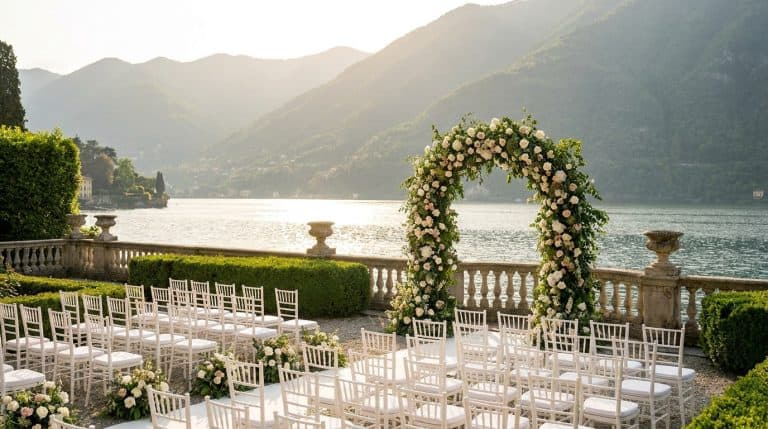
Dream Wedding on Lake Como - The Most Exclusive Locations
A wedding on Lake Como is an idea that combines iconic scenery, top-level hospitality, and a naturally cinematic atmosphere. […]
Read more Tips
Tips
Wedding Ideas: Trends and Tips for a Perfect Wedding
Organizing a wedding today means choosing among endless possibilities without losing sight of what really matters: telling your […]
Read more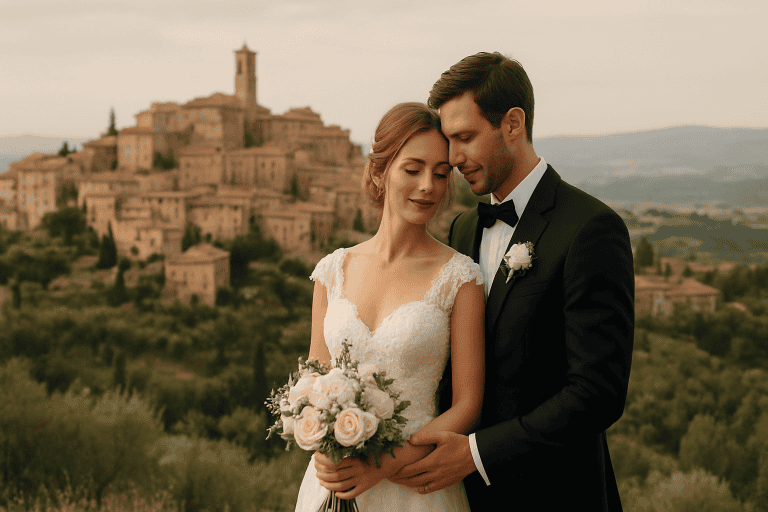 Wedding
Luxury Wedding in Montepulciano - History and Romantic Atmosphere
Luxury wedding in Montepulciano: Tuscan elegance between history and romantic atmosphere Montepulciano is one of those places that seem born […]
Read more