
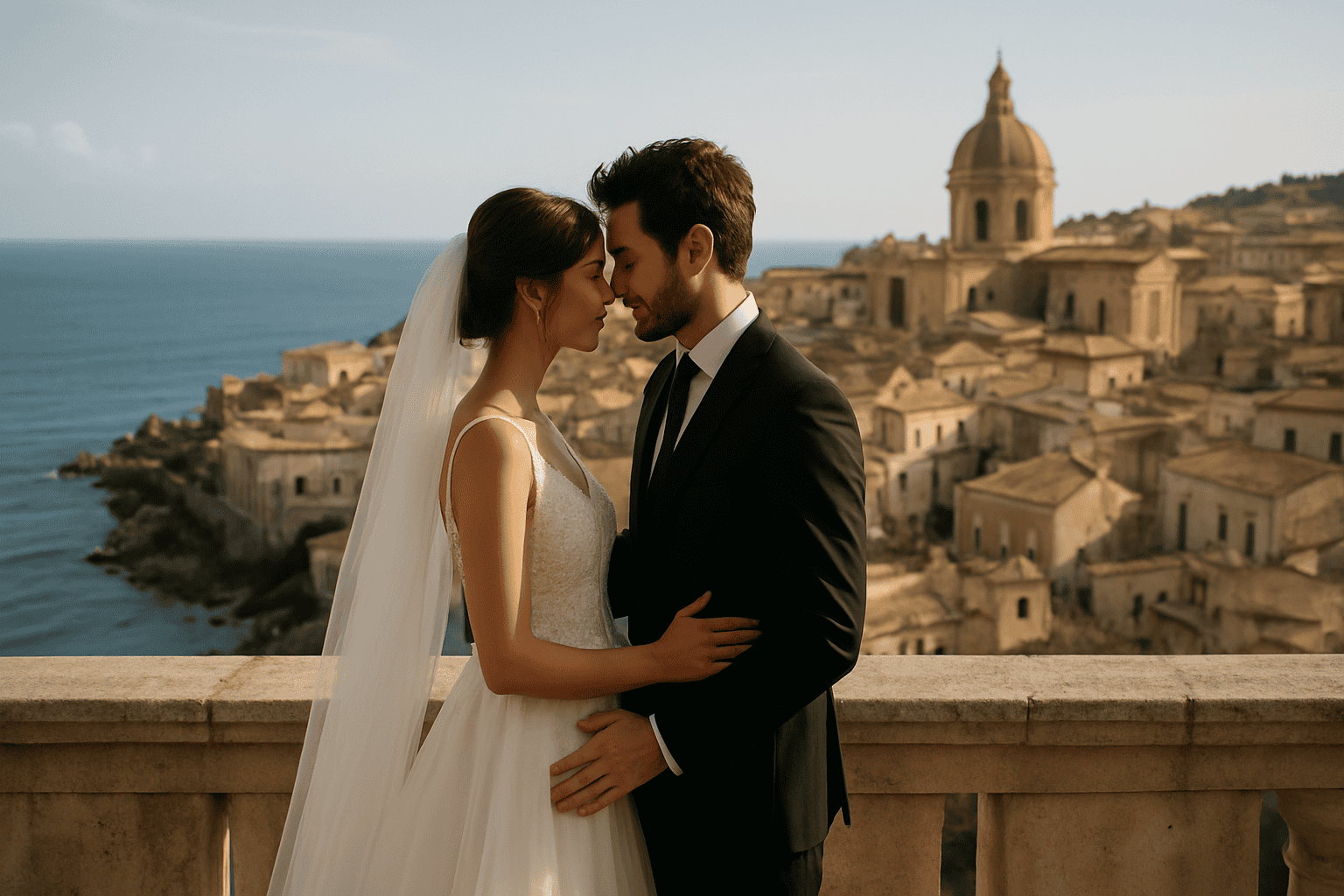
Top Sicilian Cities for Destination Weddings
The most popular Sicilian cities for destination weddings: how to choose
Choosing Sicily for a destination wedding means opting for intense, varied settings: Baroque and golden stone, crystal-clear sea, theatrical squares, Mediterranean gardens, sunsets that seem designed for photos. But when you move from the dream to planning, the question becomes concrete: which Sicilian city is really the best fit for your style?
In this guide you’ll find a curated selection of the the most in-demand Sicilian cities for destination weddings, with practical tips on atmosphere, type of venue, best times of day, and details that make a difference for guests. If you want to start building a coherent plan, it may also help to read how to organize a destination wedding in Sicily and save a basic checklist.
Palermo for a destination wedding between urban elegance and the sea
Palermo is a natural choice for those who want a wedding that combines city energy and seaside scenery a short distance away. The atmosphere is layered: historic palaces, courtyards, scenic churches, markets, and glimpses of blue. It’s a city that works well when you want to offer guests a “travel” experience beyond the wedding day.
Why international couples love it
- Arrival and welcome: it’s convenient as a base for getting around and for pre/post-wedding activities.
- Photographic settings: striking architecture and very distinctive light contrasts.
- Guest experiences: informal dinners, cultural tours, moments by the sea.
If you’re building a sophisticated but not rigid mood, Palermo lends itself to a project with multiple “chapters”: welcome dinner, ceremony, reception, after-party. For ideas on setups and palettes that enhance historic settings, you can take a look at inspirations for an elegant wedding in Sicily.
Taormina: the Sicilian postcard for panoramic destination weddings
Taormina it is often the first image that comes to mind when talking about destination wedding in Sicily. Its strong point is the view: terraces, sea vistas, and a sense of “luxury vacation” you feel right away. It’s ideal for couples who want an intimate, meticulously curated event with precise timing direction (light, sunset, entrance, cake cutting).
The style that works best
Taormina looks its best with an essential and luminous: natural materials, not overly abundant flowers, details that let the landscape breathe. Even the choice of music can follow this approach, alternating soft moments with a more energetic finale.
To avoid the “all the same” effect, work on identity elements: stationery inspired by majolica tiles, handcrafted place cards, corners dedicated to scents and citrus fruits. If you want to explore the creative side further, you’ll find ideas in ideas for decorations and details for a Mediterranean wedding.
Catania and the Ionian coast: contemporary weddings with a volcanic soul
Catania is perfect for those looking for a Sicily more urban and contemporary, with a strong character. Lava stone, color contrasts, and proximity to major natural scenery make this area very interesting for modern-taste projects, perhaps with a more fashion-forward dress code and a more “city” final party.
When to choose Catania for your destination wedding
- If you want to alternate architecture and nature in the same weekend.
- If you like a wedding with pace: quick moments, scene changes, after-party.
- If you imagine photos with a strong aesthetic, between dark stone and warm light.
A practical tip: in such a distinctive setting, even the flowers and table settings can be more graphic, with clean lines and selected colors. To understand how to set up a timeline that enhances light and travel, this can help you: the guide to the wedding day schedule.
Syracuse/Ortigia: the wedding in Sicily between white stone and an intimate atmosphere
Ortigia is one of the most loved choices for those who want a wedding romantic and intimate. Here the scenic effect isn’t “loud”: it’s made of alleys, squares, terraces, light reflected on pale stone. It’s the ideal city if you want an event with natural elegance, where every detail seems already in its place.
Guest experience: walking, discovering, living
Ortigia lends itself to a wedding weekend where guests can get around on foot, discover charming corners, and feel like they’re inside a movie. It works very well with:
- Welcome aperitif in a panoramic location;
- Ceremony in a historic setting (check availability and arrangements in the product/service sheet);
- Dinner with a Mediterranean menu and long tables that encourage conviviality.
If your goal is a “timeless” wedding, Ortigia is an excellent base. For an overview of destination wedding style and logistics, you can consult tips for welcoming guests arriving from abroad.
Noto and the Baroque of the Val di Noto: scenic and refined weddings
Noto is synonymous with Sicilian Baroque and with an almost theatrical beauty. It’s the right choice for couples who want a wedding with strong visual impact, yet elegant at the same time. The honey-colored stone, the perspectives of the main streets, and the monumental facades create a natural set that requires few additions: a well-thought-out floral design and a coherent lighting direction are enough.
How to enhance Noto without weighing it down
In a city already rich in ornamentation, the key word is balance. Generally, these work well:
- warm, natural palettes, with bolder touches only on small details;
- airy centerpieces and varying heights to create movement;
- soft lighting to highlight the stone and create depth.
For a cohesive result, it’s helpful for invitations, menus, and signage to follow the same aesthetic language. If you’re defining the stationery suite, check the product sheet for the available options for paper, colors, and finishes.
Ragusa Ibla and Modica: destination weddings among alleyways, views, and authentic flavor
Ragusa Ibla and Modica are perfect for those who want a wedding in Sicily with a soul more intimate and authentic, soul, far from the more “iconic” choices but no less scenic. Here, beauty is made of climbs, sudden glimpses, intimate squares, and views that open up without warning.
Who they’re ideal for
- Couples who want an event that is warm and convivial, with attention to detail.
- Those who love the idea of a “slow” wedding weekend, with unhurried timing.
- Those looking for a setting that combines history and everyday life, without excessive formalities.
In these cities, storytelling matters: telling the story of the place through small gestures (a welcome corner, a guided route, an unexpected musical moment) makes the experience memorable. The important thing is to design every step coherently, avoiding overloading the day.
Cefalù: seaside wedding with Sicilian charm
Cefalù is a much-loved destination because it manages to be at once seaside, elegant and relaxed. The historic center, the afternoon light and the presence of the sea create a perfect atmosphere for couples who want a “vacation” wedding, with a light dress code and a reception that flows without rigidity.
Details that make a difference
At a wedding in Cefalù, simple but well-crafted details often win: natural fabrics, light colors, seasonal flowers, candles and warm lights for the evening. Even the choice of the ceremony time can change everything: considering the light and ventilation helps ensure guests’ comfort (check the product/service sheet for the available options and time slots).
Trapani, Erice and the salt pans: destination weddings amid wind, light and unique landscapes
The Trapani and Erice area offers a different Sicily: airier, with a light that seems to amplify every color. The salt pans, windmills and sunsets create a powerful imagery for a wedding with a poetic and naturalfeel. Erice, with its medieval charm, adds a romantic and slightly fairytale touch.
How to build a wedding weekend in this area
- Welcome moment informal with a view, to bring everyone into the atmosphere.
- Wedding day with essential settings that leave room for the landscape.
- Brunch or farewells the day after, to end on a light note.
Here it’s important to plan a Plan B consistent with the style, especially if you’re aiming for open and panoramic spaces. A good plan doesn’t “copy and paste” solutions: it adapts them to the place and its personality.
How to choose the right Sicilian city for your destination wedding
If you feel drawn to more than one destination, that’s normal: Sicily offers many identities. To decide, try starting with three practical questions. The answer often clarifies everything more than a thousand saved photos.
1) What kind of experience do you want your guests to have?
- Urban weekend with culture and nightlife: Palermo or Catania.
- Intimate atmosphere and walks: Ortigia, Ragusa Ibla, Modica.
- Iconic panorama and vacation mood: Taormina or Cefalù.
- Nature and light out of the ordinary: Trapani, Erice and the salt pans.
2) What is your style (really)?
Not what’s “trendy”, but what represents you. If you love clean lines and contemporary elegance, choose settings that don’t require excess. If you dream of a scenic, baroque wedding, focus on cities that can support a more theatrical concept without feeling overdone.
3) Do you prefer a single base or multiple stops?
Some couples want to concentrate everything in one place to simplify things and let guests rest. Others love the idea of a journey: welcome in the city, ceremony in a symbolic place, party in a different venue. Both choices work, if the logistics are planned carefully.
Style details that tie together the location, the setup, and the photographic storytelling
Once the city is chosen, the next step is to create coherence. A destination wedding truly works when every element speaks the same language: invitations, palette, flowers, table setting, music, lights. There’s no need to overdo it: you need a clear direction.
Palette and materials: Sicily loves naturalness
In many Sicilian cities, materials like linen, ceramics, glass, wood work well, and colors that echo the territory: warm white, sand, olive green, deep blue, citrus accents. If you want a more glamorous look, you can add a metallic detail or a more saturated color, but without losing harmony with the surroundings.
Lighting: the secret to a memorable evening
Light defines the atmosphere more than any other element. Candles, string lights, and well-placed light points can transform even an already beautiful setting into something unforgettable. If you’re considering specific solutions, check the product sheet for the available options and the result based on the space.
Pace of the day: designing the “emotional peaks”
A destination wedding is not just an event: it’s a story. Plan the key moments (arrival, ceremony, toast, dinner, first dance, cake cutting) thinking about where guests are, what they see, how they move. Smooth direction makes everything feel more natural even in photos and videos.
Useful links to organize a destination wedding in Sicily
- Ideas for a welcome dinner that immediately feels “Sicily”
- How to choose the color palette for a Mediterranean wedding
- Planning checklist for the wedding day
Frequently asked questions that come up when choosing a Sicilian city to get married in
When planning a destination wedding, it’s normal to have practical doubts beyond inspiration. Below you’ll find answers to the most common questions (if a detail depends on a specific service, check the product sheet).
Do you want to turn your city of the heart into a coherent, elegant, stress-free wedding project? Discover the selection and proposals by ChiaraB Events: choose what reflects your style and build a destination wedding in Sicily with details that truly speak about you.
FAQ
What is the best Sicilian city for a destination wedding?
It depends on the style and the experience you want to offer: Taormina for iconic views, Ortigia for an intimate atmosphere, Palermo for urban elegance, Noto for Baroque scenery, Cefalù for seaside charm. The best choice is the one consistent with the mood, logistics, and pace of the wedding weekend.
Is it better to choose a single city as a base or organize multiple stops in Sicily?
A single base simplifies travel and guest management; multiple stops make the weekend more of a “trip” and more narrative. Both options work if the timeline is flexible and travel is planned realistically.
How can I make a destination wedding in Sicily feel authentic without overdoing the themes?
Focus on measured details: a palette inspired by the local area, natural materials, consistent stationery, small welcoming moments, and carefully directed lighting. Authenticity comes from coherence and the quality of details, not from piling up “themed” elements.
What style elements tie together the venue, flowers, and table setting in a historic Sicilian city?
Warm, natural palettes work well, airy compositions, fabrics like linen and cotton, and soft lighting that enhances the stone. In Baroque settings it is important to maintain balance, avoiding overly heavy arrangements.
What should I check before choosing a location in a Sicilian city?
Check in the product/service sheet availability, actual space, options for a plan B, hours and ways of using the spaces, as well as any logistical constraints (access, parking, transfer times). These aspects greatly affect the guests' experience.
From the blog
 Tips
Tips
Wedding Ideas: Trends and Tips for a Perfect Wedding
Organizing a wedding today means choosing among endless possibilities without losing sight of what really matters: telling your […]
Read more Tips
Tips
Getting married on Lake Garda: the perfect wedding between water and mountains
Between luminous shores, stone villages, and mountain profiles that change color with the sun, getting married on Lake Garda […]
Read more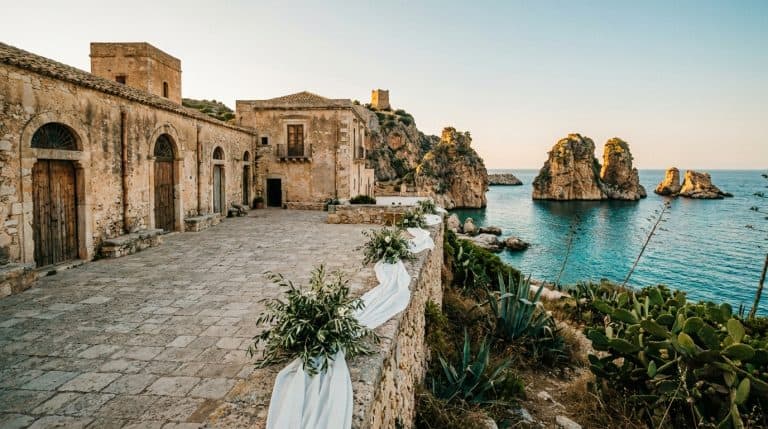 Tips
Tips
Getting married at the Tonnara di Scopello - History and Charm of a Unique Location
Tonnara di Scopello: a wedding venue between history, sea, and stone Choosing to get married at the Tonnara di Scopello means […]
Read more