
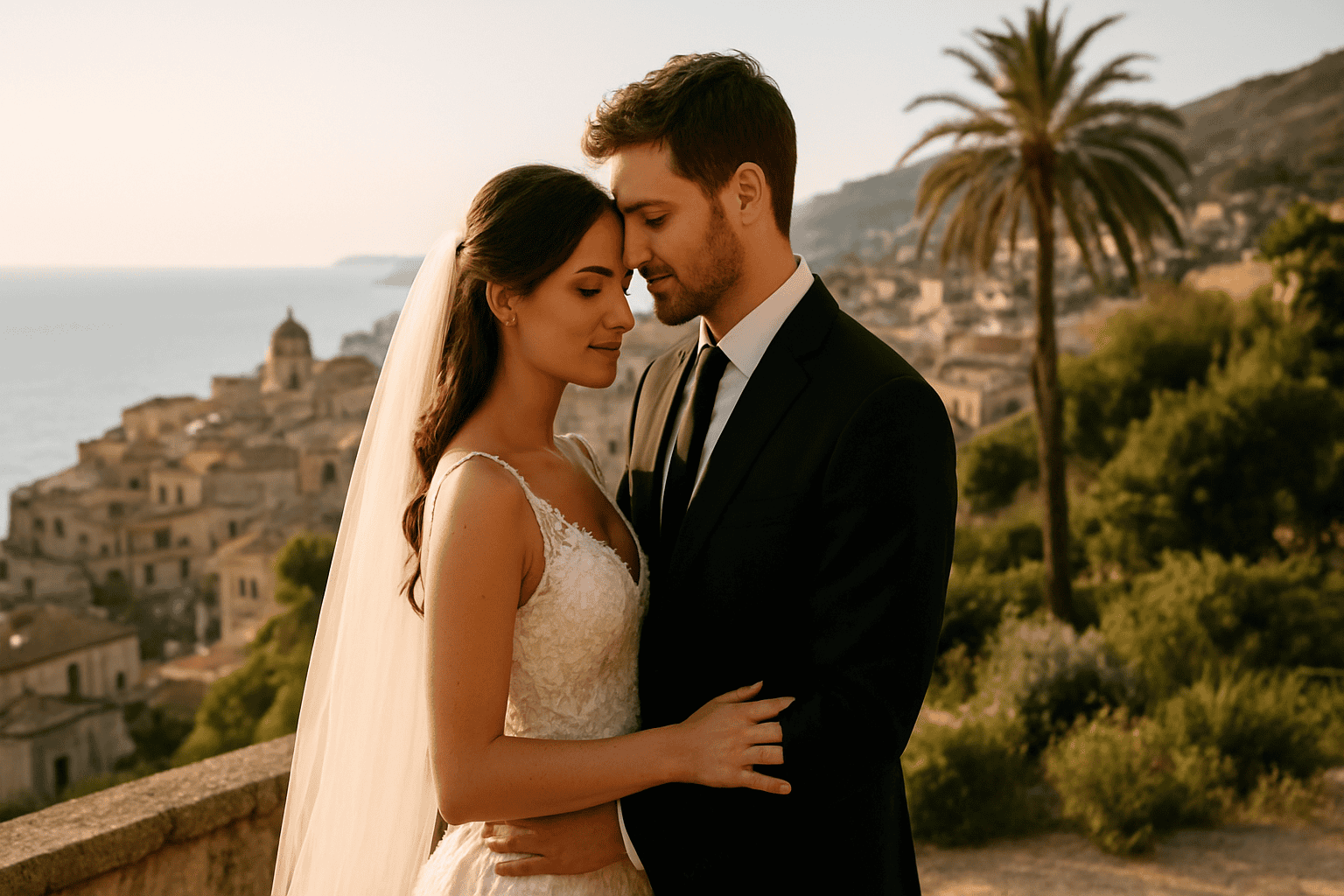
Why Marry in Sicily - Benefits, Atmosphere and Traditions
Why get married in Sicily: an experience that stays with you
Choose by getting married in Sicily means turning your wedding into a story: intense light, Mediterranean scents, ancient stone, the sea nearby, and a culture of hospitality that makes every guest feel part of the celebration. It’s not just a matter of scenery: it’s the combination of atmosphere, traditions and conviviality that makes the island a beloved destination for those who want an authentic, elegant event full of warmth.
In this article you’ll find concrete advantages, style ideas and practical tips to imagine your special day among Sicilian villages, coasts and countryside, with an eye on the event’s coherence: from the ceremony to the reception, down to the details that make the difference.
Advantages of a wedding in Sicily: different settings, same magic
One of the main reasons couples choose the island is the possibility of creating a tailor-made wedding without giving up anything. In just a few kilometers you can go from a seaside view to hills dotted with olive trees, from a Baroque historic center to a terrace with a volcano view.
- Variety of venues: sea, countryside, art cities, villages, historic residences.
- Welcoming atmosphere: the sense of celebration is natural and contagious.
- Strong identity: local colors, flavors and rituals give character to the event.
- Experience for guests: the wedding also becomes travel and discovery.
If you’re starting to gather inspiration, it may help to explore wedding ideas and services to understand how to build a project consistent with your style.
Sicilian atmosphere: light, scents and Mediterranean rhythm
Sicily has a quality of light that changes the perception of spaces: it makes whites brighter, colors fuller, skin warmer in photos. Added to this is a sensory backdrop of orange blossom, citrus fruits, aromatic herbs and sea salt. The result is a wedding you can “feel” even before you see it.
To enhance this atmosphere, a simple but refined approach often works: natural materials, palettes inspired by the land and handcrafted details. Elegance here doesn’t need excess: it’s built with coherent, well-balanced choices.
Palette and style: from Baroque to Mediterranean minimalism
Sicily lends itself to very different styles. Some couples love to emphasize the decorative richness of historic settings; others prefer a warm minimalism, made of linen, ceramics, and Mediterranean greenery.
- Baroque chic: matte gold, ivory, candles, statement arrangements.
- Contemporary Mediterranean: lime white, deep blue, terracotta, citrus.
- Elegant rustic: wood, olive, natural fabrics, warm lights.
If you want a strong common thread, it can be helpful to start from a symbolic element (sea, citrus, majolica tiles, lava stone) and build invitations, flowers, and table settings around it.
Sicilian wedding traditions: symbols, gestures, and conviviality
Le Sicilian traditions can be incorporated into the wedding in a discreet and refined way, without turning the event into a reenactment. The best idea is to choose a few authentic elements and integrate them tastefully, so they are understandable and enjoyable even for guests coming from elsewhere.
Among the most beloved references are the details tied to hospitality: small gestures that make guests feel “at home.” In Sicily, the table is also a language: it tells of generosity, celebration, sharing.
Welcoming guests: making them feel part of the celebration
A wedding in Sicily He often manages to create a family atmosphere even with many guests. You can amplify this feeling with simple choices:
- Welcome moment before the ceremony or the reception, with a dedicated corner.
- Personalized place cards that echo the theme or the area.
- Opening rituals (a toast, a dedication, a planned entrance) to set the pace.
To build a harmonious event, it can be useful to compare styles and solutions in the section inspirations for setups and decorations.
Wedding venues in Sicily: sea, villages, and countryside
Choosing the venue is the first big “yes” after the couple’s. In Sicily, the variety is an advantage, but it can also create indecision: better a terrace by the sea or a baglio in the countryside? A historic palace or a Mediterranean garden?
The advice is to start from the experience you want to create: intimate and cozy, or festive and dynamic; elegant and formal, or relaxed and convivial. From there, everything becomes simpler: timing, music, reception style, even the attire.
Seaside wedding in Sicily: romance and natural scenery
The sea is a presence that needs no introduction: it adds depth to photos, accompanies the ceremony with a natural sound, and makes every moment more cinematic. If you choose this option, carefully consider how to manage the spaces between the ceremony, aperitif, and dinner, to avoid awkward transitions.
For an elegant result, these often work well: clean lines, light flowers and a palette that dialogues with the horizon. If you want specific elements (seating, arches, textiles), check the product sheet for availability and variations.
Countryside wedding: farmhouses, vineyards, and olive groves
The Sicilian countryside is perfect for those who dream of a warm, authentic wedding, with a more relaxed pace. Here the celebration can unfold in several “chapters”: an outdoor ceremony, an aperitif among the trees, dinner under warm lights, cake cutting in a scenic corner.
In these settings it’s important to take care of the lighting and table layout to create an enveloping atmosphere. A touch that almost always works: natural materials and handcrafted details, for elegance without rigidity.
Historic centers and art architecture: the charm of Sicilian cities
If you love an urban setting and culture, historic centers offer iconic views: stairways, courtyards, exposed stone, impressive facades. Here the style can become more tailored: invitations, palette, and flowers can echo architectural motifs, the colors of majolica tiles, or Baroque details.
For those who want a wedding with a strong identity and photos with an editorial feel, this is a choice that pays off. If you’re considering a more structured project, you can explore further the support of a wedding planner to coordinate timing and vendors smoothly.
When to get married in Sicily: how to choose season and times
Sicily offers many possibilities throughout the year, but choosing the right period depends above all on the kind of experience you want: more intimate and soft, or lively and bright. The ceremony time also greatly affects the perception of the event and the photos.
- Spring: fresh colors, intense scents, romantic atmosphere.
- Summer: energy, long days, perfect for evening events.
- Autumn: warm tones, golden light, a more enveloping mood.
A useful suggestion: if you want a celebration that builds in intensity, consider a late-afternoon ceremony and a reception that comes alive with the lights of the evening. For details like decorative lights, candles, or scenic solutions, check the product sheet for the recommended effect based on the space.
Ideas for an elegant Sicilian wedding: details that tell the island’s story
A wedding in Sicily can be elegant without losing authenticity. The key is choosing details that speak of the place in a refined way: not “Sicily theme” in a literal sense, but suggestions that emerge in the materials, colors, and guests’ experience.
Setups and mise en place: balance between tradition and design
The table is one of the focal points of the reception. For a harmonious result, choose a few standout elements and let the setting breathe. Some ideas that work well:
- Centrepiece with Mediterranean greenery and seasonal flowers.
- Place cards with calligraphy or handcrafted details.
- Natural textures (linen, ceramic, glass) for a tactile beauty.
If you want to create a complete coordinated set, you can explore invitations and coordinated graphic items to keep consistency between invitations, menus, and seating chart.
Flowers and scents: Sicily through the senses
Flowers are not just decoration: they define atmosphere and visual rhythm. In Sicily, inspiration often comes from the landscape: citrus, deep greenery, sunny or dusty tones. Even the choice of scents (candles, essences, soaps for the wedding bag) can become a discreet signature of the event.
If you are selecting specific elements for the ceremony or the reception, check the product sheet for available colors and finishes, so as to avoid unwanted color breaks.
Organizing a destination wedding in Sicily: how to make everything easy for guests
When guests arrive from out of town, the wedding becomes a little journey. What makes the difference is the clarity of the information and the care of the experience. There’s no need to complicate things: just design a straightforward path, with well-spaced moments and easy-to-follow directions.
- Communication: invitations and a website/event page with essential, up-to-date details.
- Timing: leave some buffer between appointments to reduce stress and delays.
- Extra moments: an informal welcome or a final farewell can make all the difference.
For those who want an event coordinated in every detail, it can be helpful to consult wedding planning and coordination services to manage the schedule, vendors, and setups with a single, unified vision.
Frequently asked questions about why to get married in Sicily
If you are considering Sicily as the setting for your wedding, it’s normal to have practical doubts in addition to excitement. Below you’ll find quick answers to the most common questions: from choosing the location to the style, all the way to the guests’ experience.
A Sicily wedding by ChiaraB Events: create your style, stress-free
If you want to turn the idea of getting married in Sicily into a well-curated, harmonious event that is truly yours, discover ChiaraB Events’ proposals and inspiration: choose the category or brand that best matches your mood and build a project that speaks about you, from decorative details to the direction of the entire day.
FAQ
Why choose Sicily for a destination wedding?
Because it offers very different settings (sea, countryside, art cities) and a Mediterranean atmosphere made of light, hospitality, and traditions. With good management, the experience for guests becomes simple and memorable.
What are the most suitable locations to get married in Sicily?
It depends on the style: by the sea for a natural and romantic setting, in the countryside for a warm and convivial mood, in historic centers for an elegant and cultural feel. The best choice is the one consistent with the experience you want to create.
How to include Sicilian traditions without overdoing it?
Choose a few authentic, tasteful elements with integrity: a welcoming moment, handcrafted details, echoes in the colors or in the table setting. The goal is to evoke the territory, not to "theme" the event in a forced way.
Which setup style works best in Sicily?
Both baroque chic and Mediterranean minimal work. In general, natural materials, palettes inspired by the landscape, and good evening lighting greatly enhance Sicilian settings.
How to make the wedding comfortable for guests coming from out of town?
With clear information, a schedule with buffers between the main moments and small welcoming touches (welcome moment, place cards, simple directions). If you want full coordination, consider wedding planning support.
From the blog
 Tips
Tips
Wedding Ideas: Trends and Tips for a Perfect Wedding
Organizing a wedding today means choosing among endless possibilities without losing sight of what really matters: telling your […]
Read more Tips
Tips
Getting married on Lake Garda: the perfect wedding between water and mountains
Between luminous shores, stone villages, and mountain profiles that change color with the sun, getting married on Lake Garda […]
Read more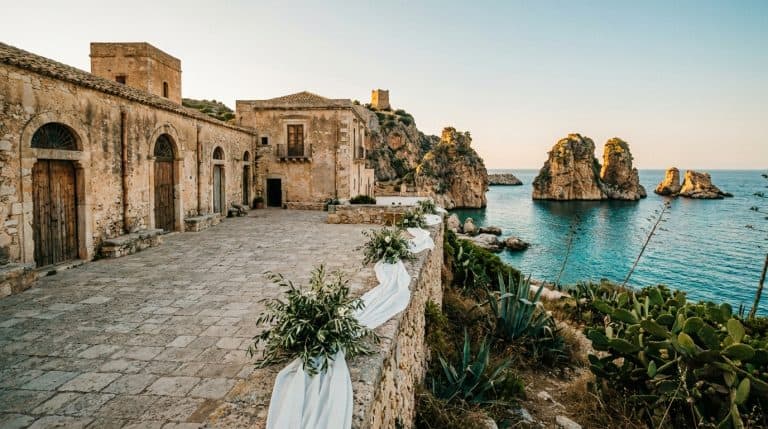 Tips
Tips
Getting married at the Tonnara di Scopello - History and Charm of a Unique Location
Tonnara di Scopello: a wedding venue between history, sea, and stone Choosing to get married at the Tonnara di Scopello means […]
Read more