

How much does a Wedding Planner cost in Italy - Price Bands and Variables
Understand how much does a wedding planner cost in Italy does not mean looking for “a number”, but correctly reading everything that lies behind a service that combines design, management, and coordination. Two couples can have similar needs on paper and receive very different quotes: what changes is the type of support required, the complexity of the event, the time of year, the location, and even the way you want to experience the planning (with more autonomy or with full direction).
In this guide you’ll find a clear overview of the price ranges understood as the logic behind building the quote and the variables that truly make an impact. The goal is to help you ask better questions, compare proposals correctly, and choose the right professional without surprises.
How much does a wedding planner cost in Italy: what are you really paying for
The cost of a wedding planner is not just “time spent looking for vendors”. In a well-structured service, you’re investing in a combination of activities that often aren’t visible, but that directly affect peace of mind, quality, and risk management.
Design and overall vision
A wedding planner works on concept, style, and consistency of the event: from the overall atmosphere to the details that tie together the venue, setups, timing, and hospitality. This phase reduces indecision and second thoughts, which are among the main causes of extra costs and stress.
Vendor selection and coordination
The difference isn’t “having a contact list”, but knowing how to to select e coordinating professionals compatible with budget, style, and logistics. A quote may include managing contacts, comparing proposals, checking deadlines, and operational alignment among multiple teams.
Operational planning and time management
Schedule, site inspections, calls, checklists, priority management: organizing a wedding is a real project. The value lies in turning decisions and wishes into an executable plan, with buffers and alternatives.
Coordination on the day of the event
The “day-of” isn’t just being present: it’s direction. It means overseeing timing, setups, arrivals, unforeseen issues, and changes of plan, so that you and your guests can enjoy the day without having to solve problems.
Price ranges: how to interpret them without numbers
There is no universally “right” range: there is the one consistent with the level of support and complexity. In the absence of universally valid public prices, it’s useful to think in terms of service models (which then are reflected in the cost ranges).
Consulting and support
For those who want to organize independently, but with guidance on crucial choices. It generally includes consultation sessions, plan review, suggestions on priorities and critical issues. It is suitable for couples who have the time, energy, and desire to directly manage vendors and logistics.
Partial planning
The wedding planner steps in on certain areas: for example, selecting specific vendors, defining the timing, or managing part of the logistics. It is a flexible formula: the cost depends greatly on which blocks are entrusted and how complex they are.
Complete organisation
It is the most structured solution: from the initial design to directing the day itself. The cost range is higher because the amount of activities, organizational responsibility, and continuity of work over time increase.
Coordination of the wedding day (or week)
Often requested even by those who have organized everything: it is needed to turn plans into execution, manage timing and vendors, and handle unexpected issues. In some situations it can extend to multiple days (welcome, side events), affecting the overall commitment.
Variables that influence the cost of a wedding planner
When you compare quotes, don’t stop at “what it includes”: also ask such as how it is managed. Two proposals may seem similar, but differ in method, availability, number of revisions, presence at the venue, and level of coordination.
Number of guests and complexity of the experience
More guests doesn’t just mean more chairs: it means more management of flows, timing, welcoming, communications, and possible variables. Even an intimate event can be complex if it includes multiple moments, venue changes, or special requests.
Venue: logistics, access, and operational constraints
A “simple” venue can reduce the need for coordination, while a venue with complex access, tight setup times, or many areas to manage may require more presence and more planning. If the venue imposes specific procedures, check the product sheet or in the documentation provided by the facility.
Time of year and availability
Seasonality affects the availability of professionals and vendors and the complexity of scheduling and site visits. In some periods the calendar is fuller and management requires more lead time and more coordination.
Style and level of customization
A simple wedding, with straightforward choices, tends to require less design work. Conversely, an event with many customizations, bespoke details, and more scenic moments increases the work of ideation and quality control.
Number of vendors involved
Each vendor adds communications, contracts, deadlines, alignments, and possible interferences between tasks. It’s not just “how many”, but how much they need to integrate with each other (for example setups, lighting, music, timing).
Destination and travel
If the wedding planner has to travel, attend out-of-area site visits, or manage a destination event, timing and organization change. Here too, the difference is made by the level of presence required and the duration of the event.
What can be included (or excluded) in a wedding planner quote
To avoid misunderstandings, it’s helpful to ask for a clear description of the included items. Not all agencies work the same way: some include many activities in a package, others tailor them based on needs.
Activities often included
- Initial brief and defining priorities
- Proposal of concept and style guidelines
- Vendor research and selection with proposal comparison
- Management of the timing and deadlines
- Operational coordination pre-event and on location
Items that may be extra or on request
- Management of related events (welcome, brunch, etc.)
- Support with paperwork, permits, or procedures specific to the venue (if applicable: check the product sheet)
- Presence of a larger team on the day
- Highly customized designs or special workmanship
The point isn’t “what is right to pay,” but having a clear scope: what is managed, with what timelines e with what level of oversight.
How to compare different quotes without being misled
When two quotes are far apart, it’s often not because one “costs too much” and the other “is a bargain”: it may be that they’re describing different services. Here’s how to read between the lines.
Ask for deliverables and working method
Useful questions:
- What are the steps of the process (from the first call to the day of the event)?
- How are concept and timeline revisions handled?
- Who coordinates the vendors and how often?
- On the day, who is present and with what responsibilities?
Check the level of coverage for unexpected issues
A higher cost can reflect greater responsibility: plan Bs, delay management, coordination of setup and teardown, delivery checks. Ask for concrete examples of how a weather change or a cascading delay is handled.
Watch out for poorly defined “inclusions”
Phrases like “full support” or “total management” are only useful if accompanied by a clear list. If something isn’t specified, ask to have it explicitly included in the document.
When it really makes sense to hire a wedding planner
It’s not a “luxury” or “fashion” choice: it’s a process choice. It’s especially worthwhile when you want to reduce mental load, mistakes, and wasted time, or when the event is complex.
- You have little time to manage calls, quotes, and deadlines
- You want a coherent project and not a set of disconnected choices
- There are multiple venues or multiple moments in the same day
- You want to experience the wedding without having to coordinate people and vendors
- You’re organizing from afar or in a different destination
Questions to ask before signing: practical checklist
A good quote shouldn’t just “appeal to you”: it should protect you. These questions help clarify expectations and boundaries.
- What is the scope of the service and what remains our responsibility?
- What are the response times and communication channels?
- How is vendor selection handled: do you propose alternatives and reasons?
- Who is the point person on the day and what happens if they’re not available?
- Is an operational plan with a shared timeline included?
- Are there conditions tied to the venue or the period? If so, check the product sheet or in the venue’s documentation.
Useful resources and further reading for organizing the wedding
If you want to explore other aspects of planning, you can dive deeper into these topics:
- How to choose the wedding venue: practical criteria
- Wedding timeline: how to build a realistic schedule
- Wedding budget: how to define priorities and expense items
- Wedding day coordination: what to really expect
- Style and moodboard: how to make setups and details consistent
CTA: find the right wedding planner for your wedding
If you want tailored support to understand which service best suits your event and receive a proposal consistent with your priorities, explore the solutions by ChiaraB Events and request a contact: starting with the right questions is the easiest way to avoid surprises and plan with peace of mind.
FAQ
What is the difference between a wedding planner and a wedding day coordinator?
The wedding planner handles the organization (partial or complete) and builds the project over time; the day-of coordinator focuses on the event’s operational direction, managing timing, vendors, and unforeseen issues on site.
What does the cost of a wedding planner in Italy mainly depend on?
It mainly depends on the level of support required (consulting, partial, full, day-of), the logistical complexity, the number of vendors involved, the degree of customization, and any travel or multiple event days.
Is it possible to request a custom service instead of a standard package?
Yes, many companies offer modular packages. It’s important to clearly define what is included, what is excluded, and which activities are considered extras, so you can compare different proposals correctly.
How can I compare two wedding planner quotes without looking only at the total?
Compare scope and method: deliverables, coordination frequency, on-site presence, handling of unforeseen issues, number of revisions, and operational responsibilities. If something isn’t specified, ask to have it put in writing.
When is it worth hiring a wedding planner even for a small wedding?
It’s worth it when you want to reduce stress and mental load, when you have little time, when there are multiple moments or locations, or when you want a very cohesive project with attention to detail.
From the blog
 Tips
Tips
Wedding Ideas: Trends and Tips for a Perfect Wedding
Organizing a wedding today means choosing among endless possibilities without losing sight of what really matters: telling your […]
Read more Tips
Tips
Getting married on Lake Garda: the perfect wedding between water and mountains
Between luminous shores, stone villages, and mountain profiles that change color with the sun, getting married on Lake Garda […]
Read more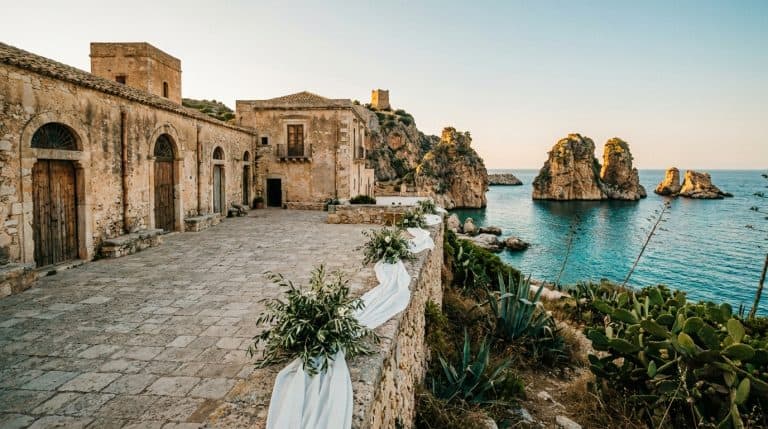 Tips
Tips
Getting married at the Tonnara di Scopello - History and Charm of a Unique Location
Tonnara di Scopello: a wedding venue between history, sea, and stone Choosing to get married at the Tonnara di Scopello means […]
Read more