
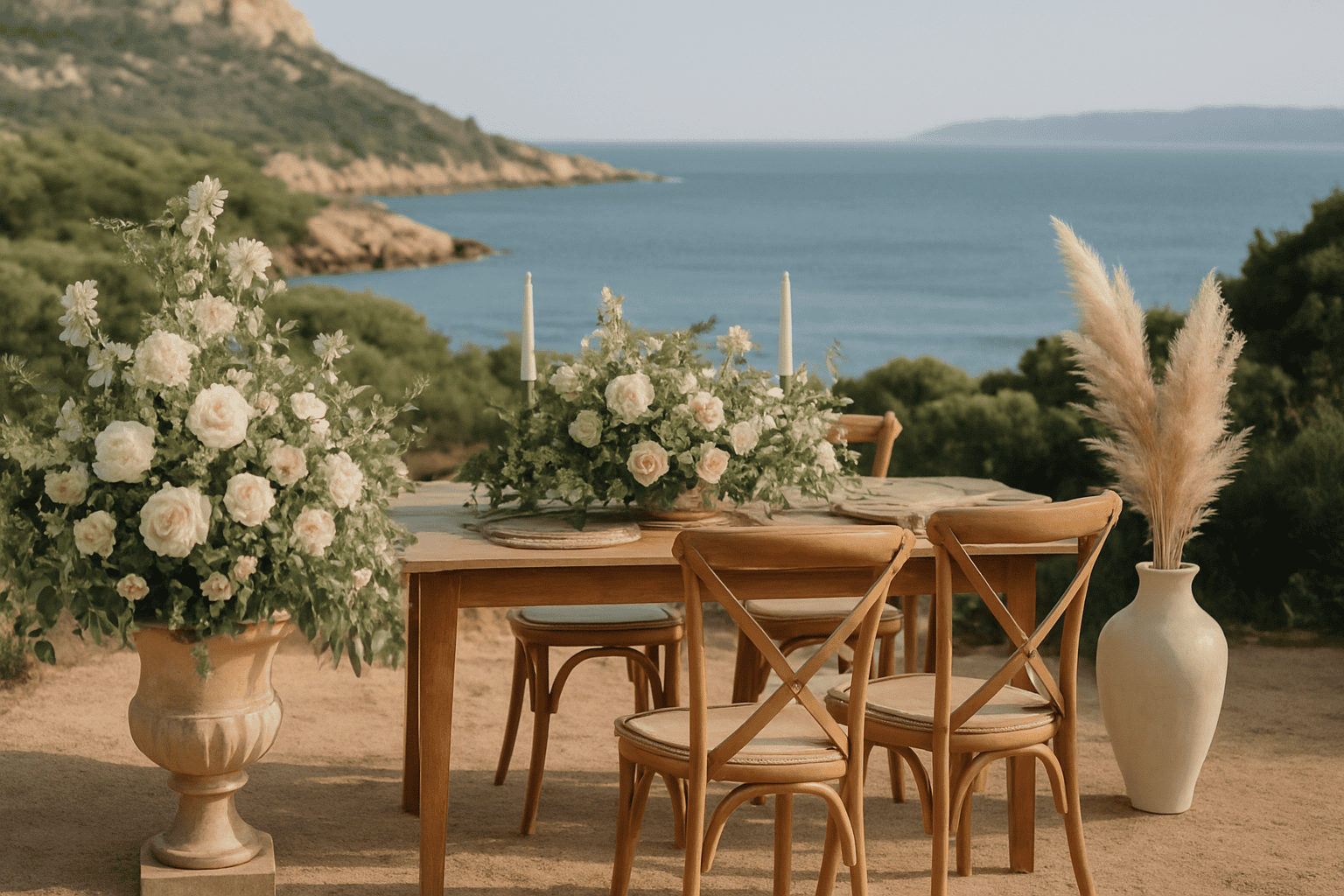
Mediterranean setups in Sardinia: palettes, materials, and seasonal flowers
Mediterranean wedding design in Sardinia: why it really works
A Mediterranean setup in Sardinia is not a “trend” to replicate: it is a way of staging the territory with balance, light, and material. Here the landscape already does half the work: the sea that changes shades throughout the day, the Mediterranean scrub, the light stone, the scents of myrtle and rosemary. The project’s task is to harmonize these elements without overloading them, creating an aesthetic that is cohesive and photogenic, but above all authentic.
When it comes to Mediterranean wedding design Sardinia, the central idea is one: let the location guide the choices. The palette, materials, and flowers must not “compete” with the scenery, but rather amplify it with thoughtful details. The result is a style that can be:
- Luxury, if you work with premium textures, lighting, and sculptural floral compositions;
- Intimate, if you choose long tables, candles, ceramics, and seasonal flowers in measured quantities;
- Destination, if you design a complete experience for guests arriving from elsewhere (logistics, welcome, extra moments).
To better understand the island’s geographic and cultural context, you can consult Insight: Sardinia (Wikipedia).
Goal and style: how to define the creative direction
Before choosing flowers or table settings, you need a clear creative direction. An effective method is to start with three practical questions:
- What is the feeling you want to leave guests with: sunny and convivial, elegant and airy, or “Mediterranean vacation”?
- Which elements of the location are already dominant (stone, wood, sea view, garden, architecture)?
- What kind of light will you have: full sun, golden hour, evening with artificial lighting?
From here you build a Mediterranean palette and a selection of materials that also work in photos: colors must hold up against backlight, fabrics must not “disappear” into the background, flowers must maintain presence without becoming bulky.
) has a reason: to enhance the location and make the experience readable, smooth, memorable.
In Sardinia, logistics greatly affect the project: distances, transfers, delivery times, and supplier availability vary by area. A well-executed Mediterranean setup requires planning and direction that brings aesthetics and operations together.
Some typical aspects to consider:
- Transport of furniture and flowers: access, loading/unloading times, any dirt tracks;
- Wind in coastal areas: choice of candles, structures, and stable arrangements;
- Heat in some seasons: management of flowers and sensitive materials;
- Timings of the venue: setup and teardown time windows to be respected.
The point isn’t to complicate things: it’s to prevent a technical detail from ruining the final effect. A “clean” Mediterranean project is often the one with the most precise logistics behind it.
Step-by-step planning for Mediterranean setups in Sardinia
Good planning allows you to choose calmly palette, materials and wedding flowers Sardinia in a way that is consistent with the season and the venue. Below is a practical outline, adaptable to your case.
Realistic timeline: from 12 to 2 months before
12–10 months before
- Definition of the concept: Mediterranean style, level of formality, color mood.
- Venue selection and space check: ceremony, aperitif, dinner, plan B.
- First draft of a Mediterranean palette: 3–5 guiding colors + neutrals.
9–7 months before
- Selection of key suppliers: floral design, lighting, furniture, stationery.
- Materials study: fabrics, ceramics, glass, metals, woods.
- Definition of the “scenographic moments”: entrance, imperial table, drink corner, cake cutting.
6–4 months before
- Composition tests: centerpiece height, flower density, candles, place cards.
- Choosing flowers based on the season and performance: better a few strong elements than too many micro-details.
- Alignment with catering and venue on layout and timing.
3–2 months before
- Final confirmation of the project: palette, materials, quantities, light points.
- Definition of plan B: alternative spaces, anti-wind solutions, coverings.
- Operational brief: who does what, when they come in, when they leave.
Checklist of essential suppliers (for a consistent Mediterranean mood)
- Floral designer: essential for selecting seasonal flowers and building volumes suitable for heat/wind.
- Furniture rental and table setting: seating, tables, textiles, candles, vases, support elements.
- Lighting: string lights, warm spots, protected candles; in the evening it “creates” half the atmosphere.
- Stationery and signage: menu, table, placeholders, directional signs in style.
- Coordination: a direction that keeps timings, access, setups and unforeseen events together.
Guest management and transfers: design and logistics must talk to each other
In a destination wedding, the setup does not only come alive during dinner: it accompanies the guests from the very first moment. If you plan transfers, consider that hospitality can also become part of the aesthetic project: welcome sign, flavored water corner, fans, cushions for the ceremony, clear directions. Simple details, but consistent with the Mediterranean palette.
If you’re setting up the organization in a structured way, this guide can help you bring order among priorities and steps: How to organise a wedding.
Mediterranean palette: colors, materials and textures that enhance Sardinia
La Mediterranean palette it’s not just “white and blue”. In Sardinia you can work with many shades, especially if you want a personal result and not a stereotyped one. The secret is to choose a neutral base and add accents that echo the landscape: sand, salt, stone, sky, vegetation, sunset.
Three color directions (with different effect in photos)
- Warm neutrals + greens: ivory, sand, linen, olive/sage green. Refined, natural, perfect with stone and wood.
- White + dusty blue: evokes the sea without being “nautical”. Works well with ceramics and transparent glass.
- Mediterranean sunset: terracotta, peach, soft coral, amber, touches of light burgundy. Ideal for golden hour and outdoor dinners.
To avoid the “too busy” effect, use a simple rule: one leading color, one supporting and one accent, plus a neutral. That way even the flowers and materials can breathe.
Materials: how to choose without losing coherence
Mediterranean design works when surfaces speak to each other. Some materials are particularly suitable because they reflect the light softly and remain elegant even in informal settings:
- Linen and cotton: tablecloths and runners with visible texture, preferably in natural tones.
- Handcrafted ceramics: plates and details with matte or glazed finishes (check the product sheet to see if they are suitable for outdoor use).
- Clear or amber glass: lightens the table and enhances candles and flowers.
- Warm metals: brass or soft gold for a luxury touch without excess.
- Wood: bare tables or natural wood details for an “organic” result.
- Stone: if the venue has stone walls or floors, avoid “covering” everything: let it speak.
A detail often underestimated: in windy areas, prefer stable and low elements
(heavier vases, protected candles, compact arrangements). The Mediterranean is beautiful also because it is alive: the design must know how to manage it.
For Wedding flowers Sardinia: seasonality, scents and arrangements wedding flowers Sardinia
the key word is seasonality. Not for a matter of “principle”, but because the performance in a Mediterranean context (heat, wind, intense light) changes a lot. Choosing flowers suited to the season means getting arrangements that are fresher, more stable and more consistent with the atmosphere.
Spring: lightness, greenery and bright tones
- In spring, arrangements that seem to have “grown” naturally work well: soft greens, light flowers, pastel accents. The ideal effect is airy, with volumes that are not too compact.Recommended palette
- : ivory, cream, sage green, butter yellow, blush pink.Arrangement style
: low centerpieces with movement, arches or light installations for the ceremony.
Summer: resilience and controlled scenic impact In summer, the floral design must take into account the hottest hours and exposure to the sun. Here it is useful to work with more graphic volumes
- In spring, arrangements that seem to have “grown” naturally work well: soft greens, light flowers, pastel accents. The ideal effect is airy, with volumes that are not too compact.and with elements that hold up well outdoors, alternating flowers and greenery intelligently.
- : ivory, cream, sage green, butter yellow, blush pink.: white, sand, olive green, coral/soft terracotta touches.
If you’re planning a ceremony in broad daylight, also consider “comfort” details coordinated with the design: fans, water, light shade. They’re not extras: they’re part of the experience.
Autumn: texture, depth and warm colors
Autumn is perfect for a more tactile Mediterranean feel: terracotta, soft rust, amber, dark green. Flowers can become more structured and tables richer in texture (heavier linen, amber glassware, lots of candles).
- In spring, arrangements that seem to have “grown” naturally work well: soft greens, light flowers, pastel accents. The ideal effect is airy, with volumes that are not too compact.: warm nude, terracotta, soft burgundy, forest green, soft gold.
- : ivory, cream, sage green, butter yellow, blush pink.: fuller centerpieces, a mix of flowers and foliage with controlled contrasts.
Winter (or cooler periods): elegant minimalism and warm light
If the date falls in a cooler period, the Mediterranean style can become essential and sophisticated: lots of greenery, few statement flowers, and great attention to light. The goal is to create visual warmth with candles, fabrics and warm metal details.
- In spring, arrangements that seem to have “grown” naturally work well: soft greens, light flowers, pastel accents. The ideal effect is airy, with volumes that are not too compact.: ivory, deep green, stone gray, soft gold, plum touches.
- : ivory, cream, sage green, butter yellow, blush pink.: clean lines, targeted installations, lots of candlelight.
Mediterranean scents and botanicals: the detail that makes everything feel more real
In Mediterranean wedding design, scent is an element of memory. Adding aromatic botanicals (in a measured way) can give identity to the setup: there’s no need to overdo it, just a hint in the right places. Here too, coherence is everything: if you choose an elegant mood, keep aromatics as an accent, not as an intrusive protagonist.
Budget and priorities: where to invest to maximize the scenic effect
A well-designed Mediterranean setup doesn’t depend on “adding more”, but on spending better. Setting priorities helps you achieve a harmonious result even when you have to make choices.
Elements that most impact the visual result
- Evening lighting: transforms the space and makes everything more intimate.
- Floral design: defines the style, colors and photography of the event.
- Textiles: tablecloths, runners, napkins; they immediately change the perception of “care”.
- Furniture: seating and tables consistent with the location (rustic chic, contemporary, classic).
- Focal elements: ceremony, seating chart, sweetheart table or a main installation.
Where to invest for a “high-end” Mediterranean effect
If you want an elegant result and not a “postcard-like” one, focus your energy on:
- A well-balanced Mediterranean palette (few colors, repeated consistently).
- Real materials and textures: linen, ceramics, glass, warm metals.
- One main statement focal point: better one memorable installation than lots of disconnected details.
Mistakes that increase costs (and often worsen the design)
- Adding elements at the last minute without a design logic: you risk incoherence and waste.
- Too many colors: the table becomes confusing and you lose the “sophisticated Mediterranean” effect.
- Centerpieces that are too tall or unstable in windy areas: beyond the practical risk, they create stress for guests.
- Ignoring the light: even a beautiful setup can look flat without a lighting plan.
Plan B and risk management: wind, weather, and venue constraints in Sardinia
In Sardinia the weather can change quickly, especially in coastal settings. A good project doesn’t just “hope for sun”: it integrates a Plan B that maintains the style even if the scenario changes.
Weather: alternative solutions without losing the atmosphere
- Covers and indoor spaces: define in advance how the layout transforms (ceremony, aperitif, dinner).
- Anti-wind elements: glass candle holders, heavier vases, more compact arrangements.
- Suitable materials: some fabrics or papers can suffer from humidity and sea air; check the product sheet.
Permissions and constraints of the location: what to ask before
Each venue has different operating rules. Before finalizing the design, clarify:
- access times for setup and teardown;
- power outlets and limits for lighting;
- areas where structures cannot be fixed or elements hung;
- alternative plans in case of bad weather.
This information doesn’t limit creativity: it makes it achievable.
Contracts and deposits: how to protect the project (without technicalities)
When you coordinate multiple suppliers, clarity prevents misunderstandings. Make sure every agreement clearly states: what is included, delivery times, setup responsibilities, change conditions. If a detail isn’t explicitly stated, ask for it to be put in writing: it’s the simplest way to reduce risks and stress.
Guest experience: Mediterranean setups that enhance hospitality
A successful wedding isn’t just beautiful: it’s easy to experience. In Mediterranean design, hospitality can be integrated elegantly, without looking like “logistics in disguise”.
Welcome moment, activities, and small rituals
The welcome is the first “set” of the experience. Some ideas consistent with a Mediterranean mood:
- Welcome corner with water and glasses coordinated to the palette;
- Seating area shaded with natural textiles;
- Scented details with Mediterranean botanicals used as an accent;
- Clear signage and in style, to guide guests through the moments.
Transportation, shuttles, and parking: how not to make them “break away” from the mood
If you plan shuttles or distant parking, take care of communication and the welcome. An elegant sign, essential directions, and a well-defined meeting point reduce confusion. Here too, design helps: graphic consistency between invitations, the wedding website, and on-site signage makes everything smoother.
Clear directions and a wedding website: aesthetics and usefulness together
The wedding website (or an equivalent digital system) is useful for centralizing information on schedules, dress code, maps, and transfers. If you set it up with the same visual identity as the event, it becomes part of the project: an extension of the Mediterranean wedding design, not a separate element.
A bespoke Mediterranean project: coherence, light, and seasonality
If you want a setup that truly tells the story of the island — with Mediterranean palette balanced, materials that enhance the location and Wedding flowers Sardinia: seasonality, scents and arrangements chosen with care — the difference is made by the direction: a unique project, built around the season, spaces and the rhythm of the day. To turn ideas and inspirations into a concrete plan (without losing taste and harmony), you can rely on ChiaraB Events and start from a clear vision of the entire event.
FAQ
What is the best Mediterranean color palette for a wedding in Sardinia?
It depends on location and light: warm neutrals (ivory/sand) often work with olive or sage greens; alternatively white with dusty blue for a nod to the sea, or sunset tones (terracotta and peach) for a warmer effect. Ideally, use one main color, one supporting color and an accent, plus a neutral.
How to choose flowers for a wedding in Sardinia without risking that they suffer from heat and wind?
Focus on seasonal flowers and greenery and on arrangements designed for outdoor use: more compact volumes, stable vases, and protected candles. Consider sun exposure and the ceremony schedule, and agree with the floral designer on an operational plan (transport, setup times, any cool staging area).
What materials make a Mediterranean wedding design in Sardinia credible?
Linen and cotton with visible texture, handcrafted ceramics, transparent or amber glass, warm metals like brass, and natural woods. If the venue has exposed stone, it’s best to let it take center stage and choose elements that enhance it instead of covering it.
How to set up a plan B without ruining the Mediterranean style?
Define an alternative layout in advance (indoor or covered spaces) and plan solutions that maintain the same visual identity: unchanged palette, warm lighting, more stable compositions, and consistent signage. Plan B must be designed, not improvised.
What are the most common mistakes in Mediterranean wedding setups in Sardinia?
Using too many colors, adding last-minute details without a design logic, underestimating evening lighting, and choosing centerpieces that are too tall or unstable in windy areas. An elegant Mediterranean design is based on coherence, light, and a few strong elements.
From the blog
 Sardinia
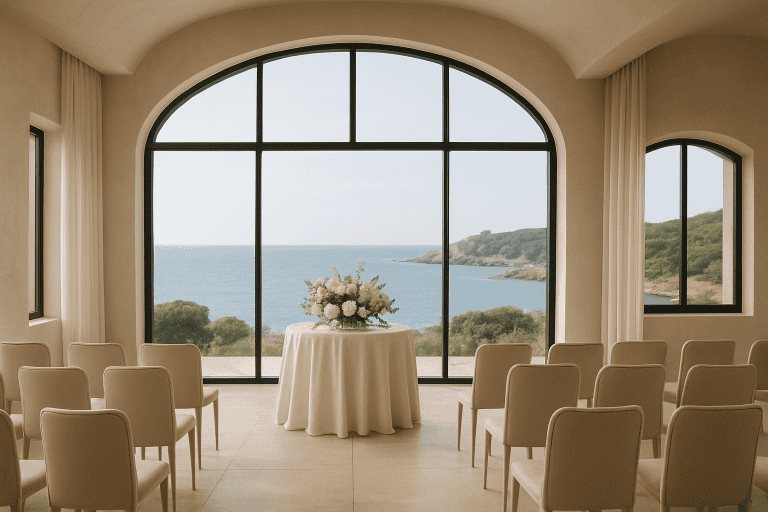
Weather Plan B in Sardinia: indoor alternatives without losing the sea view
Weather Plan B in Sardinia: why opt for an indoor venue with a sea view Organizing a wedding in Sardinia means chasing […]
Read more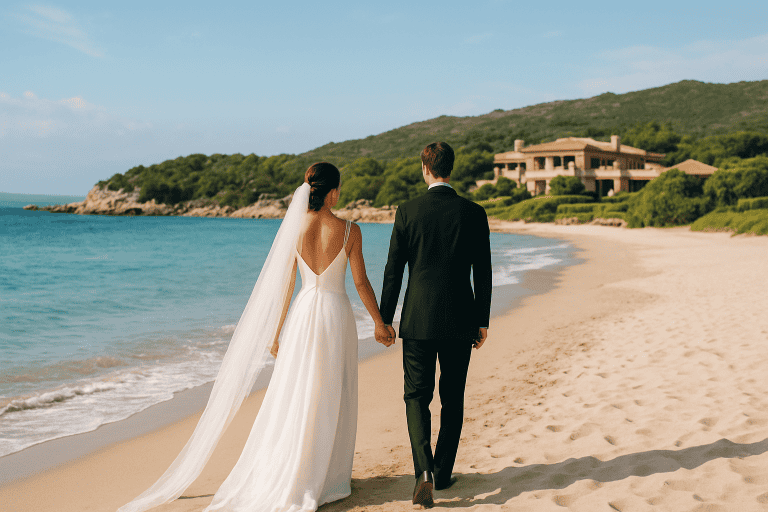 Sardinia
Wedding in Sardinia: exclusive beach or resort? a guide to choosing
Wedding in Sardinia between exclusive beach and resort: how to really choose If you are considering a Sardinia wedding, it is likely that […]
Read more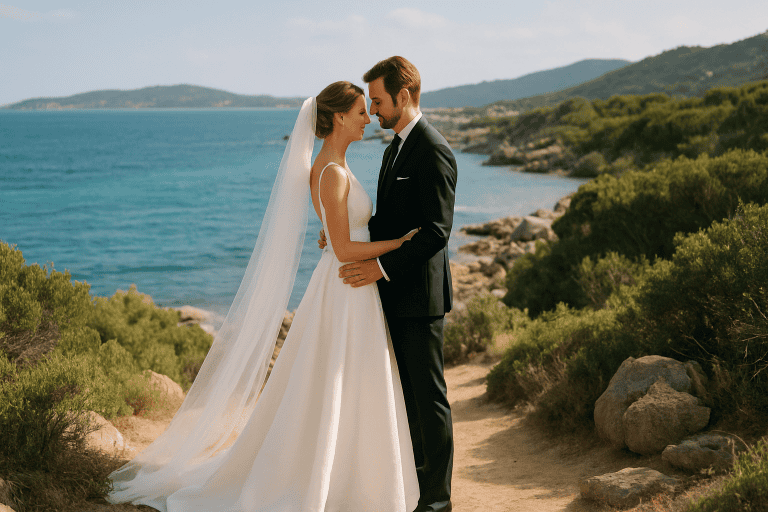 Sardinia
Costa Smeralda Wedding: privacy, budget, and supplier management
Costa Smeralda wedding privacy: what it really means (and what changes in the organization) A Costa Smeralda wedding is not just a choice […]
Read more