




Venice in winter: why it can be the most elegant choice for a destination wedding
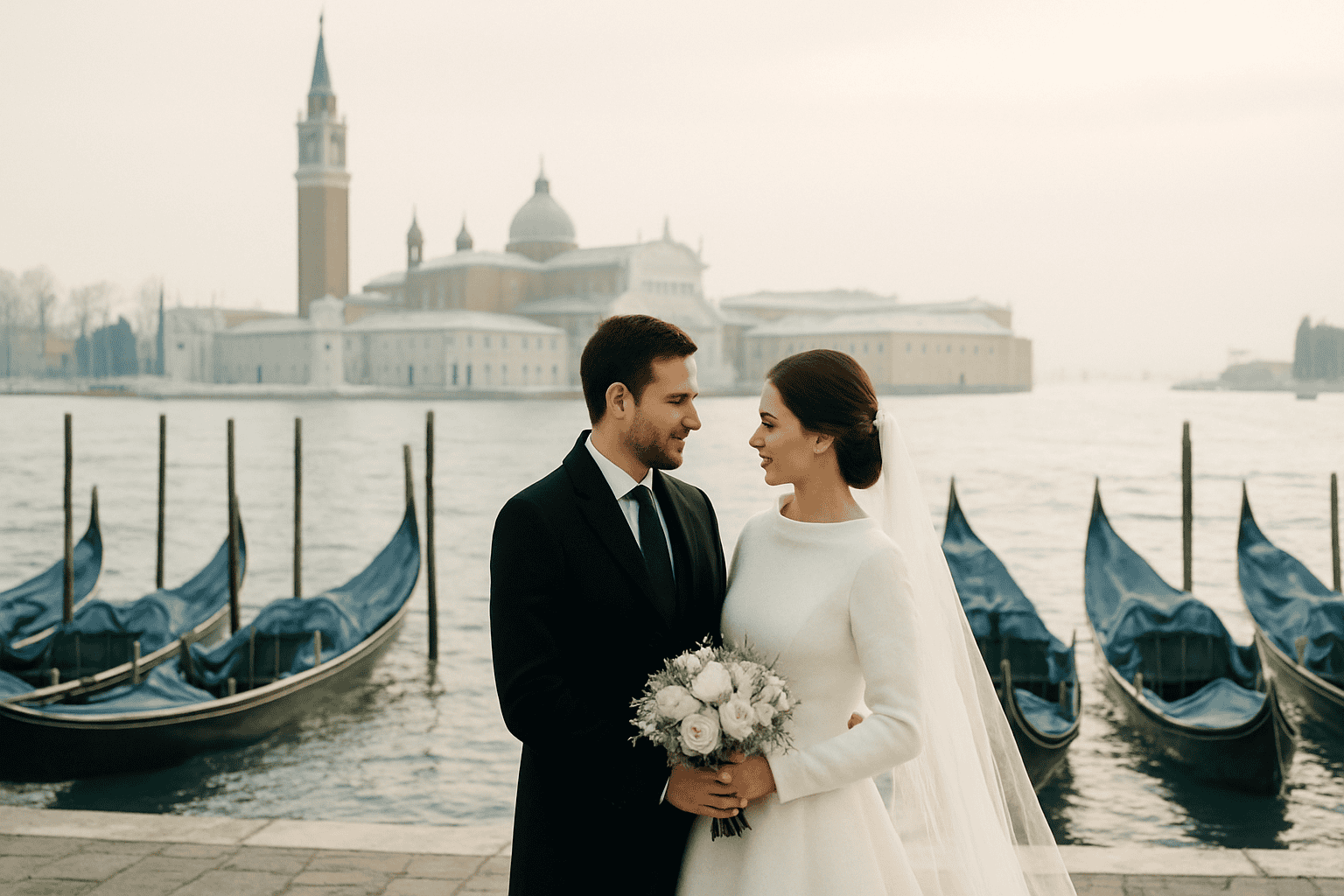
Venice in winter for a destination wedding: why it can be the most elegant choice
Choosing Venice when the days get shorter and the city becomes more rarefied means aiming for a different aesthetic: more intimate, more cinematic, more “editorial”. A winter destination wedding here is not a “reduced” version of summer: it is an experience with its own language, made of soft lights, palaces that look like sets, silent alleys, and a slower pace that favors the quality of time together.
If you are considering a winter wedding in Venice, the idea is not to “challenge the season,” but to design it: choose venues with characterful indoor spaces, build a timeline that enhances natural light, plan an elegant plan B, and take care of hospitality with tailored attention. The result can be surprisingly refined, especially for couples who want an off-season wedding with an international imprint and an authentic atmosphere.
For an overview of the city and its historic districts, you can consult Further reading: Venice (Wikipedia).
Wedding in Venice in winter: goal, style, and real logistics
Goal and style: luxury, intimate, destination
In winter, Venice naturally lends itself to a wedding design that focuses on materiality e atmosphere: velvets, candles, glass, warm metals, flowers with interesting textures, deep palettes (burgundy, forest green, ivory, champagne) or contemporary minimalism with black and white. The point is not to “do a lot,” but to do it well, letting Venetian architecture be part of the story. In this context, every detail becomes essential to enhance the beauty of Venice, creating a balance between elegance and authenticity. The decorations can reflect the richness of Venetian tradition, harmoniously integrating with the historical elements of the city. This approach allows each event to be transformed into a unique and unforgettable experience, in perfect harmony with the enchantment of this magical place.
A winter destination wedding works particularly well if the event is conceived as a weekend experience or as a carefully curated single day: welcome moment, ceremony, reception, and after-dinner in a coherent flow. Winter helps maintain an intimate tone, ideal for those who want a wedding with a private feel, without giving up spectacularity.
What to expect in terms of timing and logistics
Venetian logistics are special all year round, but in winter require even more precise planning. Movements often happen by water and on foot: for this reason, it is essential to build a timeline that minimizes unnecessary transfers and provides clear meeting points. Another key element is the management of outerwear: wardrobe, “touch-up” stations, and small comforts (coordinated umbrellas, blankets, hot drinks) make a difference in the overall experience.
If you are starting to navigate between location, ceremony, and reception, it can be helpful to start with a complete overview: Wedding in Venice: guide.
Step-by-step planning for an off-season wedding in Venice
Realistic timeline (from 12 to 2 months)
Effective planning is not just a to-do list: it is a sequence of decisions where each choice unlocks the next. For a off-season wedding in Venice, a “clean” timeline can follow this logic:
- 12–10 months before: defining style, number of guests, desired period, and location shortlist. In this phase, the tone of hospitality is also set (weekend, single day, micro-wedding).
- 9–7 months before: confirmation of location and key suppliers (planning, photography, video, floral design, catering if planned). The main moments of the day and transfers are outlined.
- 6–4 months before: development of the creative project (palette, mise en place, lighting, stationery), definition of the guest path, first timeline and plan B tests.
- 3 months before: operational confirmations: rooming list, transportation, any pre/post wedding experiences, management of intolerances and preferences, definition of ceremony details.
- 2 months before: finalization of the schedule, call with suppliers, review of the “guest journey,” informational materials and wedding website, final choices on music and entertainment.
The advantage of winter is that you can often work more calmly on the design quality. The risk, however, is postponing: the availability of the most scenic locations and the most requested suppliers is not guaranteed just because it is low season.
Essential supplier checklist
Every wedding has its structure, but in Venice in winter some roles become particularly strategic. In order of impact on the experience:
- Wedding planner/coordinator: to coordinate times, access, transfers, and plan B without stress for the couple.
- Location with strong indoor spaces: salons, historic rooms, environments with character and good acoustics.
- Photo & video team: to enhance low lights and atmospheres; alignment on the mood is important.
- Floral & styling: in winter the scene is built with textures, volumes, and light; the design must dialogue with the interiors.
- Lighting design: candles, light points, lamps, and accents: lighting is part of the aesthetic project.
- Transport: water taxi, boats for guests, any ground shuttles where necessary.
For a more extensive operational list, also useful to not forget the “invisible” details that make the day work, you can consult Organizing a wedding: checklist.
Guest and transfer management
In a winter destination wedding guests often come from different cities and towns: clarity becomes a form of elegance. These work well:
- A simple arrival point (main hotel or meeting point) with schedules communicated in advance.
- “Block” transfers (few, well-coordinated times) instead of difficult-to-manage individual transfers.
- Practical instructions on shoes, outerwear, and walking duration.
When guests feel guided, the atmosphere changes: less anxiety, more willingness to experience Venice with wonder, even on a cold or damp day.
Budget and priorities for a winter destination wedding in Venice
Main expense items (no surprises)
Instead of thinking in terms of individual “items,” it is useful to think in terms of macro-areas that influence the experience. In a winter wedding in Venice, the most determining areas are:
- Location and spaces: quality of interiors, comfort, flexibility for plan B, access logistics.
- Hospitality and transport: water transfers, welcome, management of times and meeting points.
- Setup and lighting: in winter, light builds the atmosphere, so the scenic design is central.
- Photo/video: to tell the city and the event with aesthetic coherence.
- Food & beverage: menu designed for the season, service times, overall comfort.
The difference between a “beautiful” event and a truly memorable one often lies in how these areas interact with each other, not in the sum of individual choices.
Where to invest to maximize the scenic effect
If the goal is elegance, the most effective investment is the one that is perceived without being “shouted.” In winter, three scenic levers almost always work:
- Warm and layered lighting: candles, light points on tables and pathways, accents on architecture and details.
- Materials and textures: important table linens, glassware, ceramics, natural elements, flowers with character.
- A coherent journey: from arrival to the ceremony to the after-dinner, every environment must “speak the same language”.
In practice: better an essential but impeccable project, than a set of disconnected elements. Venice, in this, does not forgive: the city is already a stage, and requires choices up to the mark.
Mistakes that increase costs (and how to avoid them)
Some typical mistakes are not season-dependent, but in winter they emerge more:
- Too many moves: each step adds complexity and risks; reducing the stages makes everything smoother.
- Improvised Plan B: if the alternative is not thought of as a “parallel plan A”, you end up scrambling at the last minute.
- Insufficient guest communicationDelays and disorientation create indirect costs (time, coordination, extra transport).
- Aesthetic choices not suitable for interiors: a design intended for summer can seem cold or empty in historic rooms.
A successful off-season wedding is born from a unique direction: creative and logistical together.
Plan B and risk management: weather, location, and contracts
Weather and truly elegant alternative solutions
Winter weather in Venice can be variable. The key is not to see it as an “enemy”, but as an element to manage with style. Some solutions that elevate the experience:
- Indoor ceremony with iconic views: maintaining the magic of the city without depending on external conditions.
- Scheduled photographic moments: short outdoor windows, with nearby routes and strategic shelters.
- Warm welcome: welcome drink, organized cloakroom, lounge areas, music accompanying entrances.
Plan B must not “seem” like a fallback. It must be a complete project, with its own aesthetic and timeline.
Permissions and constraints of the location
Every Venetian space has different rules and possibilities: access, hours, loading/unloading logistics, use of certain areas, music management. Since these conditions vary greatly, it is important check the product sheet or in the location documentation what the actual constraints are and how to integrate them into the project.
In general, the best strategy is to choose a location that offers:
- Sufficient indoor spaces for all key moments (ceremony, aperitif, dinner, after-dinner).
- Flow solutions between environments (to avoid “dead times”).
- A technical contact person to align timing and setups with.
Contracts and deposits: clarity above all
In a destination wedding, serenity comes from clarity. Before confirming suppliers and locations, it is useful to ensure that the following are defined:
- Included services and extra services (with activation methods).
- Change conditions of the timeline and the number of guests.
- Management of alternatives in case of weather or logistical issues.
It is not a “cold” topic: it is what allows the creative part to express itself without last-minute anxieties.
Guest experience in Venice in winter: hospitality, transport, and communication
Welcome moment, activities and hospitality
A off-season wedding succeeds when guests feel they have been thoughtfully considered. In winter, the best activities are those that respect the city's rhythm and enhance comfort:
- Welcome moment indoor in a suggestive environment, with a convivial and refined tone.
- Micro-experiences before the wedding (guided walk, cultural visit, tasting moment) with realistic timing.
- Hospitality rituals: small attentions in the room, indications on what to bring, useful contacts, and simple schedules.
The secret is not to fill the agenda: Venice in winter is already an experience. Just frame it well.
Transport, shuttles, parking: how to simplify
Managing transport is one of the points that most affects the perception of the event. To simplify:
- Centralize movements when possible: few schedules, clear communication, present contacts.
- Reduce changes: fewer transfers between boat, walk and shuttle means less stress.
- Plan margins in the timeline: Venice requires “human” times, especially with groups.
If some guests arrive by car, it is advisable to provide practical directions in advance on where to leave the vehicle and how to reach the meeting point. Depending on the chosen area, solutions may vary: define them well in advance and communicate them simply.
Clear directions and wedding website
A well-made wedding website is a gesture of care. For a winter destination wedding in Venice, it should include:
- Timeline with times and places (also with maps and notes on how to get there).
- Dress code with practical suggestions (shoes, outerwear, possible rain).
- Contact coordination and instructions for minor emergencies (delays, meeting points).
- Guest FAQ on transport, check-in, language and local customs.
When communication is clear, the event immediately feels more “high-end”: not because it is complicated, but because it is easy to experience.
Venice and Italian alternatives: choosing the right destination for your style
Venice is unique, but it is not the only Italian destination capable of supporting an elegant project in the low season. If you are comparing atmospheres and scenarios, it can be useful to also take a look at a different context, more lake and panoramic: Wedding on Lake Como: guide. Understanding what excites you most (urban architecture, water, mountains, palaces, gardens) helps make a decision consistent with your couple identity.
A tailor-made winter wedding in Venice: the next step
If the idea of a winter wedding in Venice fascinates you for its discreet elegance and timeless atmosphere, the next step is to turn the inspiration into a concrete project: suitable locations, realistic timeline, refined plan B and an impeccable guest experience. Discover how we can build your event together in the section Wedding in Venice: guide, with a tailored approach that combines aesthetics, logistics and attention to detail.
FAQ
Why choose Venice in winter for a destination wedding?
Because the city offers a more intimate and cinematic atmosphere, with less hectic rhythms and a strong scenic impact in the historic interiors. A winter destination wedding in Venice can be particularly elegant if designed with light, materials, and hospitality consistent with the season.
How is the weather managed at a wedding in Venice in winter?
The best strategy is to build a plan B that is a true “parallel plan A”: indoor spaces with character for ceremony and reception, a timeline with margins, short routes and comfort for guests (cloakroom, lounge areas, warm welcome).
What are the budget priorities for an off-season wedding in Venice?
Generally, it is advisable to prioritize locations with significant and flexible interiors, transportation and coordination, lighting design and styling (essential in winter), as well as photos and videos aligned with the mood. The exact priorities depend on the number of guests and the event format.
How to make the guest experience simple at a winter destination wedding?
With clear and centralized communication: defined meeting points, few transfer times, practical advice on clothing and movements, and a wedding website with timeline, maps, and useful contacts. Organizational simplicity increases the perception of elegance.
How long in advance should you start planning a wedding in Venice in winter?
Ideally, you start well in advance to secure locations and key suppliers and to build a coherent plan B. A typical timeline ranges from about 12 months to the last 2 months dedicated to operational confirmations and details, but it depends on complexity and availability.
