

Wedding Ideas: Trends and Tips for a Perfect Wedding
Planning a wedding today means choosing among endless possibilities without losing sight of what truly matters: telling your story. The wedding ideas that work best aren’t the “perfect” ones in an absolute sense, but those that are consistent with your style, the venue, and the experience you want your guests to have. In this guide you’ll find current trends, practical tips, and creative inspiration to build an elegant, personal, and well-coordinated event, from the ceremony to the party.
Wedding ideas 2026: trends that highlight style and authenticity
The most interesting trends focus on customisation, attention to detail and an “effortless” aesthetic that looks natural, but is the result of precise choices. It’s not about chasing fashions, but about selecting what represents you and truly works in the context.
- Soft, tactile palettes: dusty hues, botanical greens, warm ivory, subtle metallic accents.
- Mix of textures: linen, cotton paper, ribbed glass, handcrafted ceramics, candles and seasonal flowers.
- “Island” decorations: small scenic setups (welcome, guestbook, photo corner) instead of a single maxi backdrop.
- Guest experiences: interactive moments and micro-rituals (guided toast, dedication corner, fragrance or wax-seal corner).
- Evening atmospheres: warm lights, candles, hanging bulbs, details that make after-dinner memorable.
If you want to explore coordinated inspiration across invitations, table settings and décor, you can start from ideas and inspiration for events and build a cohesive moodboard.
Wedding theme: how to choose it without falling into the “already seen”
The theme shouldn’t be a costume: it’s a common thread that guides aesthetic and narrative choices. A good theme is felt in the details (materials, colors, fonts, flowers, lights), not in didactic elements.
Three practical questions to define your style
- Which places represent you: sea, countryside, city, mountains, garden?
- What atmosphere do you want: intimate, festive, romantic, contemporary, minimal?
- Which recurring elements do you already have: home colors, passions, travel memories, music?
Easy wedding theme ideas to make elegant
- Contemporary botanical: green as the star, seasonal flowers, glass and natural paper.
- Italian garden: citrus fruits, ceramics, thin stripes, handcrafted details.
- Minimal chic: neutral palette, clean lines, a single “wow” element (e.g., lights or flowers).
- Modern romantic: blush pink and ivory, candles, calligraphy, light arrangements.
A simple way to avoid the “forced theme” effect is to choose two keywords (e.g., “bright” and “garden”) and check that every decision respects them.
Wedding color palette: current pairings and how to use them well
The palette isn’t just to “make it look pretty”: it’s a tool for coherence. A well-thought-out combination makes invitations, flowers, tables, place cards, and even photos harmonious.
Color pairings that work in many venues
- Ivory + sage green + warm gold accent: refined and natural.
- Beige + terracotta + dusty rose: warm and welcoming, perfect for outdoor settings.
- Warm white + dusty blue + pearl gray: elegant and contemporary.
- Champagne + lavender + olive green: romantic without feeling “too sweet”.
Practical rule to avoid overdoing it
For a clean result, use 1 main color, 1 secondary color e 1 accent. The accent can appear in small details: ribbons, sealing wax, menus, candles, place cards.
If you are choosing coordinated materials and accessories, a selection of wedding decorations can help you visualize combinations and textures (check the product page for available colors).
Wedding setup: ideas for ceremony, reception and party
An effective setup guides guests along a journey: welcome, emotion, conviviality, celebration. It’s not necessary to fill every space; often it’s enough to position well a few scenic elements.
Ceremony: the entrance that creates atmosphere
- Entrance: a neutral carpet or a natural aisle runner, lanterns or low vases on the sides.
- Altar or focal point: light arch, asymmetrical installation, textile or greenery backdrop.
- Guest stations: fans, handkerchiefs, ceremony booklets, with coordinated graphics.
Reception: tables that invite you to stay
- Mise en place: consistent plates and glasses, textured table linens, candles at different heights.
- Centrepiece: prefer arrangements that don’t hinder conversation.
- Place cards and menus: small, legible, integrated into the overall design.
Party: lights and details that change the rhythm
- Warm lighting: string lights, candles, diffused light points.
- Dedicated corners: photo corner, dedication corner, cocktail area or sweet moment space.
- “Instagrammable” elements: without overdoing it, but with a recognizable scenic focal point.
For a visual coordination between ceremony and reception, it can be useful to explore solutions for setups and scenography and select a few key elements repeated consistently.
Wedding place setting ideas: details that make the difference
The table is one of the most photographed and lived-in places. Here the golden rule is: consistency + comfort. A beautiful but uncomfortable (or overly crowded) place setting risks not working.
Details that elevate the table without weighing it down
- Layering: charger plate or runner to add depth, without overdoing the layers.
- Carefully curated typography: menus and place cards with readable fonts consistent with the invitations.
- Candles: alternate heights and shapes to create movement (check the finishes in the product sheet).
- Greenery and micro-flowers: small, scattered touches, more effective than a single bulky element.
A “director’s” trick
Decide on a main focal point for each table: it can be the central arrangement, the statement candle, or a graphic detail. Everything else must support it, not compete.
Invitations and wedding stationery: how to create an elegant coordinated set
Invitations, menus, seating charts and signs are not just “prints”: they are the first preview of the event. A well-designed coordinated set helps guests find their way and reinforces the chosen style.
What to include in the coordinated set (without overdoing it)
- Invitation with essential information and a consistent tone.
- Save the date (if useful) and practical details for guests.
- Seating chart and place cards clear and readable even from a distance.
- Menu and coordinated place cards, with materials in line with the palette.
Materials and finishes that make everything feel more “premium”
Cotton paper, natural textures, ribbons, wax seals, deckle edges, or embossed details can enhance the stationery suite. If you’re considering accessories and finishes, take a look at wedding invitations and stationery suites (check the product page for available options).
Wedding entertainment ideas: experiences that truly engage
Entertainment isn’t just “what happens on stage”. It’s how guests experience downtime, get to know each other, and move through the space. The goal is to create a natural flow, avoiding overly long waiting moments.
Ideas that appeal to guests of different ages
- Welcome moment: a small entrance ritual (dedication, toast, message) that breaks the ice.
- Interactive corners: messages for the couple, polaroids, a creative guestbook.
- Musical moments: alternating between soft live music and party time, with well-managed transitions.
- Micro-surprises: a lighting change, an announcement, a well-orchestrated group moment.
When choosing activities, think about spaces e timelines: a beautiful idea may not work if it doesn’t have the right place or if it disrupts the rhythm of the reception.
Wedding favors and bomboniere: modern, useful, and cohesive ideas
The most appreciated wedding favors are the ones that don’t feel “mandatory”. They work when they make sense: they tell a detail about you, the place, or the experience you shared together.
How to choose without stress
- Consistency with the theme: materials, colors, and style must speak the same language as the event.
- Well-finished packaging: often it’s the packaging that makes even a simple object memorable.
- Short message: a tag with a phrase of yours is worth more than a long text.
If you’re interested in keeping an aesthetic thread between favors and decorations, it can be useful to explore ideas for wedding favors and keepsake details and define coordinated packaging (check the product sheet for materials and colors).
Wedding timeline: how to organize the day without unexpected issues
A well-built timeline is the difference between a “beautiful” wedding and a wedding that runs smoothly. It doesn’t have to be rigid, but it must allow for buffers and clear steps.
Basic structure (to adapt to your day)
- Welcome: guest arrival and orientation (signs, welcome point).
- Ceremony: entrance, main moment, exit, and photos.
- Aperitif: time to socialize and first informal photos.
- Dinner or lunch: alternating between courses and moments for speeches/music.
- Cake cutting: plan light, positioning, and guest flow.
- Party: clear transition (change of music/lights) to “open” the party.
Two tips that prevent last-minute running around
- Weather plan B: define in advance what changes and what stays the same.
- Clear responsibilities: who manages deliveries, setup, supplier coordination.
If you want a more practical guide to coordinating the key moments, you can consult wedding planning tips and turn ideas into a realistic timeline.
Wedding photos and videos: ideas for natural memories and not “posed”
The best images are born when the event is designed to be lived. Some details also help whoever is shooting to capture the atmosphere: warm lights, tidy spaces, scenic spots, not-too-tight timing.
Simple tips that improve the result
- An evening light point dedicated (candles or diffused lights) for softer photos.
- A “clean” area for portraits: consistent background, no random elements.
- Details ready: invitations, rings, accessories and small coordinated elements gathered in one place.
When you prepare the spaces, also think about what will end up in the frame: a tidy, consistent corner is worth more than a thousand scattered decorations.
Wedding ideas: useful questions to ask yourself before choosing the details
Before adding a new element, do a quick check: do we really need it? Is it consistent with the palette and theme? Does it improve the guests’ experience? If the answer is “maybe”, it’s probably a detail you can simplify or postpone.
- What is the main emotion that we want to leave with the guests?
- What are the three most important moments of the day (for us)?
- Where do we want to invest attention: ceremony, table, evening lights, entertainment?
- What can be essential and what, instead, superfluous?
FAQ
How to choose a wedding theme without seeming banal?
Choose two keywords that describe the atmosphere (e.g., “garden” and “bright”) and apply them to the palette, materials, graphics, and flowers. The theme should emerge in the details, not in didactic elements.
How many colors should you use in the wedding palette?
In general, a structure with a primary color, a secondary one, and an accent works well. The accent should be used in small details to add rhythm without weighing down the overall look.
What are the wedding ideas most appreciated by guests?
The things that improve the experience: clear welcoming, comfortable spaces, warm lights in the evening, small interactive corners, and a timeline that avoids overly long waits.
How can you make the table setting elegant without overcrowding the table?
Aim for consistency in materials and one standout focal point (arrangement, candles, or a graphic detail). Keep the centerpiece low or airy and leave space to converse and move comfortably.
Where should you place the decorations to achieve a dramatic effect?
Better to create well-thought-out “islands”: a welcome point, ceremony area, cake table, and a photo corner. A few strong focal points, consistent with each other, are more effective than decorations scattered everywhere.
How to manage the wedding timeline to avoid unexpected issues?
Allow buffer time between key moments, define a weather plan B, and assign clear responsibilities for deliveries and setup. A flexible but structured schedule helps the day flow naturally.
From the blog
 Wedding
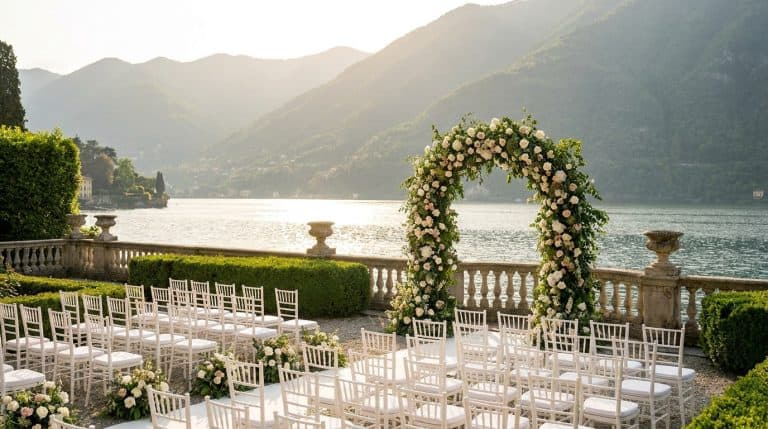
Dream Wedding on Lake Como - The Most Exclusive Locations
A wedding on Lake Como is an idea that combines iconic scenery, top-level hospitality, and a naturally cinematic atmosphere. […]
Read more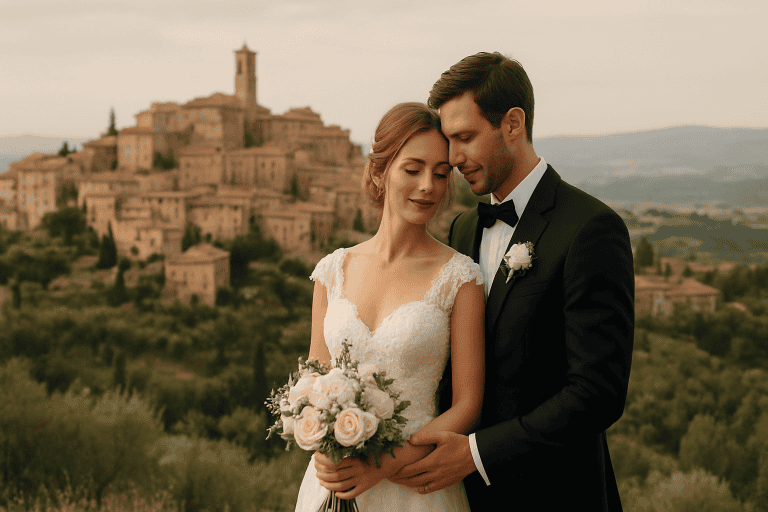 Wedding
Luxury Wedding in Montepulciano - History and Romantic Atmosphere
Luxury wedding in Montepulciano: Tuscan elegance between history and romantic atmosphere Montepulciano is one of those places that seem born […]
Read more Tips
Tips
Getting married on Lake Garda: the perfect wedding between water and mountains
Between luminous shores, stone villages, and mountain profiles that change color with the sun, getting married on Lake Garda […]
Read more