

How to Choose an Italian Wedding Planner for Foreign Couples
Organizing a wedding in Italy when living abroad is an exciting project, but also full of variables: distance, language, local suppliers, different timings, and cultural expectations. In this scenario, the choice of Italian wedding planner becomes the real turning point: not just someone who “coordinates,” but a partner who translates your wishes into an event consistent with the territory, with your style, and with the experience you want your guests to have.
In this guide you’ll find practical criteria for evaluating a professional, useful questions to ask on a call, warning signs to recognize, and guidance on how to understand whether the wedding planner is truly suited to foreign couples getting married in Italy.
Italian wedding planner for foreign couples: what really changes
A destination wedding is not “a normal wedding with an extra flight.” Priorities change and risks change. A wedding planner who often works with international couples tends to handle naturally aspects such as:
- Remote communication: structured calls, clear updates, orderly sharing of materials.
- Cultural mediation: ceremony style, day timing, expectations around welcoming and hospitality.
- Guest logistics: transfers, welcome moments, managing multiple locations (ceremony, reception, after party).
- Vendor selection: not just “the best,” but those best suited to your taste and the type of experience you’re looking for.
If you’re still deciding where to get married, it can be helpful to explore inspirations and settings: weddings in Italy for foreign couples is a good starting point to clarify style and priorities before getting into operational details.
How to choose a wedding planner in Italy: concrete evaluation criteria
When you compare multiple professionals, avoid basing your decision only on photos and “feelings.” An image can be beautiful, but it doesn’t tell you how someone works. Below you’ll find verifiable criteria that help you choose clearly.
Portfolio and aesthetic consistency (not just “pretty”)
Look at the portfolio asking yourselves: is the style consistent or does it change radically from one event to another? A solid wedding planner knows how to adapt, but maintains a consistent care for details, proportions, palettes, and styling. If you see weddings that are very different from each other, ask what the common thread is: is it a creative choice or a lack of direction?
If the site offers galleries or case studies, explore them calmly: real weddings and inspiration can help you understand how a team tells its story and how transparent it is about its processes.
Working method: timeline, responsibilities, and clear boundaries
A reliable wedding planner can explain their method simply: what happens after the first call, how the timeline is built, how revisions are handled, and who makes decisions about what. Look for signs of structure, for example:
- a phased journey (concept, scouting, vendor selection, planning, production, event-day coordination);
- shared and updated documents (brief, moodboard, run sheet);
- a clear point of contact (who replies, how, and within what timeframe).
If the method is not explainable or changes depending on the mood, it is unlikely to withstand the complexity of a destination wedding.
Listening skills and the ability to translate desires into practical choices
An experienced planner asks specific questions: not just “what style do you like?”, but also how you imagine the guest experience, which moments are non-negotiable, what kind of energy you want (intimate, festive, formal, relaxed). The goal is to turn generic preferences into operational decisions: location, layout, timing, entertainment, floral design.
If during the call you feel “pushed” toward standard solutions, stop: a wedding in Italy for foreign couples works when it’s custom-designed, not when it’s copied.
Vendor network and quality management
A good network doesn’t mean having “a thousand contacts,” but knowing how to choose the right partners for your project. Ask how selection happens: does the planner propose well-justified options? Do they explain pros and cons? Can they say “no” when a choice isn’t suitable for the location or the season?
A useful clue is the ability to talk about backup plans (for example in case of weather changes or logistical hiccups) without dramatizing and without improvising.
Language communication and call management
For foreign couples, communication is part of the service. It’s not enough to “speak English”: clarity matters. Evaluate:
- whether calls have an agenda and a final recap;
- whether the materials are understandable and well organized;
- whether the language is direct and free of ambiguity (especially regarding choices and deadlines).
If you need more structured support, it can be helpful to read how a complete journey works: wedding planning services.
Questions to ask the wedding planner before signing
A first call can be pleasant and inspiring, but the right questions help you understand what the collaboration will be like in the months that follow. Here is an outline you can use (and adapt):
- What is your process from the first brief to the wedding day?
- Who will be present on the day of the event and who will be the operational point of contact?
- How do you handle revisions and changes of mind along the way?
- How do you propose vendors and venues: how many options, and based on what criteria?
- How do you handle unexpected issues and Plan Bs without disrupting the experience?
- What kind of support do you offer for international guests (information, timing, logistics)?
Don’t look for “perfect” answers: look for specificanswers. A well-prepared professional doesn’t just reassure you, but describes how they work.
Red flags: when a wedding planner is not suitable for foreign couples
Some signs don’t necessarily indicate bad faith, but they can make the collaboration tiring, especially at a distance. Keep them in mind during the first interactions.
- Vague promises (“we do everything”, “don’t worry”) without explaining how.
- Lack of transparency about roles, responsibilities, and presence on the day of the event.
- Disorganized communication: scattered messages, outdated documents, untracked decisions.
- Creative rigidity: always the same proposal, regardless of location, season, and the couple’s style.
- Emotional management of the unexpected: if every variable becomes a problem, from a distance it will be even more so.
A wedding planner suited to destination weddings must be both creative and operational: aesthetics matter, but direction matters more.
Venue, style, and territory: how the Italian planner makes the difference
Many couples choose Italy for a specific imagery: landscapes, cuisine, architecture, light, rhythm. An Italian wedding planner who truly knows the territory doesn’t just “find a venue”: they build an experience consistent with the place.
For example, the very idea of a wedding changes a lot between a historic villa, a village, a masseria, or a seaside venue. Spaces, flows, timing, guest management, and even the kind of atmosphere that feels natural all change. The planner helps you avoid “Instagrammable” but impractical choices, and focus on solutions that make the day flow smoothly.
If you already have a specific area in mind, explore dedicated content: wedding planner in Tuscany (or an equivalent section on the site) can offer ideas on style, venues, and a local approach.
Wedding day coordination: the direction guests don’t see
On the day of the event, the wedding planner is your “operating system”: they manage timing, vendors, setups, entrances, music, key moments, and transitions. For foreign couples, this is even more important because you often don’t have a local network ready to step in.
Ask how the day schedule is built and how it is shared with vendors. Good coordination is recognized by seemingly small details:
- who welcomes vendors and checks the setup;
- who manages timing between the ceremony and aperitif;
- how micro-unexpected issues are handled without interrupting the experience;
- how the couple’s intimate moments are preserved (without “disappearing” for hours).
If the planner talks only about decorations and little about direction, ask for a concrete example of a typical day: it will help you understand whether there is substance behind the aesthetics.
Design, flowers, and table setting: how to assess taste and planning ability
Many couples start their search from the visual side: flowers, palette, tables, lights. That’s normal. The point is to understand whether the wedding planner knows how to design (not just “choose beautiful things”). Evaluate:
- if the concept starts from the location and the season;
- if the proposals are consistent with your personality (not a copy of trends);
- if the guests’ experience is taken into account (visibility, comfort, flow);
- if there is attention to light: natural, sunset, evening, candles, atmospheric lighting.
When they show you images, always ask: “Is this a proposal for us or an example from another wedding?”. The difference is huge.
Useful links for planning a destination wedding in Italy
To help you navigate choices and priorities, these internal resources may be useful:
When to start and how to organize remote collaboration
For foreign couples, collaboration works when it is set up like a project: clear goals, tracked decisions, shared deadlines. Even without going into specific details, you can set up some good practices right away:
- Initial written brief: what you want, what you don’t want, and what the day’s emotional priorities are.
- Communication channels: one main channel and an orderly way to archive files and recaps.
- Decisions in blocks: first the venue and the structure of the day, then design, then details.
- Visit to Italy (if possible): focused on high-impact choices, avoiding unnecessary meetings.
If an operational aspect isn’t clear (for example what is included in the different levels of support), ask for check the product sheet or in the proposal: transparency is an excellent indicator of professionalism.
How to tell if there’s chemistry: compatibility matters as much as experience
A wedding is a personal project. Even the most competent planner may not be the right one for you, and that’s okay. Look for compatibility on three levels:
- Style: taste, sensitivity, attention to detail.
- Rhythm: decision-making speed, working style, priority management.
- Communication: clarity, listening, the ability to guide you without imposing.
A good sign? When after the call you feel more mentally organized: you’ve understood the next steps, not just “dreamed” an idea.
CTA: let’s talk about your wedding in Italy
If you are looking for a Italian wedding planner for foreign couples able to combine direction, style, and remote management with a bespoke approach, discover ChiaraB Events and our way of working: request an initial contact and tell us your vision. We will help you turn it into an authentic, smooth, and memorable experience.
FAQ
Does an Italian wedding planner necessarily speak English?
Not necessarily. From the very first call, check the working language, the clarity of the contacts, and whether the planning documents are available in a language that is convenient for you.
How do I know if a wedding planner is suitable for a destination wedding in Italy?
Assess the ability to work remotely with a structured method, manage guest logistics, and familiarity with local venues and suppliers. Ask for concrete examples of timelines and coordination on the event day.
Is it better to choose a wedding planner near the wedding venue?
It often helps, because they know the area and suppliers, but it’s not the only criterion. What matters most is the quality of the method, the network of partners, and the ability to design an event consistent with the location.
What questions should I ask before confirming a wedding planner?
Ask about the work process, roles and presence on the wedding day, how vendors are selected, revision management, contingency plans for unforeseen events, and how communication is handled with you and with the guests.
Does the wedding planner also take care of the guests' experience (transfers, pre/post moments)?
It depends on the service. Some include the direction of side events and guest logistics, others focus only on the wedding day. Check in the product sheet or in the proposal which activities are included.
From the blog
 Tips
Tips
Wedding Ideas: Trends and Tips for a Perfect Wedding
Organizing a wedding today means choosing among endless possibilities without losing sight of what really matters: telling your […]
Read more Tips
Tips
Getting married on Lake Garda: the perfect wedding between water and mountains
Between luminous shores, stone villages, and mountain profiles that change color with the sun, getting married on Lake Garda […]
Read more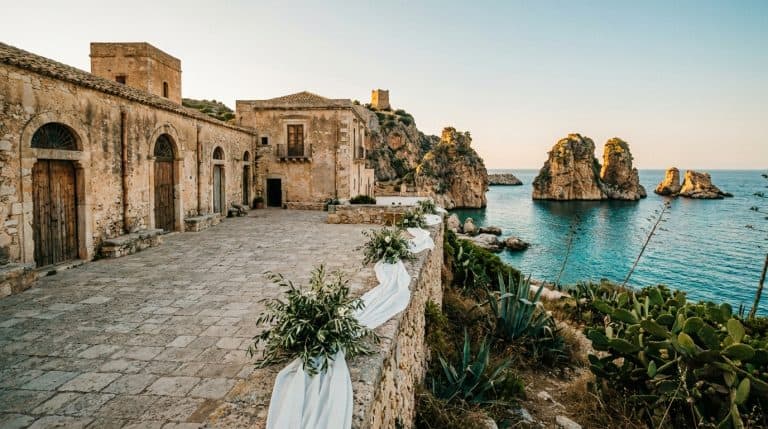 Tips
Tips
Getting married at the Tonnara di Scopello - History and Charm of a Unique Location
Tonnara di Scopello: a wedding venue between history, sea, and stone Choosing to get married at the Tonnara di Scopello means […]
Read more