

Mistakes to Avoid When Choosing a Wedding Planner
Choosing a wedding planner is one of the most delicate decisions in the entire planning process: it’s not just about “delegating”, but about entrusting one person (or a team) with the direction of timing, vendors, style, and handling the unexpected. Precisely for this reason, some recurring mistakes can turn valuable support into a source of stress. In this guide you’ll find the most common mistakes to avoid and practical signs to recognize the right professional for you.
Mistakes to avoid when choosing a wedding planner
When it comes to mistakes in choosing a wedding planner, often don’t depend on a lack of information, but on the way they’re evaluated. Here are the most frequent ones, with concrete guidance to avoid falling into the trap.
1) Choosing only “by gut feeling” without a structured comparison
Empathy is important, but it can’t be the only criterion. A pleasant first meeting doesn’t guarantee that the wedding planner has method, organization, and management skills suited to your event.
To avoid impulsive choices, prepare a mini list of questions and ask for examples of how they work: how they set up the timeline, how they manage priorities, how they coordinate vendors. If you need ideas, you can start from this page: how to plan a wedding without stress.
2) Not clarifying the scope of services (and taking the rest for granted)
One of the most common misunderstandings is thinking that “wedding planner” automatically means “takes care of everything”. In reality, each professional may offer different support: creative design, day-of coordination, consulting on certain vendors, logistical management, or a mix.
Always ask them to clarify:
- which activities are included and which are not;
- how communication happens (calls, email, meetings);
- who will be present on the day of the event;
- how changes and unexpected issues are handled.
If you find info sheets or descriptive packages on the website, check the product sheet what is included in a precise way.
3) Ignoring compatibility of style and vision
A wedding planner can be excellent, but not suited to your taste. The mistake is looking only at “pretty” photos without understanding whether that professional can interpret your vision: minimal, romantic, contemporary, classic, natural, theatrical.
A good sign is when they ask you targeted questions (not only about colors and flowers), but about atmosphere, the pace of the day, the guests’ experience. To explore the topic of visual identity further, you may find this useful: ideas and inspiration for wedding style.
4) Not checking how they work with vendors
Many think the value of a wedding planner is “having contacts”. In reality, what matters more such as is that they select, coordinate, and negotiate priorities among vendors, the venue, and the couple. A typical mistake is not asking how selection happens: do they propose coherent options or do they always push the same names?
Ask whether they work with an open network and how they handle:
- initial brief and creative alignment;
- deadlines and deliverables;
- plan B in case of unforeseen events;
- on-site coordination on the day of the event.
If you’re also considering choosing the setting, take a look at: how to choose the wedding venue.
5) Confusing “online presence” with reliability
A well-curated social profile is useful, but it’s not enough. The mistake is believing that the quantity of content equals quality of service. A reliable wedding planner knows how to present themselves, but above all knows how to document method and results clearly: a coherent portfolio, real cases, contextualized testimonials, explained processes.
When possible, ask for examples of projects similar to yours in complexity and style. If you find a dedicated section, explore it: portfolio and real weddings.
6) Not defining roles and boundaries with family and witnesses
A wedding planner works better when the couple is aligned and when the “support” figures don’t create overlaps. A frequent mistake is involving too many people in operational decisions, generating contradictory messages and slowdowns.
To avoid friction:
- establish who approves what (you and your partner, first of all);
- decide who is the single point of contact for the wedding planner;
- ask the professional how they handle feedback and revisions.
Clarity today means less stress tomorrow, especially in the final weeks.
7) Underestimating day-of management (the “day of”)
Many couples invest energy in the planning phase, but forget that the wedding day is a complex system: arrivals, setups, music, timing, travel, key moments. The mistake is not asking explicitly how operational coordination is managed.
Useful questions:
- who coordinates the vendors on location and with which tools;
- how the timeline is built and shared with the teams;
- how delays and schedule changes are handled;
- whether a final briefing with all the key contacts is planned.
If you’re still defining the schedule, this can help you: wedding timeline: how to build it well.
How to recognize a wedding planner who’s truly right for you
Avoiding mistakes is half the job. The other half is understanding which signs indicate you’re looking at the right person. In general, a good wedding planner:
- listens and reframes: gives you back a clear summary of your wishes;
- proposes coherent options, not recycled “standard” solutions;
- guides you in decisions without replacing you;
- has an organized approach: deadlines, priorities, shared documents;
- handles complexity calmly and with an operational plan.
Also, pay attention to communication: if from the start it’s confusing, inconsistent, or not very transparent, it can become a problem when the pressure increases.
Smart questions to ask at the first meeting with the wedding planner
A well-structured conversation helps you quickly understand whether there’s compatibility. There’s no need to turn it into an interrogation: aim for questions that reveal process, priorities, and working style.
- “How do you set up the project in the first few weeks?”
- “Which decisions do you recommend making right away and which can wait?”
- “How do you handle changes of mind along the way?”
- “What kind of support do you offer in the days immediately before?”
- “How do you coordinate with the venue and vendors during the event?”
If some answers remain vague, ask for practical examples. A solid professional has no difficulty explaining “how” they work, not just “what” they do.
Do you want tailored support for your wedding?
If you’re looking for a team capable of combining creative vision with impeccable management, explore the proposals by ChiaraB Events: you’ll find solutions designed to support you with method, taste, and attention to detail, from the first conversation through to the big day.
FAQ
What is the most common mistake when choosing a wedding planner?
Relying only on the initial impression without verifying the working method, scope of services, and style compatibility. A pleasant meeting is important, but it should be supported by practical questions about organization and day-to-day management.
How can I tell if a wedding planner is right for my wedding style?
Look at the portfolio for consistency and variety, then evaluate the questions they ask you: if they delve into atmosphere, guest experience, and priorities (not just colors and flowers), they’re more likely to know how to interpret your vision.
What should I clarify before I start working with a wedding planner?
Clarify what is included in the service, how communication and revisions take place, who will be present on the day of the event, and how vendor coordination is handled. If there are descriptive sheets, check the product sheet for details.
Is it important to ask how they handle unexpected events?
Yes. The difference is often seen in the management of the “day of”: ask how they build the timeline, how they coordinate vendors on site, and what solutions they plan in case of delays or changes of plan.
How many people should talk to the wedding planner during the planning?
Ideally, a pair and a single point of contact for operational communications. Involving too many people can create contradictory instructions and slow down decisions; it’s better to define roles and boundaries from the start.
From the blog
 Tips
Tips
Wedding Ideas: Trends and Tips for a Perfect Wedding
Organizing a wedding today means choosing among endless possibilities without losing sight of what really matters: telling your […]
Read more Tips
Tips
Getting married on Lake Garda: the perfect wedding between water and mountains
Between luminous shores, stone villages, and mountain profiles that change color with the sun, getting married on Lake Garda […]
Read more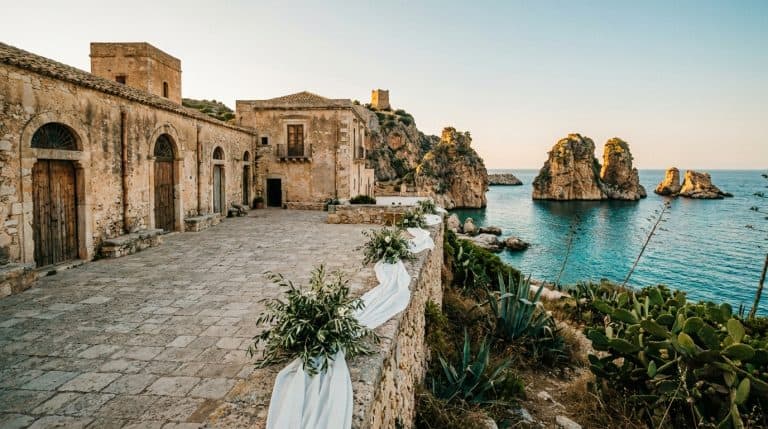 Tips
Tips
Getting married at the Tonnara di Scopello - History and Charm of a Unique Location
Tonnara di Scopello: a wedding venue between history, sea, and stone Choosing to get married at the Tonnara di Scopello means […]
Read more