
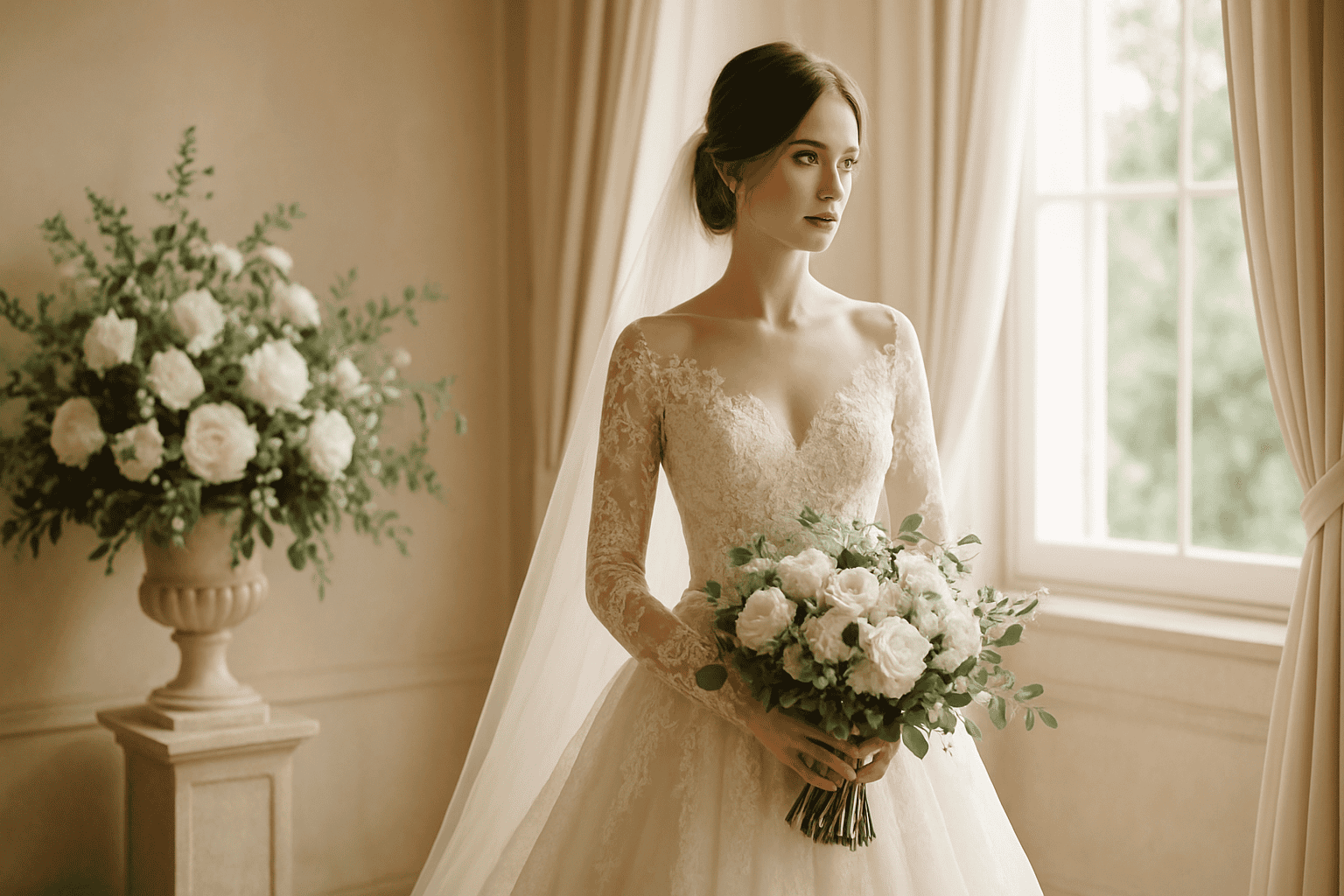
How to turn a theme into a luxury wedding - ChiaraB Events' tips
From theme to luxury wedding: the starting point is the idea (not the decoration)
A theme can be a word ("garden"), an image ("Italian Riviera"), an emotion ("intimacy") or a detail (a color, a flower, a texture). Turning it into a luxury wedding means making a leap: from “theme as a frame” to theme as an experience. It’s not enough to repeat a color on invitations, flowers and place settings: you need direction that brings together the venue, lighting, materials, the rhythm of the day and guests’ perception.
Luxury, in this context, is not excess: it is consistency, attention to detail and choices that feel inevitable, as if they had always been there. It is also comfort: well-managed spaces, smooth timing, moments designed to make every guest feel welcomed.
If you’re building the vision for your wedding, you can start by exploring inspirations and dedicated services on ChiaraB Events, so you can align style and expectations right away.
How to choose an elegant theme without falling into the “already seen”
A “luxury” theme isn’t necessarily rare: it is interpreted with personality. Even a classic like white and green can become memorable if it’s built on proportions, quality of materials and a precise narrative idea.
Start with three guiding words (and use them as a filter)
Define three words that describe the desired atmosphere: for example, bright, contemporary, Mediterranean. Every choice should pass this test: “does it respect the three words?”. If the answer is no, eliminate it, even if it’s beautiful.
Turn inspiration into a concept, not a collage
Save images, yes, but then synthesize. An effective concept board isn’t an endless collection: it’s a map with a few key elements (palette, texture, silhouette, light). When the theme is clear, it becomes easier to avoid the “Pinterest copy” risk.
Watch out for visual shortcuts
Some elements, if used without a plan, immediately feel like a “standard event”: out-of-context neon signs, too many glossy finishes together, an undeclared mix of styles. Luxury requires intentionality: if you include a scenic element, it must have a role and a reason.
Color palettes for a luxury wedding: depth, contrasts and materials
The palette isn’t just “which colors”: it’s how colors live in materials. An ivory on matte paper is different from the same ivory on silk. And luxury is perceived right there: in the depth, in the nuances, in the tactile sensation.
Build a layered palette
- Base: 1–2 neutrals (ivory, sand, warm gray, champagne).
- Accent: 1 signature color (olive green, midnight blue, soft terracotta, dusty burgundy).
- Metal: one consistent finish (warm gold, brass, soft silver). Avoid random mixes.
- Depth: a dark shade or a texture (wood, stone, linen) to add dimensionality.
The “luxury” trick: fewer colors, more texture
If you want a sophisticated effect, reduce the colors and increase the textures: textured table linens, grainy paper, silk ribbons, glass with soft reflections. The overall result feels rich without becoming noisy.
Floral design and scenography: volumes, proportions, and focal points
Florals in a luxury wedding aren’t “a lot”: they’re right. The difference shows in the proportions relative to the space, in the choice of varieties, in the composition, and in the visual continuity between ceremony, aperitif, and reception.
Design 2–3 focal points (not ten)
An elegant wedding has few scenic moments, but memorable ones. Examples of focal points:
- an entrance with structured arrangements and thoughtfully planned lighting;
- a ceremony area with floral architecture consistent with the venue;
- a head table or a long table with a centerpiece conceived as a “landscape”.
Everything else harmonizes with more discreet details, so the eye can rest and the final effect is more high-end.
Height and readability: the rule of conversation at the table
At the reception, aesthetics must coexist with conviviality. Compositions that are too tall or too dense can hinder conversation. Alternating low elements, candles, and well-placed vertical volumes creates dynamism without sacrificing comfort.
Seasonal flowers and perceived quality
The choice of varieties should respect the season and context. If you are considering a specific solution, check the product sheet availability or the alternatives recommended by the supplier. The goal is to achieve a natural yet polished result, with blooms that “look right” in the space and in photos.
Luxury table styling and mise en place: the art of coordinated details
The mise en place is one of the areas where luxury is perceived immediately: it is close, photographed, experienced. But to be truly “high-end” it must be In luxury, the scenic effect is not just “big”: it is and not excessive.
Visual hierarchy: what should stand out first
Choose a protagonist: it can be the table linen, a statement charger, a calligraphed place card, a floral element. Everything else must support, not compete. When every object wants to be the protagonist, the effect is diminished.
Materials that elevate the whole
- Paper and printing: invitations, menus, and seating charts with tactile finishes and calibrated colors.
- Textiles: tablecloths and napkins with an elegant drape, considered folds, silk or linen ribbons.
- Glass and light: candles and soft reflections for an enveloping atmosphere.
To learn more about how to coordinate paper elements with the style of the event, you can take a look at ideas for invitations and stationery.
Lighting and atmosphere: the secret that makes an elegant wedding “cinematic”
If there is one element that transforms a theme into a luxury wedding, it is the light. Light is not added at the end: it is designed. It changes colors, enhances textures, guides attention, and creates intimacy even in large spaces.
Three levels of lighting (to coordinate)
- Ambient: lights the space evenly and softly.
- Accent: highlights focal points (cake table, ceremony, scenic details).
- Decorative: candles, lanterns, micro-lights for depth and romance.
Color temperature and consistency
A temperature that’s too cool can make the atmosphere feel “technical”; one that’s too warm can alter the palette. The best result comes when lighting, candles, and the environment are harmonized. If you’re choosing lighting elements or specific candles, check the product sheet recommended tones and output.
For inspiration on evening atmospheres and romantic settings, visit reception setups and mood.
Location and styling: how to make the theme converse with the space
A theme becomes luxury when it feels born for that location. That’s why styling can’t ignore architecture, existing colors, floors, greenery, furnishings, and even acoustics. The goal is to enhance work with the space, not fight it.
Read the location like a set
Ask yourself:
- where natural light comes in and what time it changes;
- which architectural lines must be respected;
- which spots are already “photogenic” and which need to be built;
- how guests will move (without bottlenecks or empty areas).
Consistency between indoors and outdoors
If the day unfolds between the garden and indoor rooms, create a common thread: same palette, same metals, same key materials. You can change intensity (cooler outdoors, more enveloping inside), but without “changing weddings” halfway through the event.
If you want to understand how a complete direction is built, explore the wedding planning service and its steps.
Dress code, beauty, and the couple’s details: elegance without rigidity
In a luxury wedding, the couple is also part of the aesthetic project. It doesn’t mean conforming: it means choosing what respects the concept and enhances personality.
Outfit and accessories: the role of finishes
Often the difference is in the details: a clean line with a substantial fabric, an accessory chosen with intention, a bouquet that echoes the palette without “copying” the decor. If you’re considering accessories or specific details, check the product sheet materials and finishes.
Beauty look and consistency with light and season
Make-up and hairstyle must work in person and in photos, by day and by night. A look that’s too “constructed” can clash with a natural theme; one that’s too soft can get lost in a grand setup. The key is balance.
Guest experience: welcome, timing, and micro-moments that convey luxury
A luxury wedding is also how you feel. The guest experience is built through a sequence of thoughtful touches: clear directions, smooth welcoming, comfort, measured surprises.
Welcoming and orientation without intrusive signs
You can guide guests with elegant, integrated elements: a welcome corner consistent with the theme, a readable seating chart, discreet signage. The result is orderly and “well cared for,” without giving the impression of an improvised event.
Pace of the day: alternating between energy and intimacy
Luxury is also knowing how to calibrate. Alternate show-stopping moments (entrance, ceremony, first dance) with more intimate moments (tables, conversations, lounge). When everything is “wow,” nothing truly is.
Sensory comfort
- Spaces: lounge areas or conversation corners if the venue allows.
- Sound: music with volumes appropriate to the moments (aperitif, dinner, party).
- Details: small gestures of care that reflect the theme (without filling things with gadgets).
Coordination and direction: the “behind the scenes” that makes everything impeccable
A theme can be beautiful, but without coordination it risks remaining just an idea. The difference between a well-done event and a luxury wedding is often invisible: it’s in the direction, in the timing, in vendor management, and in last-minute choices.
Realistic timeline and breathing room
A timeline that’s too tight increases stress and reduces the quality of the experience. Building in buffers (for photos, transfers, greetings) makes the day smoother and allows the setups to be experienced, not just passed through.
Plan B consistent with the concept
Luxury isn’t “hoping everything goes well”: it’s being ready without changing style. If an alternative plan is предусмотрен, it must have the same aesthetic care as the main plan, so the day remains coherent.
Useful links for inspiration and signature services by ChiaraB Events
CTA: take your theme to the “luxury” level with ChiaraB Events
If you want to turn an idea into an elegant, cohesive and memorable wedding, discover the selection and creative approach of ChiaraB Events: from defining the concept to directing the day, for a luxury wedding tailored to your style.
[w4y_bf_related_posts post_id=”33471″]
FAQ
What is the difference between a wedding theme and a luxury wedding concept?
The theme is a starting inspiration (color, place, atmosphere). The concept is the design translation: palette, materials, lighting, proportions, rhythm of the day, and coherence among all the elements, so that the experience is elegant and consistent.
How to choose an elegant color palette without seeming banal?
Reduce the number of colors and increase textures: neutrals as a base, a well-chosen accent, and a consistent metallic finish. Sophistication comes from depth and materials, not from the number of shades.
How many scenic elements are needed for a luxury wedding?
In general, 2–3 well-designed focal points are enough (entrance, ceremony, head table, or cake area). The rest should remain harmonious and more understated, so the eye has a hierarchy and the overall effect looks more sophisticated.
How can you make the mise en place truly “luxury” without overdoing it?
Define a focal point (textiles, paper, centerpiece, or candles) and make the other elements support it. Aim for color consistency, refined finishes, and materials that feel pleasant to the touch: elegance lies in the direction of the details.
Why are lights so important in a luxury wedding?
Because light changes the perception of colors, volumes, and atmosphere. A layered lighting design (ambient, accent, decorative) makes the space more intimate, enhances focal points, and creates a “cinematic” effect especially in the evening hours.
How do you maintain theme consistency between the ceremony, aperitif, and reception?
Use a consistent common thread (palette, metals, key materials) and vary only the intensity: fresher and lighter outdoors, more enveloping indoors. Consistency is achieved by repeating the same stylistic choices in a calibrated way, not by copying identical decorations.
From the blog
 Wedding
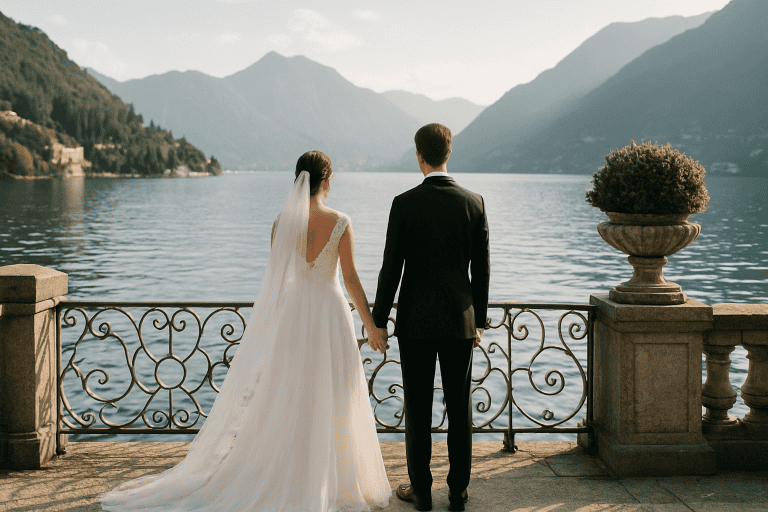
 Dream Wedding on Lake Como - The Most Exclusive Locations
A wedding on Lake Como is an idea that combines iconic scenery, high-level hospitality, and a naturally cinematic atmosphere. […]
Read more Tips
Tips Wedding Ideas: Trends and Tips for a Perfect Wedding
Organizing a wedding today means choosing among endless possibilities without losing sight of what really matters: telling your […]
Read more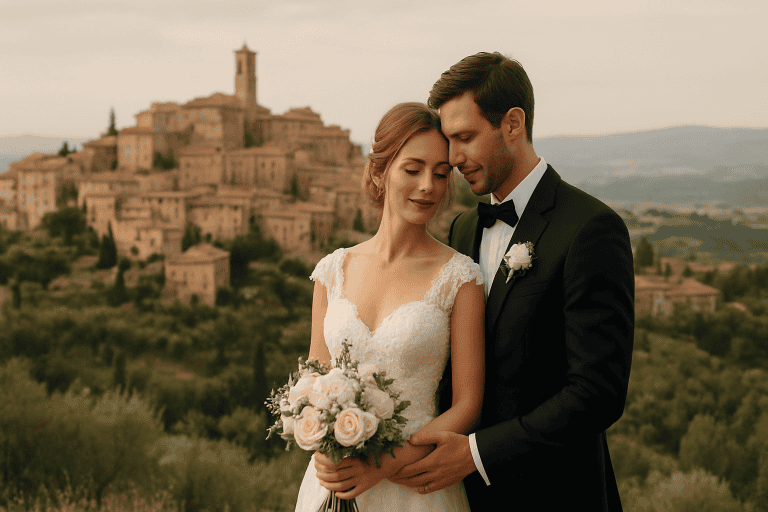 Wedding
 Luxury Wedding in Montepulciano - History and Romantic Atmosphere
Luxury wedding in Montepulciano: Tuscan elegance between history and romantic atmosphere Montepulciano is one of those places that seem born […]
Read more