
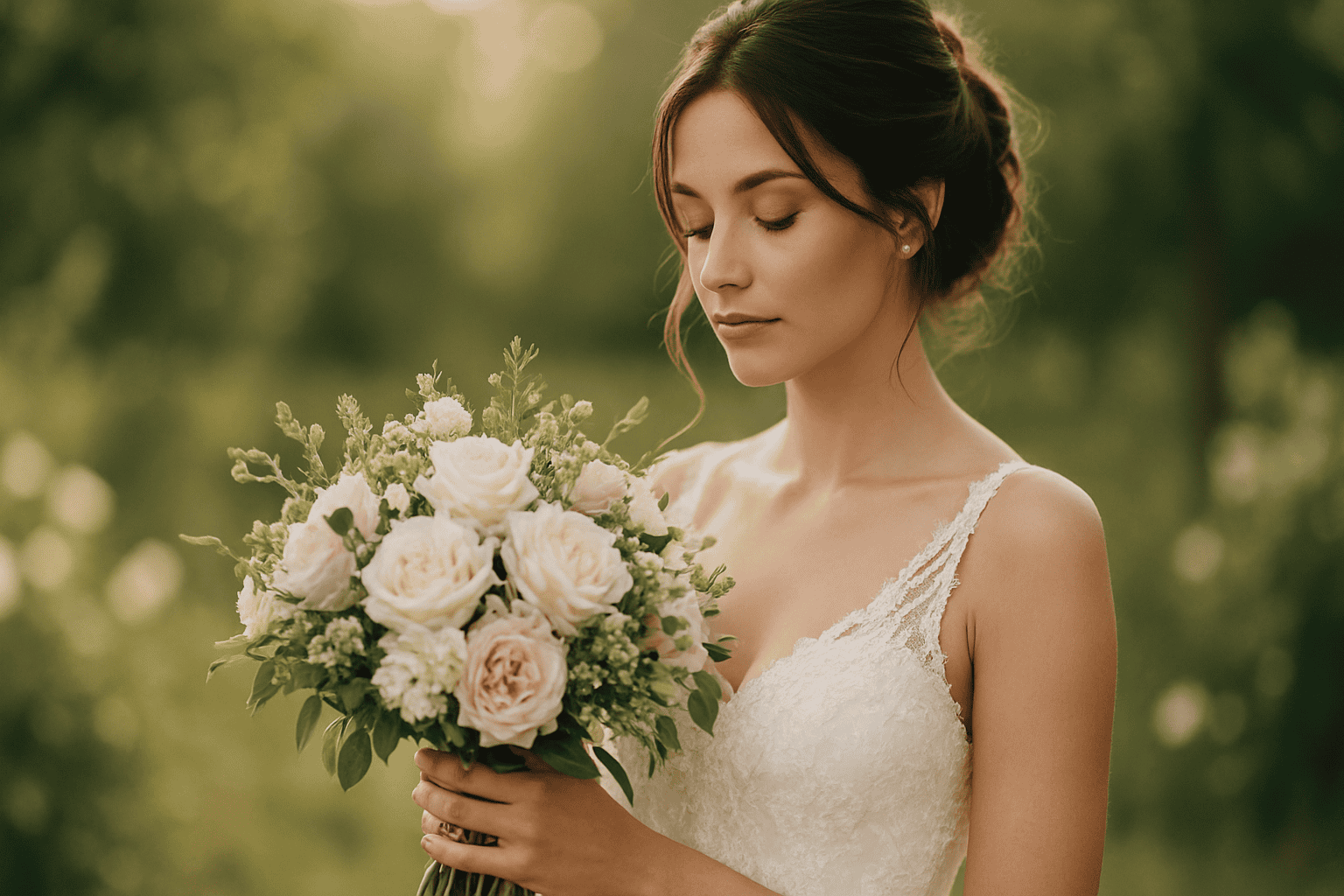
Photography and floristry for unforgettable weddings with ChiaraB Events
Wedding photography and floristry: a unique story, from light to petals
In a truly memorable wedding, images and flowers are not “two separate services”: they are two languages that, if they speak to each other, build atmosphere, rhythm, and coherence. Photography captures what happens; floristry suggests what is felt. When palette, volumes, textures, and light meet, the result is an event that is recognizable at first glance and remembered for a long time.
With ChiaraB Events, the goal is to create a harmonious experience: an aesthetic project that runs through the venue, floral setups, and shots, without forcing and without a “catalog effect”. Every choice – from the bouquet to the centerpieces, from the ceremony spot to the table details – can become part of a coherent visual narrative, ready to be photographed at its best moment.
ChiaraB Events: coordinating photography and floral setups seamlessly
The difference between a beautiful wedding and a wedding that “works” often lies in the direction. Coordinating photography and floristry means designing carefully:
- the color palette (main tones, accents, neutrals, and materials);
- the focal points (ceremony, sweetheart table, entrance, scenic corners);
- light management (natural and artificial) in relation to flowers and decorations;
- continuity between spaces (from getting ready to the party, without sudden “style changes”).
When these elements are thought out together, even the smallest details become important: a ribbon, a texture, a vase, a candle. Not to fill space, but to guide the eye and create a clean visual story.
If you want to learn more about the approach and services, you can start from ChiaraB Events and then explore the sections dedicated to weddings and wedding design.
Floral setups for weddings: style, seasonality, and personality
Wedding floristry is not just “which flowers to choose”, but what identity to give the event. A well-designed floral setup speaks about you: discreet or theatrical, romantic or minimal, Mediterranean or contemporary. The key is to turn a personal taste into a coherent system of choices.
From the bouquet to the set design: building a palette that holds up in photos
An effective palette is not necessarily “colorful” or “neutral”: it is a palette that remains believable in every shot, from the backlight of the ceremony to the warm light of dinner. For this reason, it is useful to think about:
- dominant colors (those that define the atmosphere);
- supporting colors (that tie different elements together without competing);
- an accent (even minimal) that makes everything recognizable;
- materials and textures (fabrics, glass, metal, wood) that “respond” to the light.
If you are not sure which combination works in your context, it is useful to compare inspirations and proposals: check the product sheet or in the reference pages which solutions are available and in which variants.
Flowers and season: natural harmony without forcing it
Seasonality is not a limit: it is a guide. Working with what is consistent with the time of year helps to achieve more believable volumes, more “true” colors and an overall more elegant result. In addition, choosing greenery, branches, berries or secondary flowers can add depth and movement, making shots richer without weighing them down.
For ideas and inspirations related to the floral world, you can also consult the section dedicated to floristry and, if available, ceremony and reception setups.
Wedding photography: light, composition and details that matter
Wedding photography isn’t just “taking good shots”: it’s knowing where to look and when. A carefully designed floral setup offers the photographer narrative anchor points: lines, frames, textures, perspectives. And, at the same time, photography gives value back to the floral work, making it part of the memory.
Details that deserve a shot (and how to prepare them)
Some elements become iconic because they are designed to be experienced and photographed. Among the most important:
- bouquet and accessories: ribbons, pins, small color accents;
- table setting: place cards, menus, centerpieces and candles;
- scenographic corners: welcome, seating chart, photo corner, location details;
- ceremony: arch or structure, seating, aisle, guests’ viewpoints.
A practical tip: plan a moment when these details are “clean” and complete (before guests arrive or before the service). That way photography can enhance them without rushing and without anything out of place.
When flowers help photography: frames, depth, and color
Flowers aren’t just decoration: they can become visual tools. A floral installation can create a natural frame for portraits; a well-proportioned centerpiece adds depth to dinner shots; light greenery can soften complex backgrounds. The secret is balance: enough presence to define the style, but not so much that it steals the scene from the people.
If you’re considering solutions to make certain spaces more photogenic, take a look at ideas and inspiration for wedding styling (link managed by the plugin).
Consistency between ceremony and reception: from “I do” to the toast without changing language
A wedding often moves through multiple settings: outdoors, indoors, shaded areas, warm evening lights. The challenge is to maintain aesthetic consistency without repeating everything exactly the same. Here photography and floristry work together to create something a common thread recognizable.
An effective strategy is to define a few constant “signs”:
- a recurring color (even just in small doses);
- a shape (soft, linear, asymmetrical compositions, etc.);
- a material (transparent glass, ceramic, metal, natural fabrics);
- a type of green or a botanical texture that recurs.
So, even if the ceremony is more airy and the reception more intimate, the overall result remains coherent. And in the photos you perceive a single story, not a sequence of “disconnected scenes”.
How to choose the floral style based on the location (and vice versa)
The location is not just a backdrop: it is an active element of the project. Some spaces call for a light touch, others require more presence to be enhanced. Floral design can:
- enhance enhance
- an already scenic place with targeted touches; soften
- very modern environments with botanical textures and warm colors; organize
- complex spaces by creating clear focal points; connect
different areas with a common language.
- From a photographic point of view, this means getting cleaner images: fewer random elements, more intention. If you’re building your moodboard, try starting with three questions:
- What is the main emotion you want to remember when looking at the photos?
- What kind of light will you have at the key moments (ceremony, dinner, party)?
Which details do you want to be noticeable even in the overall shots?
When you have these answers, it’s easier to define a floral project that doesn’t “fight” with the space, but completes it.
Timeline and logistics: the behind-the-scenes that makes everything feel more natural
- The success of photography and floral setups also depends on smooth time management. There’s no need to turn the day into a rigid schedule, but some choices help avoid stress and unexpected issues:detail preparation
- “ready” flowers: bouquets and boutonnieres available in advance of the portraits;
- ceremony: check the direction of the light and the passage points;
- reception: define when the room is complete and “untouched” for the wide shots.
In this way, photography can work calmly and the floral design is enhanced at the moment when it is at the peak of its aesthetic impact. If some organizational aspects depend on specific options, check the product sheet or in the dedicated information pages.
Floral details that become memories: from accessories to small scenic corners
Not everything has to be “big” to be memorable. Often it’s the details that make a wedding personal and recognizable. Some ideas (adaptable to the style of the event) include:
- micro-arrangements repeated consistently in multiple spots (welcome, bathroom, lounge);
- greenery and flowers as a frame for the stationery or for a welcome message;
- botanicals on the table with a studied rhythm (full/empty) to let the table setting breathe;
- a “signature” point that tells your story (a dedicated corner, a symbolic detail, a recurring color).
From a photographic point of view, these elements help create a more varied sequence of images: not only portraits and moments, but also atmospheres. And the album (or the gallery) becomes a complete story.
Useful links for inspiration on wedding photography and floristry
To help you navigate styles, moods, and possible solutions, you can explore:
Contact ChiaraB Events for a wedding in harmony between photos and flowers
If you want a project capable of bringing together photography and floristry for unforgettable weddings, explore the selection and proposals by ChiaraB Events: let yourself be guided by a consistent style and create an event that, even years later, can be recognized in an instant.
FAQ
Why coordinate photography and floristry at a wedding?
Because flowers and images build the atmosphere together: a consistent palette and well-designed focal points make the shots more harmonious and the story more recognizable.
How to choose the floral palette with photos in mind?
Define dominant and neutral colors and an accent, considering the light at different times (ceremony, dinner, party). Textures and materials help maintain consistency even in variable lighting conditions.
What floral details is it useful to prepare to be photographed?
Bouquet, accessories, centerpieces, welcome and seating chart are among the most important. It is useful to plan a moment when they are complete and tidy, before the guests arrive or before service.
Does the seasonality of flowers affect the aesthetic result?
Yes: working in harmony with the season helps achieve more natural colors, believable volumes, and a more elegant overall result. For available options and variants, check the product page.
How can you maintain consistency between the ceremony and the reception without repeating everything exactly the same?
Choose a few recurring elements (a color, a shape, a material, or a type of greenery) and apply them modularly across different spaces, adapting intensity and volumes to the context.
From the blog
 Wedding
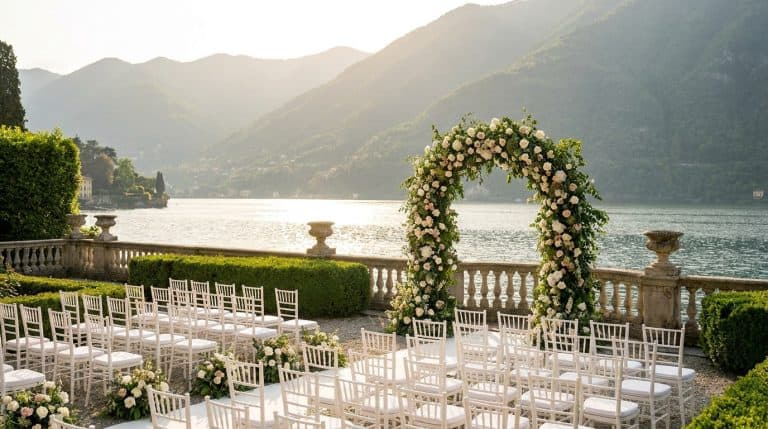
Dream Wedding on Lake Como - The Most Exclusive Locations
A wedding on Lake Como is an idea that combines iconic scenery, top-level hospitality, and a naturally cinematic atmosphere. […]
Read more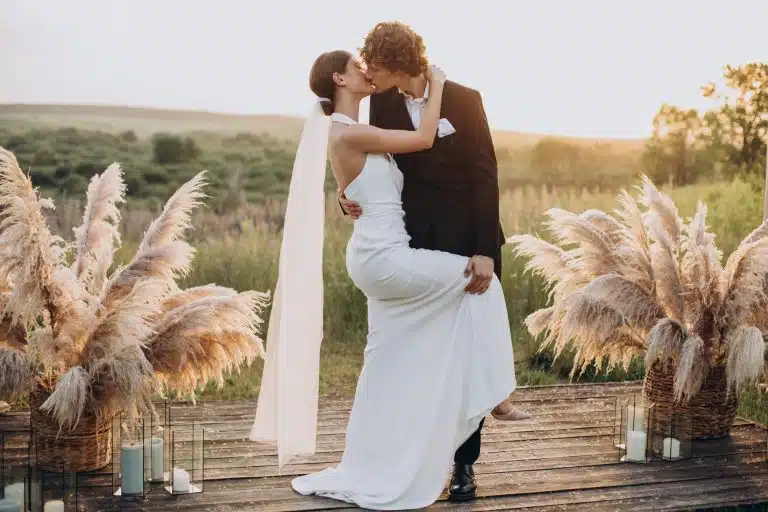 Tips
Tips
Wedding Ideas: Trends and Tips for a Perfect Wedding
Organizing a wedding today means choosing among endless possibilities without losing sight of what really matters: telling your […]
Read more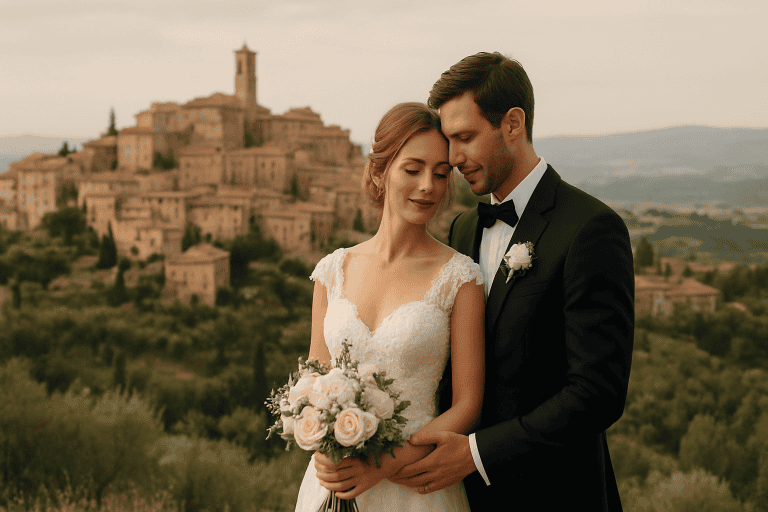 Wedding
Luxury Wedding in Montepulciano - History and Romantic Atmosphere
Luxury wedding in Montepulciano: Tuscan elegance between history and romantic atmosphere Montepulciano is one of those places that seem born […]
Read more