
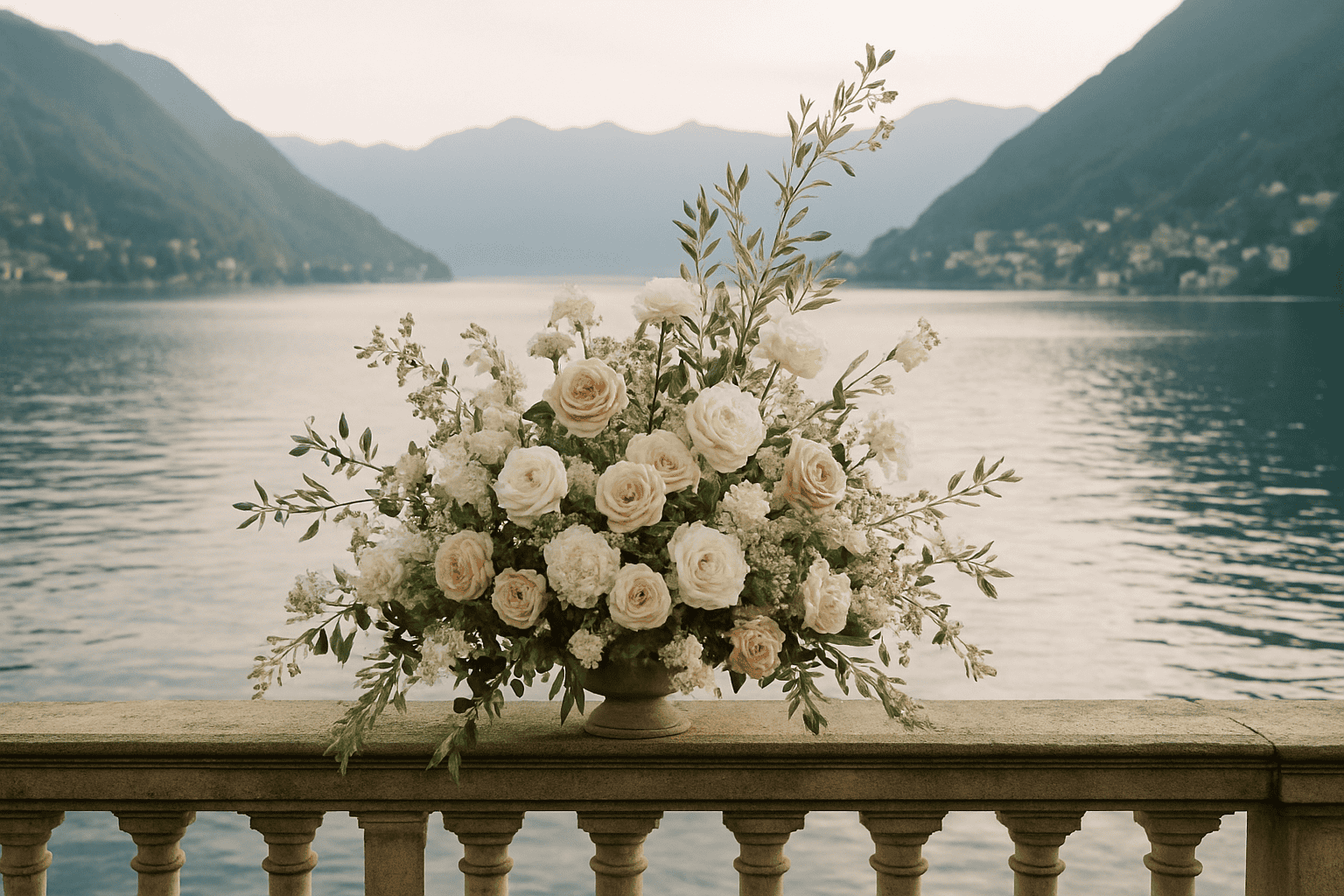
Floral arrangements on Lake Como: elegant palettes and seasonality
Lake Como floral arrangements: why elegant palettes and seasonality really matter
When it comes to floral arrangements Lake Como, the point isn't to “fill” a venue with flowers: it's to create a coherent atmosphere with the landscape, the light, and the event’s identity. Lake Como has a distinct character: historic villas, manicured gardens, water views, stone and wrought iron, interiors with frescoes or wood paneling. In this context, an effective floral choice is one that converses with the setting instead of overpowering it.
The most successful result, especially for destination weddings or intimate celebrations, comes from the meeting of three elements:
- Color palette designed based on light, architecture, and season;
- Wedding flowers selected for aesthetic impact and real availability in the period;
- Proportions (volumes, heights, focal points) conceived for photos, the ceremony, and conviviality.
If you’re planning an event in the area, it can be useful to frame the broader context first: Wedding on Lake Como: guide collects tips and inspirations to help you navigate venues, style, and organization.
For those who want a descriptive reference about the place (geography, history, and the lake’s identity), you can also find Insight: Lake Como (Wikipedia).
Goal and style: luxury, intimate, destination (without excess)
“Luxury” on Lake Como rarely coincides with indiscriminate abundance. A luxury works better when it is measured and bespoke: few elements, but refined, tactile, with a clear chromatic thread. In practice:
- a palette with 2–3 main colors + 1 accent;
- a mix of textures (petals, leaves, branches, fruits, ribbons) that adds depth;
- a “signature” element repeated consistently (for example a standout variety or a specific greenery).
This approach is ideal for destination events: guests immediately perceive an aesthetic direction and the photos turn out harmonious, without needing to fill every corner.
What to expect in terms of timing and logistics
Floral setups in the lake area require careful planning because factors such as access points, internal routes, outdoor spaces, and weather conditions come into play. In many villas and hotels, for example, the route between the unloading area and the installation point may include stairs, corridors, elevators, or gravel gardens: details that affect timing and installation methods.
Moreover, on Lake Como the light changes quickly between morning and late afternoon: a color palette that looks perfect in the showroom may appear different in backlight on the lake or under shaded porticos. For this reason, when possible, it is useful to plan a trial or at least a comparison with real photos of the location in the same time slot as the event.
Step-by-step planning for wedding flowers and color palette
The difference between a “beautiful” floral project and a truly memorable one often lies in the sequence: decide the style first, then the palette, then the focal points, and only afterward the quantities. This way you avoid wasting budget and ending up with an incoherent effect.
Realistic timeline (from 12 to 2 months)
An indicative timeline, useful for weddings on Lake Como, could be this:
- 12–10 months before: defining the style (classic, garden, contemporary), moodboard, first palette ideas and location.
- 9–7 months before: choosing the key points (ceremony, imperial or round tables, entrance, cocktail), first proposals for seasonal wedding flowers.
- 6–4 months before: revising the color palette based on mise en place, stationery, and lighting; defining structures and supports (arches, columns, vases).
- 3 months before: confirmation of the project, site inspection (if possible), logistics plan with access times.
- 2 months before: finishing touches: details on boutonnière, bouquet, corsage, floral place cards, and photo areas.
Practical note: the availability of some varieties may vary. If a choice is essential, check the product sheet or with the supplier based on the period.
Checklist of essential suppliers (for aesthetic consistency)
To make the setups truly work, the flowers can’t “go it alone.” Consistency comes from alignment among multiple professionals. An essential checklist includes:
- Wedding planner / event designer: overall direction, timing, and consistency among elements.
- Floral designer: selection of wedding flowers, palette, structures, setup and teardown.
- Catering / banqueting: table spacing, centerpiece heights, candle management and service.
- Lighting: warm or neutral lighting changes how the color palette is perceived.
- Photos and videos: guidance on focal points and scenography that looks its best.
If you are building your overall roadmap, an operational outline like Organizing a wedding: checklist, can help, useful for not forgetting key steps and synchronizing suppliers.
Guest management and transfers: impact on the floral project
On a lake, flows matter. If guests arrive by boat or shuttle, the welcome area becomes a strategic scenic point: a flowered entrance, a welcome corner, or a small fragrant “moment” can immediately convey the idea of a well-curated event.
On the other hand, if arrivals are spread across multiple access points or different time slots, it is better to focus on clear visual cues (repeated arrangements in key spots) instead of concentrating everything in a single installation.
Color palette on Lake Como: elegance, light, and seasonality
La color palette is the true “invisible direction” of the setup. On Lake Como, where the environment is already rich in details (water, greenery, stone, architecture), the most effective palettes are often those that:
- echo natural tones (greens, ivory, sand, blush);
- add a sophisticated accent (burgundy, dusty blue, terracotta, warm gold);
- keep a neutral base to enhance the light and the lake view.
Spring: controlled freshness and luminous romance
In spring, vegetation takes center stage and the light tends to be softer. Airy and “clean” palettes work well, with tender greens and nuanced whites. A practical tip: avoid mixing too many pastel colors together; it’s better to choose a guiding shade and repeat it in bouquets, centerpieces, and details.
Summer: elegant contrasts and heat management
In summer on Lake Como, outdoor ceremonies are common and the light can be intense. Here the palette must hold up in both sun and the shade of porticoes and trees. Refined contrasts (white/green with a bold accent) photograph very well, especially near the water.
From a design standpoint, it’s useful to plan arrangements that keep a beautiful shape even in high temperatures. Some varieties are more delicate: if you want specific flowers, check the product sheet their performance in the period or consider chromatically equivalent alternatives.
Autumn: depth, texture, and warm tones
Autumn is perfect for more enveloping palettes: terracotta, rust, wine, cream, olive green. On Lake Como they pair well with wood, candles, and more tactile fabrics. It’s also the ideal season to play with textures (berries, branches, foliage), creating an elegance that’s less “classic” and more contemporary.
Winter: scenic minimalism and warm light
In winter, especially in venues with significant interiors, the winning choice is often scenic minimalism: few focal points, but very well curated. Palettes with white, ivory, dark green, and metallic details (if consistent with the mise en place) create a timeless effect. In this season, artificial light becomes decisive: coordinating flowers, candles, and lighting is what transforms the atmosphere.
Budget and priorities: where to invest to maximize the scenic effect
The floral budget isn’t optimized by cutting everywhere, but by choosing visual priorities. On Lake Como, photos and the guest experience often revolve around a few moments: arrival, ceremony, tables, cake cutting. If these points are strong, everything else can be more essential without losing impact.
Main cost items that affect the project
In a floral project, the items that tend to weigh the most are:
- Structures and supports (arches, frames, bases, statement vases);
- Labor (assembly, disassembly, internal transport, timelines);
- Quantity and dimensions of the arrangements at focal points;
- Logistics linked to the venue (access, distances, setup times).
The choice of wedding flowers matters, but often it’s the combination of volumes, structures, and labor hours that determines the difference between a “simple” project and a highly scenic one.
Where to invest for a wow effect (without waste)
If the goal is an elegant, photogenic impact, the areas where it’s worth focusing creativity are:
- Ceremony: arch, ground arrangements, aisle or seating; it’s the most emotional and most photographed moment.
- Sweetheart table or imperial table: it’s the “line” that defines the style of the entire reception.
- Entrance and welcome: first contact, especially for destination events.
- Cake cutting / after dinner: even a single well-placed installation can become iconic.
The rest can be handled with smart repetitions: small echoes of the color palette and chosen greenery, so the overall look stays cohesive.
Common mistakes that increase costs (without improving aesthetics)
- Too many colors: a confusing palette requires more variety and more trials, but not necessarily more elegance.
- Heights not compatible with service: centerpieces that get in the way lead to last-minute changes.
- Installations in the wrong places: a large setup where no one passes by “disappears” and doesn’t deliver.
- Lack of a logistics plan: tight timelines and complex access create stress and adjustments.
Plan B and risk management: weather, venue, and smart choices
A lake event is wonderful also because it’s “alive”: breeze, moving clouds, changing light. But precisely for this reason you need a plan B that isn’t a fallback solution, but an alternative version already conceived with the same aesthetic.
Weather: alternative solutions consistent with the palette
Plan B works when it maintains the same visual codes from Plan A: color palette, materials, proportions. Some useful strategies:
- design a ceremony that can “shift” from outdoors to indoors without losing the focal point;
- prefer modular compositions (multiple coordinated elements) instead of a single structure that is hard to move;
- plan alternative indoor photo spots, with suitable light and backdrop.
Permissions and constraints of the location: what to check
Every villa or hotel has specific rules on access, schedules, use of spaces, and management of setups. Without going into details that vary case by case, it’s important to clarify in advance:
- where vendors can enter and at what times;
- which areas can be used for setup and temporary storage;
- whether there are limits on supports, fixings, or the use of certain structures.
If a detail is not certain, check the product sheet or with the venue before finalizing the project.
Contracts and deposits: clarity on changes and substitutions
In the wedding flower world, some substitutions can be normal (availability, quality, season). The key is to turn uncertainty into creative control: define a color palette and a style so clearly that they allow “equivalent” substitutions without changing the final effect. Agreeing in advance on how to handle any variations helps avoid rushed decisions right before the event.
Guest experience on Lake Como: how flowers guide the journey
A well-designed floral setup is not just decoration: it is emotional orientation. Guests understand where to go, what is about to happen, and what atmosphere to expect. On Lake Como, where there are often changes of setting (garden, terrace, hall, dock), flowers can become elegant “signage.”
Welcome moment, activities and hospitality
The welcome is the first chapter. Even a simple detail, if consistent with the color palette, can do a lot: an area with repeated arrangements, a recognizable scent, small floral accents that foreshadow the style of the ceremony.
If activities are planned (lake-view aperitif, boat tour, moments in the garden), it’s useful to think about “light” micro-setups: they shouldn’t compete with the scenery, but to frame the experience.
Transport, shuttles, parking: aesthetics and practicality together
When travel is part of the event, visual communication becomes essential. A small floral cue at strategic points (entrance, area change, access to the dock) can help make the route intuitive. The goal is for the guest to feel guided, not “moved around.”
Clear directions and wedding website: graphic consistency with the palette
The color palette doesn’t live only in the flowers: it should also be reflected in invitations, menus, seating chart, and wedding website. When graphics and flowers speak the same language, the event looks more polished and seamless. Here too, less is more: a few colors repeated consistently, readable typefaces, and materials that harmonize with the venue.
Practical ideas for Lake Como floral setups: arrangements and focal points
To translate palette and seasonality into concrete choices, it helps to think in terms of “scenes” (moments) rather than individual elements. Here are some design ideas that often work on Lake Como, adaptable to the style of the event:
- Lakeside ceremony: ground arrangements that follow the horizon line, avoiding volumes that block the view.
- Aperitif terrace: groups of coordinated vases at different heights to create rhythm without weighing things down.
- Tables: alternating between “full” centerpieces and lighter elements to maintain visual breathing room.
- Photo corners: a single well-placed installation, with favorable light, can become the event’s signature.
The secret is consistency: repeating the same codes (color palette, type of greenery, style of shapes) in every scene, varying only the scale.
A bespoke floral design for Lake Como
If you want setups that can enhance the panorama, architecture, and season with an elegant, natural aesthetic, ChiaraB Events can support you in defining the style, palette, and direction of the event. Tell us your idea and let’s build together a harmonious project, designed for Lake Como and for your story.
FAQ
Which color palettes work best for a wedding on Lake Como?
In general, elegant and uncluttered palettes work well: a neutral base (ivory, white, green) with 1 sophisticated accent (dusty blue, burgundy, terracotta, or warm gold). The choice should be calibrated to the light, the venue's architecture, and the style of the table setting.
How to choose wedding flowers based on seasonality on Lake Como?
Start from the season and the context of the location, then select varieties consistent in shape and color. If you want a specific flower, check availability for the period in the product sheet or with the supplier and consider chromatically equivalent alternatives to maintain the same palette.
How to design a weather plan B without ruining the aesthetics of floral arrangements?
Plan B must be an alternative version already conceived in the same style: same color palette, same materials, and modular compositions that can be easily moved. Define in advance an internal (or covered) focal point that replaces the main outdoor scene without losing impact.
Where is it best to focus the floral arrangement to maximize the visual impact?
Usually for the ceremony, entrance/welcome, the couple's table or imperial table, and the cake-cutting/after-dinner area. If these points are strong and consistent, the rest can be more essential while maintaining references to the color palette.
Can floral arrangements help enhance guests' experience during the event?
Yes: flowers can guide the route between areas (welcome, ceremony, aperitif, reception) and create visual reference points. In settings like Lake Como, with outdoor and indoor spaces, small repeated arrangements in strategic spots make transitions more intuitive and the atmosphere more refined.
From the blog
 Lake Como
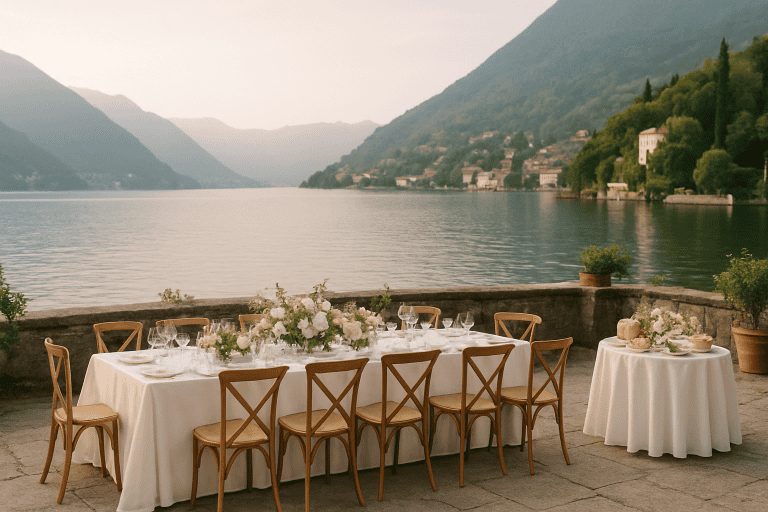
How to manage a wedding weekend on Lake Como: welcome dinner and brunch
Wedding weekend Lake Como: why welcome dinner and farewell brunch are the right choice A wedding weekend lake […]
Read more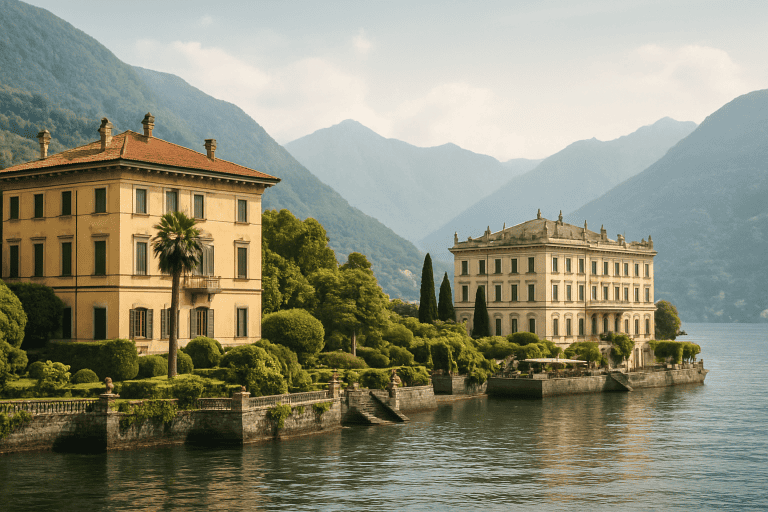 Lake Como
Historic villa vs luxury hotel on Lake Como: which choice is really worth it?
Historic villa vs luxury hotel on Lake Como: how to really choose the right venue Choosing between historic villa […]
Read more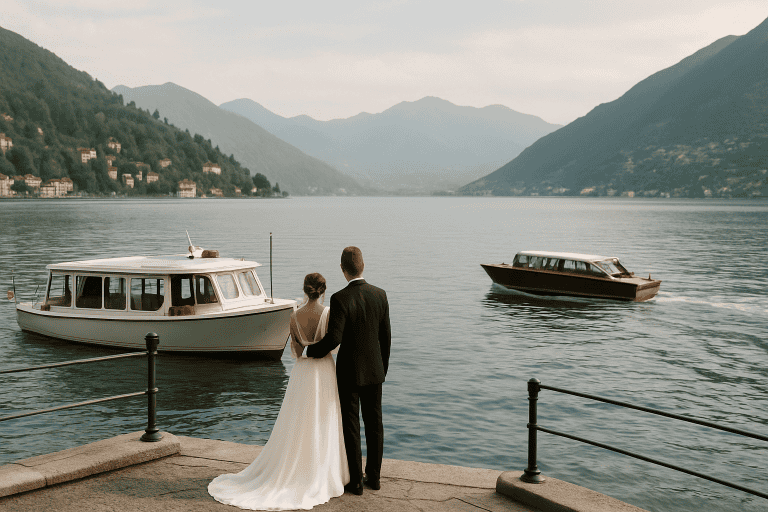 Lake Como
Transport and parking on Lake Como: shuttles, taxi boats, and realistic timing
Transport and parking on Lake Como: what to really expect (times, style, logistics) When talking about weddings on the Lake […]
Read more