
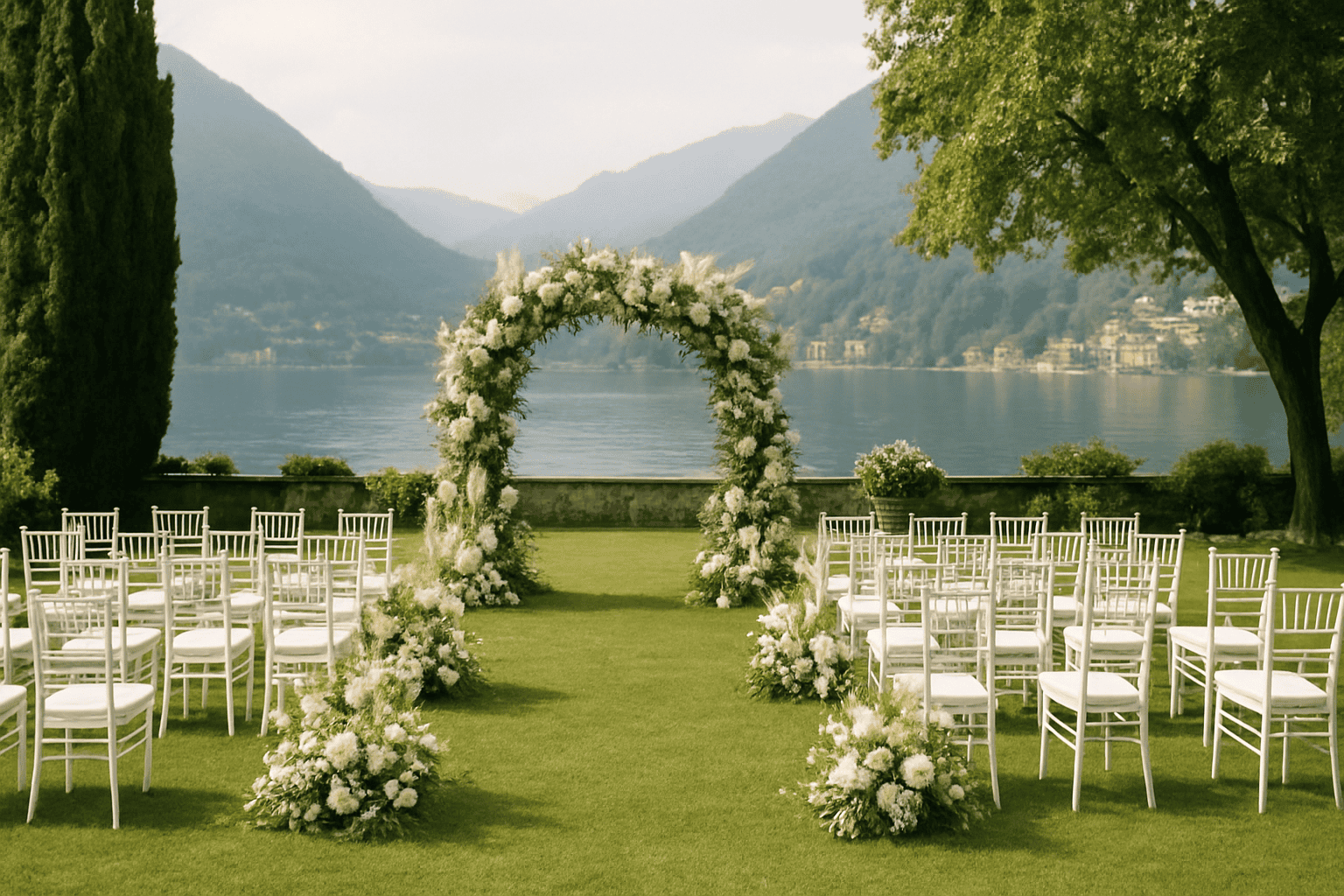
Garden ceremony on Lake Como: layout, shadows and heat management
Garden ceremony on Lake Como: why layout, shade, and heat make the difference
A garden ceremony lake como for many, it is the perfect image of “I do”: natural light, a view, seasonal scents, and an elegance that seems spontaneous. In reality, precisely because the atmosphere is so “real”, the result depends on very concrete details: layout (how people and gazes move), shadows (where you feel comfortable and where you don’t) and heat management (comfort, make-up, flowers, timing).
In an iconic setting like Lake Como, theoutdoor setup is not just decoration: it is the design of space, flows, and perception. This is where the wedding designcomes into play: not “adding things”, but building an experience consistent with the location and with your idea of a wedding.
For a broader overview of the area and its characteristics, you can consult Insight: Lake Como (Wikipedia).
Garden ceremony on Lake Como: objective, style, and real logistics
Goal and style: luxury, intimate, destination (without rigidity)
The garden, on Lake Como, can tell very different styles: from contemporary minimal to romantic, from botanical to classic. The key is to define a clear objective: do you want a ceremony intimate and close-knit, or a more theatrical scenic impact? Do you want the lake view to be the star, or for the floral installation to frame the scene?
In the wedding design the choice is not “view or flowers”: it’s a balance. An arch that’s too dominant can steal the landscape; a setup that’s too light can get lost in a large garden. The best project is the one that dialogues with the greenery and with the location’s architecture, without forcing it.
What to expect in terms of timing and logistics
A garden ceremony requires setup and preparation times that are often underestimated. It’s not just about placing seating: you need to consider access, technical routes, any level changes, lawn protection, and above all the light. On Lake Como, exposure can vary greatly from one garden to another: the same time can be perfect in one villa and challenging in another.
To avoid surprises, it’s useful to think right away about:
- orientation of the ceremony (sun in the eyes, backlighting, reflections off the water);
- natural shade areas (trees, pergolas) and possible additions;
- circulation plan for guests, officiant, and the couple’s entrance;
- waiting areas before and after the ceremony (welcome, photos, toast).
Step-by-step planning for outdoor setup and heat management
Realistic timeline (from 12 to 2 months)
For a wedding on Lake Como, advanced planning is an advantage: it helps to calmly choose the best solution for the garden and to coordinate suppliers in an orderly manner. A realistic timeline can be:
- 12–10 months: concept definition, venue selection, first draft of the ceremony layout and guest flows.
- 9–7 months: selection of key vendors, technical site inspection, study of light/shade in the desired time slots.
- 6–4 months: design of outdoor setup (ceremony + related areas), plan B, draft schedule for the day.
- 3 months: confirmation of transfer logistics, definition of signage and guest communications.
- 2 months: final review of the layout, tabletop run-through of the moments (entrance, readings, exit), hot-weather comfort check.
If you want an operational outline so you don’t forget important steps, this resource can be useful: Organizing a wedding: checklist.
Checklist of essential vendors (ceremony-focused)
The garden ceremony doesn’t exist in isolation: it’s connected to photos, aperitif, movements, and often to a change of atmosphere between day and evening. For this reason, in addition to the officiant, it’s worth coordinating a core group of essential roles:
- Wedding planner / coordination: timing direction, flow management, handling the unexpected.
- Floral & design: aesthetic and functional design (not just the bouquet).
- Audio: microphones and discreet sound reinforcement, especially in open spaces.
- Photo/video: assessment of light and positioning so as not to intrude on the scene.
- Transport: staggered arrivals, shuttles, any restricted access.
The point isn’t “having more vendors,” but getting them to work on a single plan: a wedding design coherent one reduces improvisation and improves the perception of quality.
Guest management and transfers: the layout starts before the garden
A common mistake is to think the layout concerns only the seating. In reality, the perception of order and comfort starts with arrival: where you get out, where you wait, where you find water, where you shelter from the sun. In the Lake Como context, movements may include walking stretches, staircases, paths, and sometimes arrivals by lake.
For this reason, the plan should include:
- meeting point and welcome (even simple, but clear);
- guided path toward the ceremony, without confusing crossings;
- a smooth exit toward photos and a toast, avoiding “bottlenecks.”
Budget and priorities for wedding design in a garden on Lake Como
Main items: what really affects the result
Without getting into numbers, it’s useful to know which areas tend to weigh most when designing an outdoor ceremony: not only flowers, but also logistics, shading structures (if needed), audio, seating, scenic elements, and comfort management. The mistake is to distribute resources evenly: outdoors, some choices have a much stronger visual and practical impact than others.
Where to invest to maximize the scenic effect (and how it photographs)
For a garden ceremony, the eye focuses on three main “frames”:
- ceremony spot (officiant + couple): backdrop, proportions, harmony with the landscape;
- entrance aisle: rhythm, alignments, sense of “arrival”;
- front rows: they are the most photographed and define the overall elegance.
A outdoor setup well thought-out doesn’t necessarily have to be complex: it has to be readable. Correct proportions, a palette consistent with the season, and materials that don’t “clash” with the context are often worth more than random additions.
Mistakes that increase costs (without improving the experience)
- Redoing the layout at the last minute: moving seating and the ceremony spot right up against the event creates extra work and stress.
- Ignoring sun and shade: choosing a time that looks “nice” on paper and then having to scramble with emergency solutions.
- Not planning waiting areas: if guests look for shade and water without guidance, order is lost.
- Underestimated audio: outdoors, if you can’t hear well, the ceremony loses intensity.
Plan B and risk management: weather, shade, and credible alternatives
Weather and alternative solutions (without ruining the style)
Plan B isn’t a “fallback”: it’s a second direction, designed to keep the atmosphere and photos consistent. On Lake Como, even in favorable seasons, it can happen that you have to deal with sudden rain or humidity. The goal is to have an alternative that doesn’t feel like an escape, but a natural scene change.
When you evaluate Plan B, check with the venue:
- indoor space availability and real capacity (not just “we fit”);
- switch timing and access for setups;
- semi-covered options (porticos, greenhouses, loggias) that maintain natural light.
If you are considering shading elements or coverings, check the product sheet materials and color rendering: in photos, some surfaces reflect or alter the light more than you might imagine.
Permissions and constraints of the location: what to clarify immediately
Every garden has practical rules and limits: lawn protection, access, setup times, no-walk areas, constraints on fixings or supports. There’s no need to get into regulatory aspects: it’s enough to set up a clear conversation with the venue to understand what is possible and what needs to be reconsidered.
Some useful questions:
- What are the usable areas for ceremony and waiting?
- or delimiting spaces? shaded spots “natural” ones to enhance?
- How are technical accesses and unloading materials handled?
Contracts and deposits: clarity on layout changes and Plan B
To reduce stress and misunderstandings, it’s helpful for agreements and confirmations to explicitly include: what happens if the ceremony spot changes, if you move indoors, if the time is brought forward or pushed back to avoid the heat. It’s not a “cold” topic: it’s the way to protect the experience and keep the project wedding design faithful to the initial idea.
Guest experience: comfort, shade, and flow in an outdoor ceremony
Welcome moment and hospitality: heat is managed with micro-choices
In the garden, guests immediately sense whether it has been thought through. Managing the heat is not just “providing shade”: it’s creating a rhythm that avoids unnecessary waiting in the sun and offering small points of relief without breaking the aesthetic.
Simple but effective actions:
- staggered arrivals with clear indications of the actual start time;
- shaded waiting area (even partial) before taking your seat;
- water available in a discreet way and integrated into the setting;
- streamlined ceremony during the hottest moments, leaving room for photos and toasts in cooler areas.
From the point of view of the layout, it works very well to distinguish three areas: waiting, seating, exit. This way you avoid those who arrive early taking seats “at random” or groups forming that block the entrance.
Transport, shuttles and parking: reduce friction, increase elegance
Lake Como is a destination that often involves narrow roads, variable timing and selective access. Even a perfect setup can lose its magic if guests arrive disoriented or late. The advice is to design the arrival as part of the scenery: a clear drop-off point, a short and shaded route when possible, and a welcome that gently directs people.
If you plan shuttles or transfers, communication must be consistent and repeated: invitation, website, reminder messages. Clarity is a form of hospitality.
Clear directions and wedding website: fewer questions, more presence
In a garden ceremony lake como, practical information helps everyone experience the moment without distractions: where to go, when to arrive, what kind of terrain to expect, whether there are stretches on foot, where plan B takes place. A wedding website or an essential info page reduces last-minute messages and makes the experience smoother.
In the text, avoid “rulebook” tones and prefer useful, kind directions. And if you suggest accessories (for example for the sun), keep it generic: every personal choice depends on style and sensitivity.
Ceremony layout: orientation, shade and visual composition in the garden
Orientation: sun, backlighting and lake view
Lake Como offers beautiful light, but it can be challenging. A good layout starts with orientation: where guests are facing, where the sun falls during the ceremony, how reflections on the water change. If the ceremony spot is backlit, the effect can be poetic, but it must be managed: not all gardens allow the same result, and not all times are the same.
A practical rule: favor a setup that avoids direct sun in the eyes for guests and the couple, especially if the ceremony lasts more than a few minutes. When it’s not possible, you work with timing, natural shade and a more intimate arrangement.
Shade: natural, “designed” and integrated into the wedding design
Shadows are not a problem to hide: they are a design tool. A pergola, a row of trees, a facade that casts shade can become part of the visual story. The important thing is that the shade is In luxury, the scenic effect is not just “big”: it is: irregular patches on half the seats create discomfort and uneven photos.
If integrations are needed, the goal is to make them look like part of the project, not a technical add-on. Materials, colors and proportions must dialogue with the whole; if you are considering fabrics or structures, check the product sheet the result in natural light.
Heat management: timing, seating and details that protect the atmosphere
When it’s hot, the ceremony must be designed to be pleasant, not “enduring”. Some wedding design choices help without overturning the style:
- duration and rhythm: essential readings, entrance without unnecessary waiting, immediate exit toward a cooler area.
- comfortable seating and well spaced in the passageways, to avoid crowding.
- suitable materials: some surfaces heat up more than others; better to consider comfort to the touch.
- water station close by but discreet, so as not to interrupt the scene.
The best result is achieved when comfort and beauty are the same thing: a outdoor setup successful one is when guests don’t “notice” the heat management, because they simply feel good.
For inspiration and an overview of how to enhance the destination, you can also read Wedding on Lake Como: guide.
Useful links for organizing an outdoor ceremony on Lake Como
- Organizing a wedding: checklist to set priorities and timing without leaving anything out.
- Wedding on Lake Como: guide to explore the style, atmosphere, and logic of the destination.
Designing a garden ceremony on Lake Como with a bespoke wedding design
A garden ceremony on Lake Como truly succeeds when layout, shadows e heat management they are conceived together, from the very beginning. This is where wedding design becomes strategic: it transforms constraints and real conditions (light, pathways, comfort) into a natural, elegant aesthetic consistent with the location.
If you want a complete project of outdoor setup and direction attentive to the guest experience, explore the section dedicated to the wedding on Lake Como on ChiaraB Events: you’ll find ideas, approaches, and inspiration to build a harmonious day, from the first arrival to the last toast.
FAQ
What is the best time for a garden ceremony on Lake Como if we’re worried about the heat?
It depends on the garden’s exposure and the natural shade available. In general, it’s best to assess the actual light with an on-site visit at the same time slot chosen, so as to avoid direct sun on the guests and on the ceremony area.
How do you design a layout that enhances the lake view without sacrificing comfort?
You start with orientation (view and sun), then you design the aisle, seating, and ceremony point with consistent proportions. Comfort is achieved by providing shaded waiting areas, orderly flows, and a quick exit to a cooler area after the “yes”.
Does Plan B ruin the style of an outdoor ceremony?
No, if it is designed as a coherent second setting. Ideally, choose an alternative with good natural light (for example, covered but open spaces) and define in advance how the layout and decorations will be adapted.
What are the most common mistakes in managing the heat during the ceremony?
Underestimating expectations, seating guests in direct sunlight, failing to provide a comfortable welcome area, and not coordinating timing and movements. Audio is also often neglected: if it can’t be heard well, attention drops and discomfort increases.
What role does wedding design play in an outdoor setup on Lake Como?
Wedding design combines aesthetics and functionality: it integrates landscape, greenery, and architecture with layout, palette, and materials, while also managing comfort, shade, and flow. The result is an elegant, smooth, and natural ceremony, without visible “emergency” solutions.
From the blog
 Lake Como
Floral arrangements on Lake Como: elegant palettes and seasonality
Floral arrangements Lake Como: why elegant palettes and seasonality really matter When talking about floral arrangements Lake of […]
Read more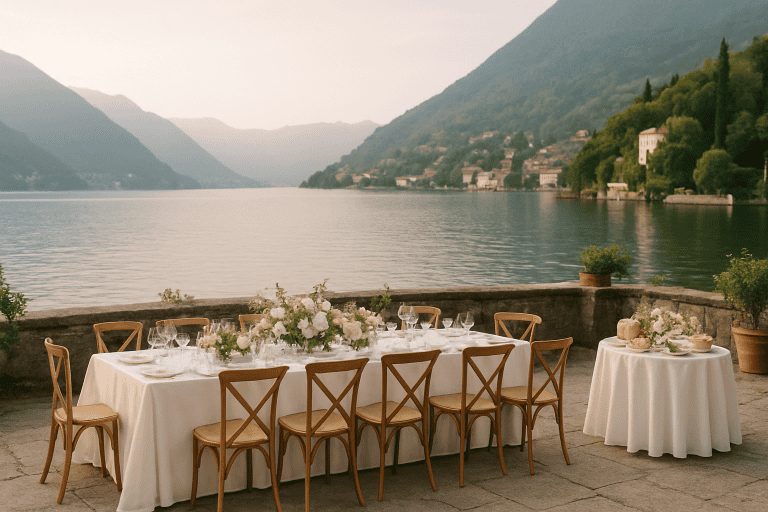 Lake Como
How to manage a wedding weekend on Lake Como: welcome dinner and brunch
Wedding weekend Lake Como: why welcome dinner and farewell brunch are the right choice A wedding weekend lake […]
Read more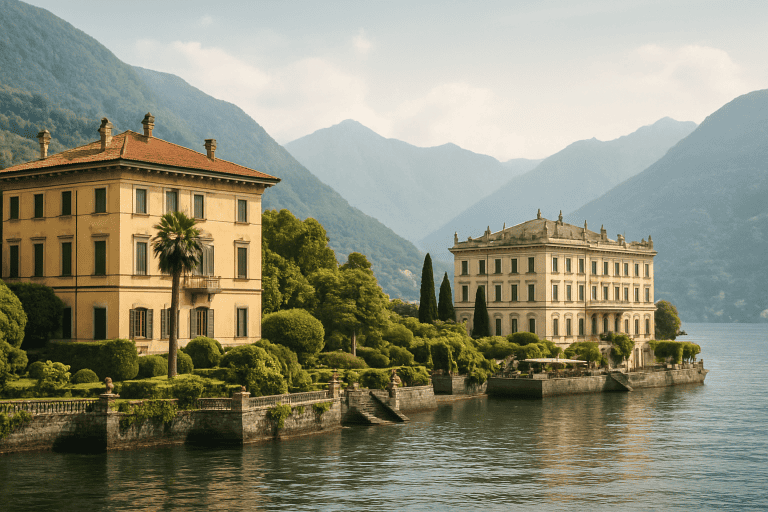 Lake Como
Historic villa vs luxury hotel on Lake Como: which choice is really worth it?
Historic villa vs luxury hotel on Lake Como: how to really choose the right venue Choosing between historic villa […]
Read more