
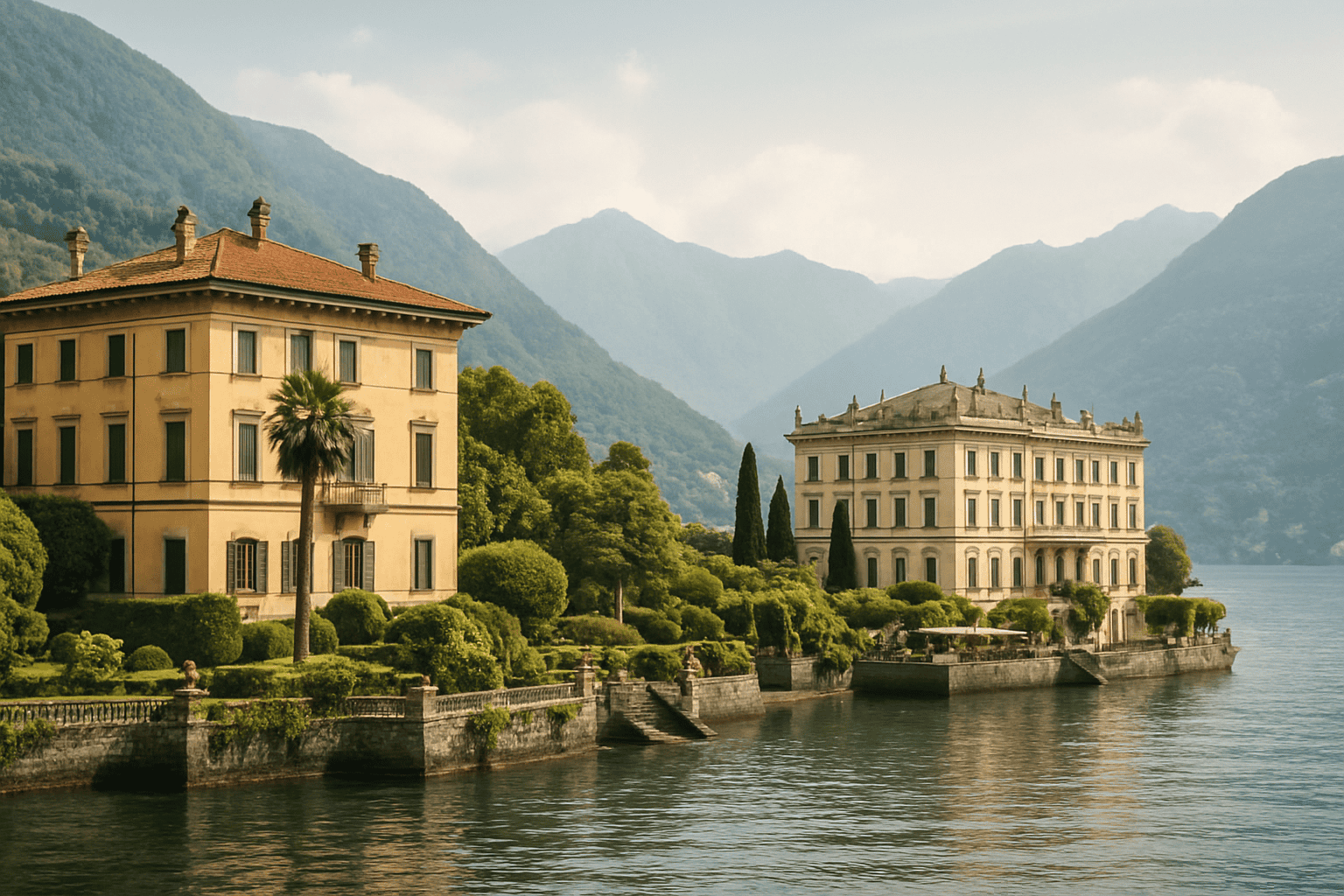
Historic villa vs luxury hotel on Lake Como: which choice is really worth it?
Historic villa vs luxury hotel on Lake Como: how to truly choose the right venue
Choosing between historic villa e luxury hotels on Lake Como it's not just a matter of style: it changes the way you will experience the day, the logistics, the guests' experience, and even the overall perception of the event. If you are considering the formula historic villa vs Lake Como hotel, the goal of this guide is to help you understand what really makes sense based on concrete priorities: atmosphere, control of the spaces, privacy, included services, weather management and organizational complexity.
Lake Como is one of the most sought-after destinations for elegant events and international weddings: a setting where the Lake Como location is not “just” a backdrop, but a narrative element. Not by chance, those looking for a wedding Lake Como often want a complete experience: a scenic arrival, attentive hospitality, moments on the lake, design details and a pace that alternates emotion and comfort. For a general overview of the area, you can also read In-depth: Lake Como (Wikipedia).
Historic villa vs Lake Como hotel: goals, style and impact on organization
What kind of wedding do you really want: luxury, intimate or destination?
Before getting into numbers and logistics, the key question is: what feeling do you want guests to take home? A historic villa tends to convey exclusivity, authenticity and a “private” atmosphere. A luxury hotel, on the other hand, often offers a more structured, smooth and service-oriented, experience, with established standards.
- Historic villa: ideal if you want an event that feels “like at your home”, with spaces that tell a story, gardens and iconic views. Perfect for those who want a lot of customization.
- Luxury hotels: ideal if you want a more straightforward organization, with an in-house team used to managing guests, rooms, catering and timing in an integrated way.
What to expect in terms of timing and logistics
The most concrete difference between the two options often emerges behind the scenes. In a villa, the event may require more elaborate direction: access, loading/unloading, supplier shifts, setups and breakdowns. In a hotel, many procedures are already well established, and some services can be in-house or coordinated with regular partners.
In summary: the villa gives you more freedom, but often requires more coordination. The hotel gives you more structure, but sometimes with more guided customization margins (check in the venue sheet what is included and what is constrained).
Step-by-step planning for a Lake Como location (villa or hotel)
A realistic timeline: from vision to details
Effective planning on Lake Como starts with a realistic timeline, especially if you are organizing a destination wedding. Without strict timing, you can think in phases: from the general idea to the definition of suppliers, up to the direction of key moments. The real difference between a villa and a hotel is that in a villa you might have to manage more “micro-projects” (setups, logistics, technical spaces), while in a hotel some pieces are already integrated.
To avoid losing the thread, a clear work structure can help you: Organizing a wedding: checklist it’s a useful starting point to visualize priorities and the sequence of choices.
Essential supplier checklist (without complicating life)
Whether you choose a villa or a hotel, there are vendors that directly impact the success of the event. The difference is that in a hotel some services may be in-house, while in a villa they often need to be selected and coordinated one by one. In both cases, aim for a team that knows how to work with the typical pace and access constraints of the Lake.
- Coordination and direction: essential when there are multiple spaces, multiple moments, and multiple transfers.
- Catering/banqueting: in a hotel it may be in-house; in a villa often external (check the venue sheet for any exclusivities).
- Setups and floral design: they determine the visual impact, especially in historic or panoramic settings.
- Photos and videos: on the Lake, the light and views are an asset; you need to plan timing and movements.
- Music and entertainment: pay attention to spaces, acoustics, and schedules (check the venue sheet for constraints).
Guest management and transfers: the element that makes it “worth it/not worth it”
In the comparison between a historic villa vs a hotel, guest logistics is often the variable that tips the scales. A luxury hotel can offer an immediate advantage: on-site rooms and centralized welcome services. In a historic villa, on the other hand, you may have to spread guests across multiple properties and coordinate transfers with greater precision.
If your goal is a frictionless experience, consider:
- meeting point for departures and returns;
- staggered arrivals to avoid congestion;
- shuttle plan clear and communicated in advance;
- lake option to make the transfer part of the experience (check availability and conditions with vendors).
Budget and priorities: where it’s worth investing in a wedding lake como
Main items that change between historic villa and hotel
Without talking about prices, it’s useful to understand which items tend to weigh more depending on the choice. In a historic villa, the components related to setup, logistics and production (technical areas, installations, flow management) often increase. In a luxury hotel, some items may be more “compact” because they’re integrated into the service, but you may have less freedom on certain customizations.
In practice:
- Villa: more creative control, but more elements to orchestrate.
- Hotel: more operational simplicity, but with routes and standards often already defined.
Where to invest to maximize the scenic effect on Lake Como
Lake Como is already scenic: the best strategy is to enhance what already exists instead of “covering it”. Whether you’re in a villa or a hotel, the wow effect comes from coherent, targeted choices:
- Timing of the light: plan the key moments (ceremony, aperitif, photos) based on how the view will look.
- Space design: a few strong elements, well placed, often work better than an excess of decorations.
- Guest experience: elegant signage, welcome, comfort and smooth flow between areas.
- A “signature” moment: an arrival by lake, a sunset toast, a garden dinner (check the location sheet for feasibility).
Mistakes that increase complexity (and the budget) without improving the result
When you fall in love with a Lake Como location, it’s easy to add “extras” that complicate the direction without any real perceived benefit. Some typical examples:
- too many area changes (ceremony in one spot, aperitif far away, dinner elsewhere): nice on paper, tiring in reality;
- redundant setups in spaces already rich in character (especially in a historic villa);
- non-optimized transfers for guests, which turn the experience into waiting;
- weather plan underestimated, which leads to last-minute choices (always check the available alternatives).
Plan B and risk management between a historic villa and a luxury hotel on Lake Como
Weather: alternative solutions that don’t feel like “fallbacks”
Weather is one of the reasons why many couples consider a luxury hotel: it often has indoor halls already ready and scenic. In a historic villa, Plan B can be just as elegant, but it must be designed in advance: tensile structures, porticoes, historic halls, greenhouses or covered spaces (check the location sheet for the real options).
The golden rule: Plan B must be consistent with the style e communicated to the team as if it were Plan A. That way, if it needs to be activated, no one improvises.
Permissions and constraints of the location: what to ask before confirming
Every location on Lake Como has specific rules: hours, music, access, use of certain areas, limitations for setups and logistics. It’s not a problem: it’s normal. It becomes a problem when you find out late.
Before choosing between a historic villa and a hotel, ask (and have confirmed in writing) aspects such as:
- usable spaces and their actual capacity (check the location sheet);
- times and management of the evening moments;
- catering policy and external suppliers;
- technical accesses for setup and unloading.
Contracts and deposits: how to reduce uncertainty
In a destination wedding, contractual clarity is part of peace of mind. Without going into legal aspects, the point is to have a clear view of: what is included, what is extra, what the change conditions are, and what the operational timelines are. In particular, in the comparison historic villa vs Lake Como hotel, the hotel tends to have more standardized processes, while the villa may require more customized agreements (check the location sheet and the documents provided).
Guest experience: the true luxury in a Lake Como location
Welcome moment, activities and hospitality: what changes between villa and hotel
In the wedding Lake Como, guests often come from far away and experience the wedding as a trip. Here the choice between villa and hotel makes a huge difference.
- : there are often indoor rooms and covered spaces already ready. Ask how the arrangement changes, where the ceremony and party take place, and which areas remain usable.: welcome, concierge and services can make everything easier. It’s easier to manage check-in, rooms, breakfasts and last-minute requests.
- : check availability of lounges, permitted tents or usable porticoes. If an external structure is needed, clarify installation times and visual impact:: the experience can be more intimate and memorable, but it’s worth building a dedicated hospitality system: welcome desk, useful contacts, assistance with transfers and timing.
An effective idea is to create a mini-narrative of the weekend: arrival, welcome drink, wedding day, final goodbyes. Even without “filling” the schedule, it’s enough to give guests the feeling that everything is thought through.
Transportation, shuttles, parking: details guests notice immediately
The beauty of Lake Como goes hand in hand with scenic roads, sometimes narrow access points and travel times that can vary. For this reason, logistics are not a detail: they are part of the perceived quality.
Whatever the choice, take care of these aspects:
- arrival directions simple and up to date;
- drop-off points clear (especially for taxis and private hire);
- shuttle plan with understandable schedules;
- dedicated parking and alternatives (check availability and rules in the location listing).
Clear directions and a wedding website: the elegant solution to reduce questions
When guests are international or when the venue is complex, a wedding website (or a well-made information page) becomes a luxury tool: it reduces messages, misunderstandings, and anxiety. Include practical information, but with a polished tone: how to get there, dress code, timing, useful contacts, suggestions on what to do in the area. If you have multiple locations (hotel for the stay, villa for the event), clarity is essential.
How to decide: historic villa or luxury hotel on Lake Como?
If you want an operational summary, try answering these questions:
- Do you want maximum privacy and a “residential” atmosphere? The historic villa tends to be the most consistent choice.
- Do you want to simplify logistics and hospitality with integrated services? The luxury hotel is often more straightforward.
- How much do you want to customize spaces and design? In a villa you can build a more bespoke project; in a hotel you can achieve elegance with more guided processes.
- Is Plan B a critical point for you? Carefully evaluate covered spaces and the quality of the alternatives (check the location listing).
In both cases, what “pays off” is what allows you to achieve a coherent experience with less friction: for you, for the guests, and for the vendors.
Useful links for organizing a Wedding on Lake Como
If you are building your vision and want a complete reference on the topic, you can find ideas and in-depth information here: Wedding on Lake Como: guide. It’s useful to help you navigate style, logistics, and the choices that really matter when the venue becomes part of the story.
CTA If you want to turn the choice between a historic villa and a hotel into a harmonious project (without stress and with impeccable direction), explore the section dedicated to the Wedding on Lake Como: guide and discover ChiaraB Events' approach to creating an elegant, seamless, and memorable Lake Como wedding.
FAQ
Is a historic villa or a luxury hotel better for a wedding on Lake Como?
It depends on priorities: the historic villa offers more privacy and customization, while the luxury hotel simplifies hospitality and logistics with integrated services. Evaluate the desired style, guest management, and the quality of Plan B (check in the location sheet).
What are the main logistical aspects to consider at a Lake Como venue?
Transfers, supplier access, drop-off points, shuttles, parking, and timing between different moments of the event. On the lake, it is essential to communicate clear instructions and provide alternatives in case of unforeseen events (check the location sheet).
How to manage the weather Plan B in a historic villa or in a hotel on Lake Como?
In hotels there are often indoor rooms already set up; in a villa, Plan B must be designed in advance, considering porticos, historic rooms, or dedicated structures. The goal is to have an alternative that is consistent and not perceived as a fallback (check the location sheet).
How to improve the guest experience at a wedding on Lake Como?
Take care of hospitality, communication, and comfort: welcome moment, practical information, wedding website, clear timing, and well-coordinated transportation. If guests are staying in different accommodations, define a simple and reliable shuttle plan (check in the venue sheet).
When is it worth choosing a luxury hotel over a historic villa on Lake Como?
It’s worth it when you want to reduce organizational complexity, centralize rooms and services, and have already proven processes for catering and guest management. It’s a particularly effective choice for large groups or for those who want a very smooth experience (check the location sheet).
From the blog
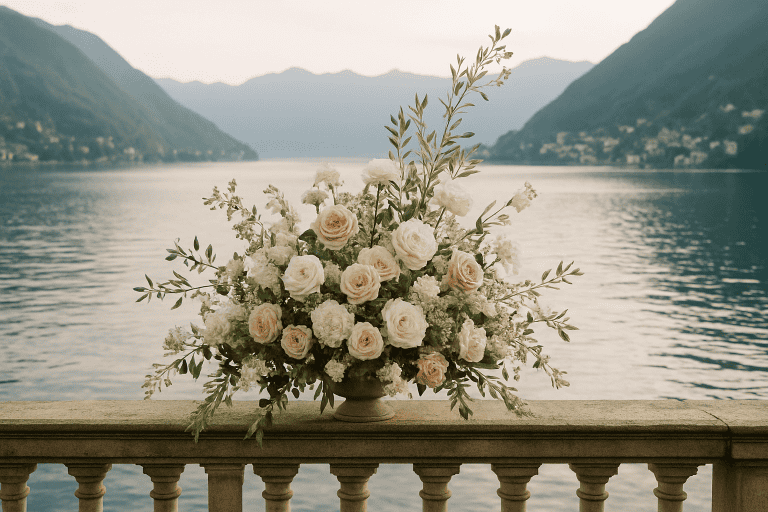 Lake Como
Floral arrangements on Lake Como: elegant palettes and seasonality
Floral arrangements Lake Como: why elegant palettes and seasonality really matter When talking about floral arrangements Lake of […]
Read more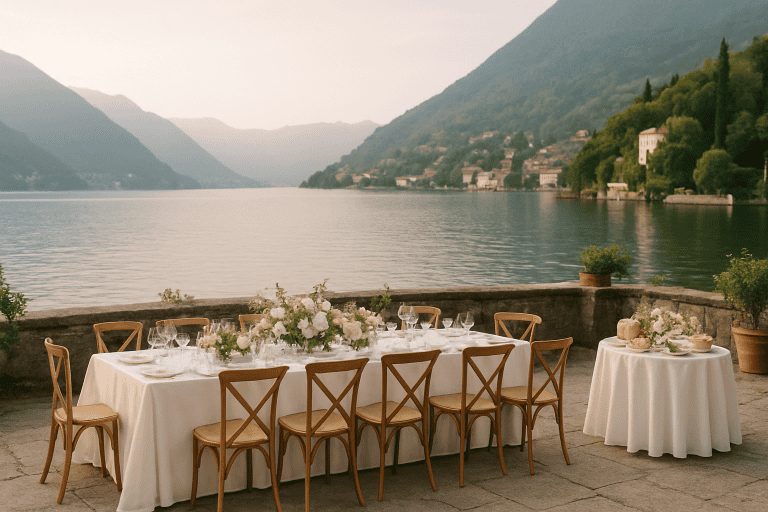 Lake Como
How to manage a wedding weekend on Lake Como: welcome dinner and brunch
Wedding weekend Lake Como: why welcome dinner and farewell brunch are the right choice A wedding weekend lake […]
Read more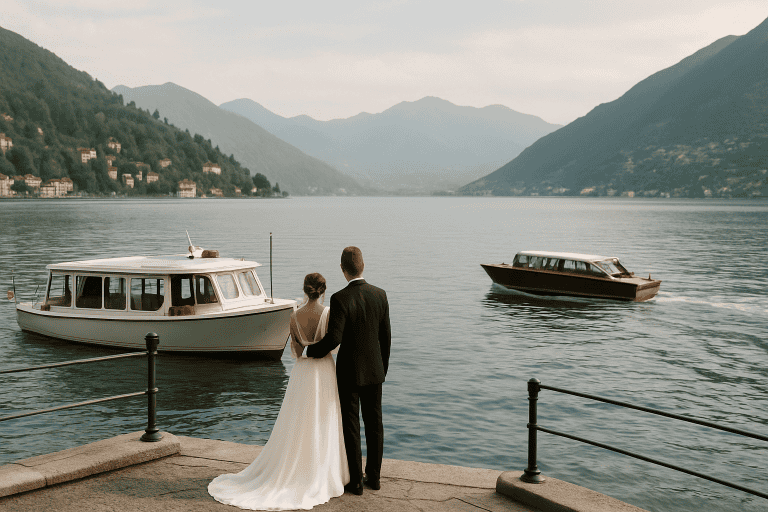 Lake Como
Transport and parking on Lake Como: shuttles, taxi boats, and realistic timing
Transport and parking on Lake Como: what to really expect (times, style, logistics) When talking about weddings on the Lake […]
Read more