
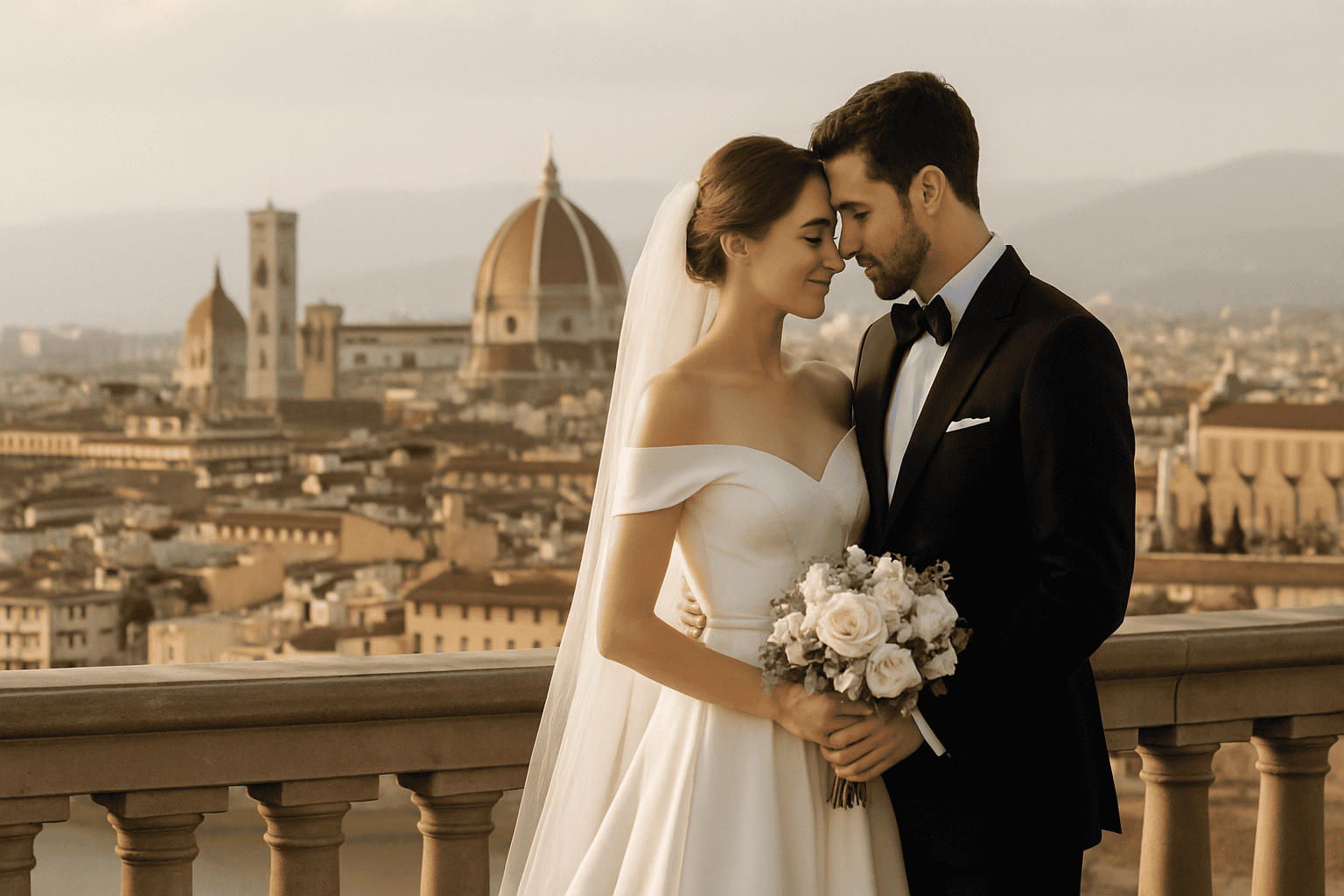
Getting married in Florence - Art, History and Luxury in the Heart of Tuscany
Getting married in Florence: the charm of a city that becomes a backdrop
Getting married in Florence means choosing a place where art, history and luxury coexist naturally: just cross a bridge over the Arno, step into a silent cloister or look out from a terrace to understand that here every detail has a precise character. Florence doesn’t “serve as a backdrop”: it takes part. And it does so with a beauty that needs no special effects, because it’s already all in the light, the stones, the gardens and the Renaissance perspectives.
For those who want a well-curated, elegant and coherent wedding, the city offers a rare balance: monumental grandeur e intimacy, tradition and contemporaneity, ritual and creative freedom. Whether you imagine an intimate ceremony or an event spread over several days, Florence lets you build a complete experience, with a natural rhythm between culture, conviviality and moments to remember.
Wedding venues in Florence: historic palaces, villas and panoramic terraces
Choosing the venue is often the first step in giving the wedding an identity. In Florence and the surrounding area you can choose among very different settings, each with a specific aesthetic language. The key is to understand what atmosphere you want: solemn, romantic, contemporary, bucolic or a well-balanced mix.
Historic palaces and period residences in the center of Florence
If you dream of a wedding with a classic feel, historic palaces are a natural option: frescoed halls, inner courtyards, scenic staircases, architectural details that become part of the design. In these settings, the setup works when it is measured: flowers and lights must not “compete” with the environment, but enhance it.
Villas on the Florentine hills: nature and a view of the city
The hills around Florence offer villas with gardens, tree-lined avenues and panoramic glimpses. It’s the ideal choice for those who want a wedding that alternates outdoor and indoor spaces, with a smooth transition between ceremony, aperitif and dinner. Depending on the season, consider the presence of covered areas and shelter solutions: for some details, check the product sheet or in the venue description.
Terraces and rooftops: an urban and sophisticated wedding
For those who love contemporary elegance, a terrace with a view over the rooftops can turn the reception into a highly photographic experience. Here the lighting design is essential: a discreet direction, designed to accompany the sunset and the evening, makes the atmosphere warm and cinematic.
Art and history in wedding design: how to create a “Florentine” wedding without clichés
The risk, in an iconic city, is falling into the “postcard” theme. A truly Florentine wedding isn’t made of repeated symbols, but of consistent choices: materials, palettes, textures, and the rhythm of the event.
Some ideas that work well when you want to evoke Florence with elegance:
- Palettes inspired by stones and pigments: ivory, sand, soft terracotta, sage green, matte gold.
- Authentic materials: linen, worked glass, handcrafted ceramics, satin-finish metals.
- “Garden” flowers and airy arrangements: more movement, less rigidity.
- Calligraphy and stationery with an editorial, clean taste, without excessive decoration.
If you’d like support in defining style and visual coherence, you can explore the approach on the page Wedding planning and design and consider a tailored journey.
Wedding weekend itinerary in Florence: guest welcome, events, and timing
Many couples choose Florence also for the possibility of turning the wedding into a wedding weekend. This format is particularly suitable when guests are coming from out of town or when you want to experience the city more calmly, without packing everything into a few hours.
A typical (customizable) structure can include:
- Welcome moment informal: an evening get-together with drinks and local tastings, perfect for breaking the ice.
- Wedding day: ceremony, reception, party; with timing planned around light and travel.
- Brunch or final goodbyes: a relaxed moment, ideal for ending on a light note.
The advantage is twofold: guests enjoy a complete experience and you can manage the event with a more natural rhythm. If you’re considering a multi-day organization, you’ll also find useful ideas in the section Private events and celebrations.
Style and discreet luxury: dress code, details and atmosphere
Luxury in Florence is rarely ostentatious: it is perceived quality, care for materials, proportions, harmony. This is also reflected in the style choices of the couple and the guests.
Dress code: elegance consistent with the location
A well-communicated dress code helps create a refined overall look. There’s no need to impose rigid rules: it’s enough to suggest a mood (for example “creative black tie” or “summer elegance”) and indicate practicality based on the spaces. If the event includes a garden, gravel or staircases, it’s better to guide guests toward appropriate footwear and outerwear.
Details that make a difference
In a high-profile wedding, details are not “decorations”: they are signals of care. Some examples:
- Place cards and menus integrated into the mise en place, with a clean, legible design.
- Scenting and candles to build a sensory memory (to be checked based on the spaces).
- Music designed in phases: welcome, aperitif, dinner, party.
- Guest experience: small touches that make everything simpler and more enjoyable.
Photography and video in Florence: light, views and authentic moments
Florence offers views that already look like film sets, but what makes the difference is the direction of the day: timelines, movements, management of breaks and naturalness. The advice is to avoid an overly tight “photo tour” approach: it’s better to choose a few meaningful spots and leave room for the beauty of the unexpected.
Some elements to consider:
- Golden hour: plan the aperitif or a short couple session when the light is softer.
- Historic interiors: frescoes and important rooms require respectful, well-lit photography.
- Real moments: entrances, toasts, hugs; they are often the most powerful images.
If you want an event that “works” on camera too, the planning must be conceived in an integrated way: lighting, spaces, timing and flows. You can find inspiration and use cases on the page Wedding portfolio.
Reception and conviviality: how to enhance Tuscan cuisine with a contemporary touch
Conviviality is part of Tuscan identity: a reception in Florence can be elegant without losing warmth. The winning idea is to build a gastronomic journey that respects tradition, but with modern presentation and a smooth pacing of the moments.
For a balanced experience:
- Aperitif with light, well-distributed islands, to avoid queues and create flow.
- Dinner with a pace that encourages conversation and comfort.
- Desserts and party as a scene change: lights, music, and a more energetic atmosphere.
If you anticipate specific dietary needs for some guests, it’s helpful to manage communication in advance and coordinate alternatives discreetly, without “labeling” anyone.
Transportation and city logistics: getting around, parking, and guest comfort
Organizing a wedding in Florence requires attention to logistics, especially if the event unfolds across multiple locations. The historic center has its own dynamics and, even when everything looks close on the map, actual timings can change depending on schedules and access.
To improve the guest experience:
- Shuttles or transfers coordinated for key moments (ceremony, reception, return).
- Clear directions on meeting points and times, in a digital or printed wedding guide.
- Plan B for any delays: a small tolerance window avoids stress.
If you want full direction that also includes these aspects, you can explore the services on the page Wedding planning in Florence.
Flowers, lighting, and table setting: the aesthetic that brings art and romance together
In a setting like Florence, the best setup is the one that converses with the architecture. There’s no need to “fill”: you need to create focal points and lines of continuity between the ceremony and the reception.
Flowers: natural volumes and harmonious colors
Arrangements with movement, varied heights, and seasonal materials help achieve a sophisticated result. If you want a more contemporary look, you can opt for monochromatic palettes or soft contrasts, avoiding overly saturated pairings if the venue is already rich in details.
Lighting: the true emotional direction of the evening
Lights aren’t just for “seeing”: they’re for feeling. Candles, warm light points, architectural lighting, and a coherent plan for the party phase transform the experience. Some solutions depend on the spaces and technical possibilities: for specific details, check the product sheet or in the supplier’s guidelines.
Mise en place: balance between material and form
An elegant table is born from balance: fabrics, transparencies, ceramics, cutlery and centerpieces must speak the same language. A practical tip: choose a “hero” element (for example the fabric or the floral arrangement) and build the rest in a complementary way.
Useful links for organizing a wedding in Florence in style
To plan clearly and maintain consistency between aesthetics and logistics, these in-depth resources can help you find your way:
- Wedding planner consultation to define priorities, timing and style.
- Day-of event coordination services to enjoy the day without worries.
Create your wedding in Florence with ChiaraB Events
If you want to get married in Florence with a project that brings together aesthetics, organization and attention to the experience, explore the category dedicated to services and let ChiaraB Events guide you: from the initial idea to the direction of the day, we will build a coherent, elegant and authentic event.
FAQ
What is the best time of year to get married in Florence?
It depends on the style you want: spring and early autumn are often chosen for mild temperatures and pleasant light, while summer enhances evening events and rooftops. Always consider indoor spaces and a plan B based on the venue.
Is it better to choose a location in the city center or in the Florentine hills?
The city center offers a monumental and convenient atmosphere for those staying in town; the hills guarantee privacy, greenery, and panoramic views. The ideal choice depends on logistics, number of guests, and the type of experience you want to create.
How to avoid a “postcard” themed wedding in Florence?
Focus on consistency and quality: palettes inspired by the city's materials, restrained setups, clean stationery, and a well-thought-out lighting design. The goal is to engage with the architecture without overloading it.
How to organize a wedding weekend in Florence?
You can plan an informal welcome moment on the wedding day with timing optimized for light and travel, and a farewell brunch. The overall direction works better when logistics and style are designed together.
Which logistical aspects are most important in a wedding in Florence?
Transfers between locations, clear meeting points, real-time time management in the historic center, and a plan B. A wedding guide for guests and precise coordination reduce stress and unforeseen events.
How to enhance photos and videos during a wedding in Florence?
Choose a few meaningful highlights, plan a short session during golden hour, and take care of the evening lighting. Avoid an overly tight schedule: authentic moments often become the strongest memories.
From the blog
 Wedding
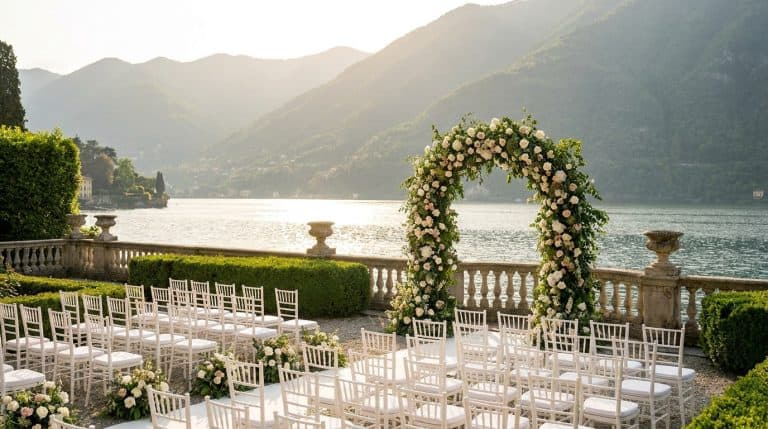
Dream Wedding on Lake Como - The Most Exclusive Locations
A wedding on Lake Como is an idea that combines iconic scenery, top-level hospitality, and a naturally cinematic atmosphere. […]
Read more Tips
Tips
Wedding Ideas: Trends and Tips for a Perfect Wedding
Organizing a wedding today means choosing among endless possibilities without losing sight of what really matters: telling your […]
Read more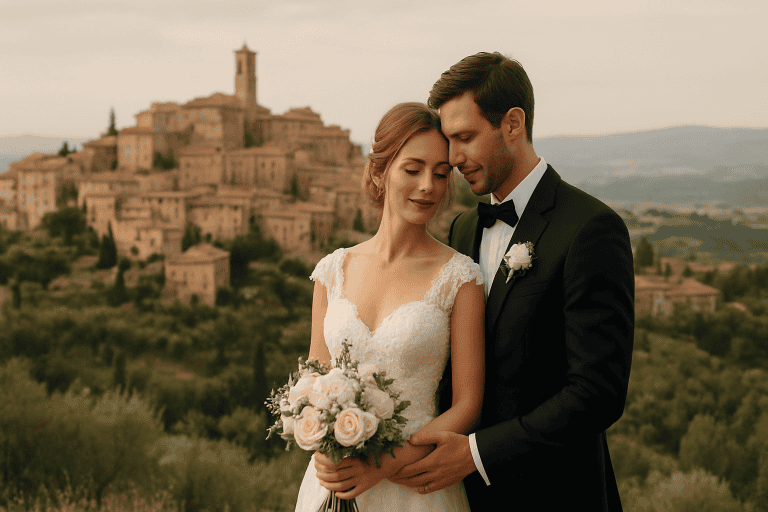 Wedding
Luxury Wedding in Montepulciano - History and Romantic Atmosphere
Luxury wedding in Montepulciano: Tuscan elegance between history and romantic atmosphere Montepulciano is one of those places that seem born […]
Read more