
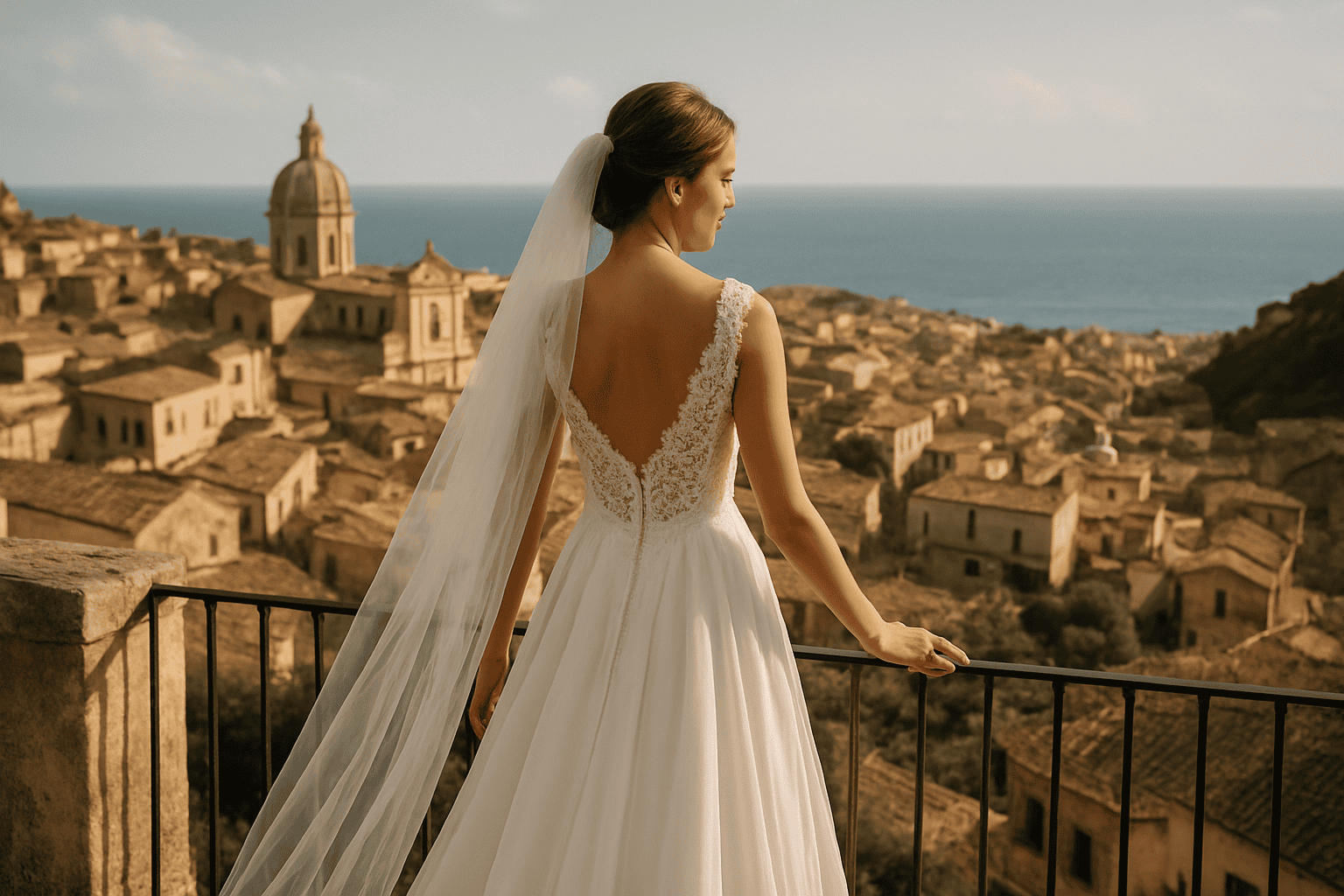
How to Organise a Wedding in Sicily from Another Region
Organising a wedding in Sicily Living in another region is an exciting project, but it requires method: distance, response times, reduced inspections, and a network of suppliers to coordinate without always being on site. The good news is that, with a clear strategy and the right tools, you can create an authentic, well-curated, and perfectly manageable event even remotely.
In this guide you’ll find a practical path: from choosing the area and the venue, to managing vendors, all the way to logistics for guests and the couple. The goal is to help you make solid decisions, reduce unexpected issues, and reach the big day with the feeling that you have everything under control.
Planning a wedding in Sicily from another region: where to start
When you plan from a distance, the order in which you tackle choices makes the difference. Before you fall in love with a detail, set an organizational foundation: priorities, timeline, and style.
- Define the vision: atmosphere (elegant, intimate, contemporary, traditional), approximate number of guests, time of day (lunch, dinner, multi-day event).
- Identify the time window: more than the “perfect” date, you need a realistic period for site visits and confirmations.
- Set priorities: for some, the venue matters most; for others, the food; for others still, the music or photography. Putting 2–3 elements at the top helps you avoid costly second thoughts in terms of time and energy.
If you want an operational outline, it can help to consult the wedding checklist guide and adapt it to a “remote” organization, with earlier deadlines for what requires site visits.
Choosing the right area in Sicily: sea, art cities, or countryside
Sicily is large and very different from one area to another. Choosing the area isn’t just a matter of scenery: it affects travel, hospitality, culinary style, and vendor availability.
Wedding in Sicily by the sea
Perfect if you want light, sunsets, and a Mediterranean mood. Carefully consider wind management and shaded areas, especially for outdoor ceremonies. If the venue offers a plan B, ask for realistic photos and videos of how it is set up.
Wedding in Sicily in a city or in historic villages
Ideal for those who love architecture, squares, palaces, and a more urban rhythm. It’s often easier for guests to get around without a car, but it may require more careful planning for access, parking, and schedules.
Wedding in Sicily among vineyards and countryside
An intimate, scenic atmosphere, great for multi-day events. Consider the distance from airports and the availability of accommodation nearby, so you don’t turn every trip into an “expedition”.
A good criterion: imagine the guest experience. If most are coming from out of town, focus on an area with easy connections and an accommodation offer consistent with the type of event.
How to choose a wedding venue in Sicily without being on site
The venue is the pivot: it defines logistics, style, and often also part of the services. From a distance, the selection must be more “documented” than usual.
- Request complete materials: floor plans, photos in different seasons, video walkthroughs, examples of real setups.
- Check the functional spaces: aperitif area, dining room or dinner area, dance floor, technical spaces for catering and music.
- Ask for a guided call: a video call in which the contact person walks through the spaces and answers your questions in real time.
- Look into the plan B: it’s not enough to say “there’s an indoor room”; you need to understand capacity, aesthetic result, and the event flow.
If the venue offers extra services (lighting, furniture, coordination), check the product sheet state in the detailed proposal what is included and what is optional, so you avoid overlaps with external suppliers.
To better navigate styles and solutions, you can also read ideas and inspirations for wedding setups, useful for understanding which spaces truly enhance your vision.
Wedding planner in Sicily and remote coordination: when it’s worth it
If you live far away, a local coordination figure can make the difference, especially when site visits are few. It’s not just “organization”: it’s on-the-ground presence, time management and mediation between suppliers.
When is it really worth it?
- If you’re planning a multi-day event (welcome, wedding day, brunch).
- If you have many guests arriving from out of town and you want a smooth welcome.
- If the venue requires external suppliers and technical coordination.
- If you want a cohesive aesthetic project (palette, flowers, place settings, lights).
If you’re considering professional support, take a look at ChiaraB Events to understand how the event direction can be structured and which steps make remote planning easier.
Timeline and method: the schedule that reduces stress and unexpected issues
Planning a wedding in Sicily from another region means making some decisions in advance and making communications more efficient. The best method is to work with a block-based timeline, where each phase produces a clear result.
Phase 1: project foundations
- Area and venue (with alternative options).
- Style and palette, also in the form of a moodboard.
- Indicative guest list to estimate spaces and flows.
Phase 2: key vendors
- Catering/banqueting or the venue’s dining proposal.
- Photographer and video (if desired).
- Music and entertainment.
Phase 3: details and production
- Flowers and decorations, coordinated graphics, lighting.
- Transportation, hospitality, welcome.
- Day-of coordination: timings, entrances, special moments.
A practical tip: every call with a vendor should end with 3 written points (decisions made, open questions, next deadline). It’s simple, but it prevents misunderstandings.
Vendors in Sicily: how to select and manage them remotely
Distance shouldn’t turn into “blind choices”. Today you can evaluate almost everything with materials and calls, as long as you ask for the right information.
Useful questions to evaluate a vendor
- What is the work process and what information is needed to get started?
- How do they handle unexpected weather issues or changes to the schedule?
- Who will be present on the day of the event and in what role?
- Can they share examples of similar work in terms of style and context?
Tools that simplify coordination
- Shared folder with contracts, inspirations, floor plans and schedules.
- Single document with contacts and responsibilities (who does what).
- Alignment call among main vendors, especially for lighting/music/service timing.
If you want a reference for the aesthetic side, you can explore ideas for wedding flowers and decorations and use them as a basis to explain to vendors the result you want, without having to “invent” technical words.
Logistics for traveling guests: airports, transfers and accommodation
When Sicily is chosen as the destination, often many guests travel. Logistics becomes part of the experience: if it’s clear and well communicated, everyone will feel welcomed; if it’s confusing, stress increases.
How to simplify travel
- Define reference points: a recommended area to stay, close to key locations.
- Consider organized transfers for the main moments (ceremony, reception, return).
- Prepare essential directions: average times, practical tips, useful contacts.
Wedding website or guide message
No need to make life complicated: even a well-made document (or a dedicated page) with up-to-date information cuts down dozens of repetitive questions. Include: how to get there, where to sleep, dress code, times, any extra moments.
If you’re planning a multi-day event, a simple schedule helps guests get organized and enjoy the experience without anxiety.
Setups and style: how to maintain consistency even from afar
When you can’t be present at every rehearsal or setup, aesthetic consistency is built beforehand: with clear choices and shared materials.
Moodboard: your visual “brief”
A well-made moodboard isn’t just inspiration: it’s a common language between florist, graphic designer, lighting, and venue. It should include:
- Color palette and materials (linen, ceramics, glass, metals).
- Flower style (soft, structured, minimal arrangements).
- References for table settings and seating.
- Evening atmosphere: candles, warm lights, scenic focal points.
Focus on the “photo spots”
In Sicily the light and spaces can be incredible: use them. Identify 2–3 areas you want to highlight (ceremony, sweetheart table, cake cutting, cocktail corner) and build the most recognizable details there. The rest can be more essential, but harmonious.
If you’re choosing decorative elements or coordinated items, check the product sheet timing and methods of personalization, so you can align production with the event timeline.
Menu and welcome: the Sicilian experience without stereotypes
A wedding in Sicily doesn’t have to follow clichés. You can create an authentic experience by working on seasonality, territory, and the rhythm of the day, without weighing down the schedule.
- Welcome moment: a small gesture on arrival (a note in the room, an information point, a symbolic tasting) immediately sets the tone.
- Reception rhythm: alternate dynamic moments and breaks, avoiding dead time between one phase and the next.
- Experiential corners: if you like them, choose just a few but well-curated, consistent with the overall style.
To make everything flow, direction is essential: a shared schedule with catering, music, and photo/video, so each moment has its natural time.
Weather Plan B and handling unexpected issues: what to really plan for
The “Plan B” isn’t an abstract idea: it’s a parallel project. From afar, it’s even more important because you can’t step in at the last minute with extra site visits.
- Ask for an alternative layout with table layout, dance area and pathways.
- Check the aesthetic result: real photos of events held in Plan B, not just renders or descriptions.
- Check the logistics: access for suppliers, changeover times, technical spaces.
Another frequent unexpected issue is time management: if the ceremony runs late or the aperitif drags on, the schedule must absorb the change without “breaking”. Here it helps to have central coordination that keeps everything on track.
Useful links for planning a destination wedding in Sicily
To explore certain aspects in more depth and build a tailored plan, here are some internal resources that can be useful during the organization:
- Wedding planning services to understand how to set up the event direction remotely.
- Inspiration for the wedding theme and style to define a coherent visual identity.
Questions to ask before confirming venue and vendors in Sicily
Before giving confirmations, gather clear answers on what really impacts remote organization. This mini-checklist helps you avoid gray areas.
- Who is the operational point of contact on the day of the event and how are urgencies handled?
- What are the available time slots for setup and teardown?
- What is included and what must be coordinated externally (setups, lighting, audio)?
- Which spaces are guaranteed exclusively and which are shared?
- What is the real Plan B and how does the guests' experience change?
Putting everything in writing (even in a simple summary email) is a small gesture that, over time, becomes your insurance against misunderstandings.
CTA: let's plan your wedding in Sicily together
If you want to turn distance into an advantage and experience the planning with more peace of mind, discover ChiaraB Events’ approach: from defining the concept to directing the day, we help you create a wedding in Sicily that is consistent, well-curated, and manageable even from another region. Visit ChiaraB Events and request an initial consultation to start shaping your project.
FAQ
Is it possible to organize a wedding in Sicily without doing many site visits?
Yes, it’s possible if you set up a method: location selection with video walkthroughs and floor plans, structured calls with suppliers, a shared folder with documents, and a timeline with early deadlines. When needed, local coordination can reduce unforeseen issues.
How many days is it advisable to dedicate to an inspection visit in Sicily?
It depends on how many visits you want to concentrate and on the distance between the locations. In general, it’s worth planning a trip with appointments already set (locations and 1–2 key vendors), so you can make concrete decisions and not use the time just to “look around”.
How do I choose the most suitable area of Sicily for guests arriving from out of town?
First assess how easy it is to get there and the availability of accommodations in the same area, then the style you want (sea, city, countryside). The goal is to reduce travel during the main moments and make the experience simple even for those who don't know the area.
What should I ask the venue about the backup plan in case of bad weather?
Ask for a complete alternative layout (ceremony, aperitif, dinner, dancing), real photos of events held with Plan B, and guidance on timing and logistics for the changeover. If some details are not clear, check in the product sheet or in the detailed proposal what is included.
How can I maintain a consistent style if I organize everything remotely?
Create a moodboard with a palette, materials, and clear references; share it with all suppliers involved in the setups. Define 2–3 priority scenic focal points and use a single document with decisions and deadlines to avoid uncoordinated changes.
Does it make sense to organize a wedding weekend in Sicily?
Yes, especially if many guests are traveling: a welcome and a post-wedding moment make the experience more relaxed. However, it requires precise coordination of schedules and transfers, so guests can enjoy the weekend easily and without uncertainty.
From the blog
 Tips
Tips
Wedding Ideas: Trends and Tips for a Perfect Wedding
Organizing a wedding today means choosing among endless possibilities without losing sight of what really matters: telling your […]
Read more Tips
Tips
Getting married on Lake Garda: the perfect wedding between water and mountains
Between luminous shores, stone villages, and mountain profiles that change color with the sun, getting married on Lake Garda […]
Read more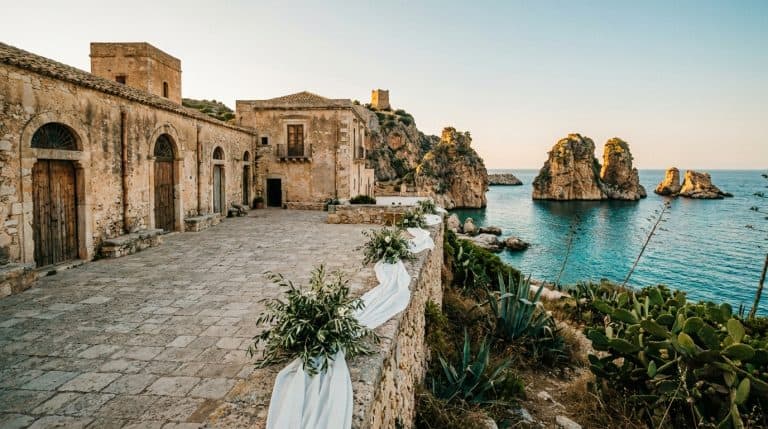 Tips
Tips
Getting married at the Tonnara di Scopello - History and Charm of a Unique Location
Tonnara di Scopello: a wedding venue between history, sea, and stone Choosing to get married at the Tonnara di Scopello means […]
Read more