
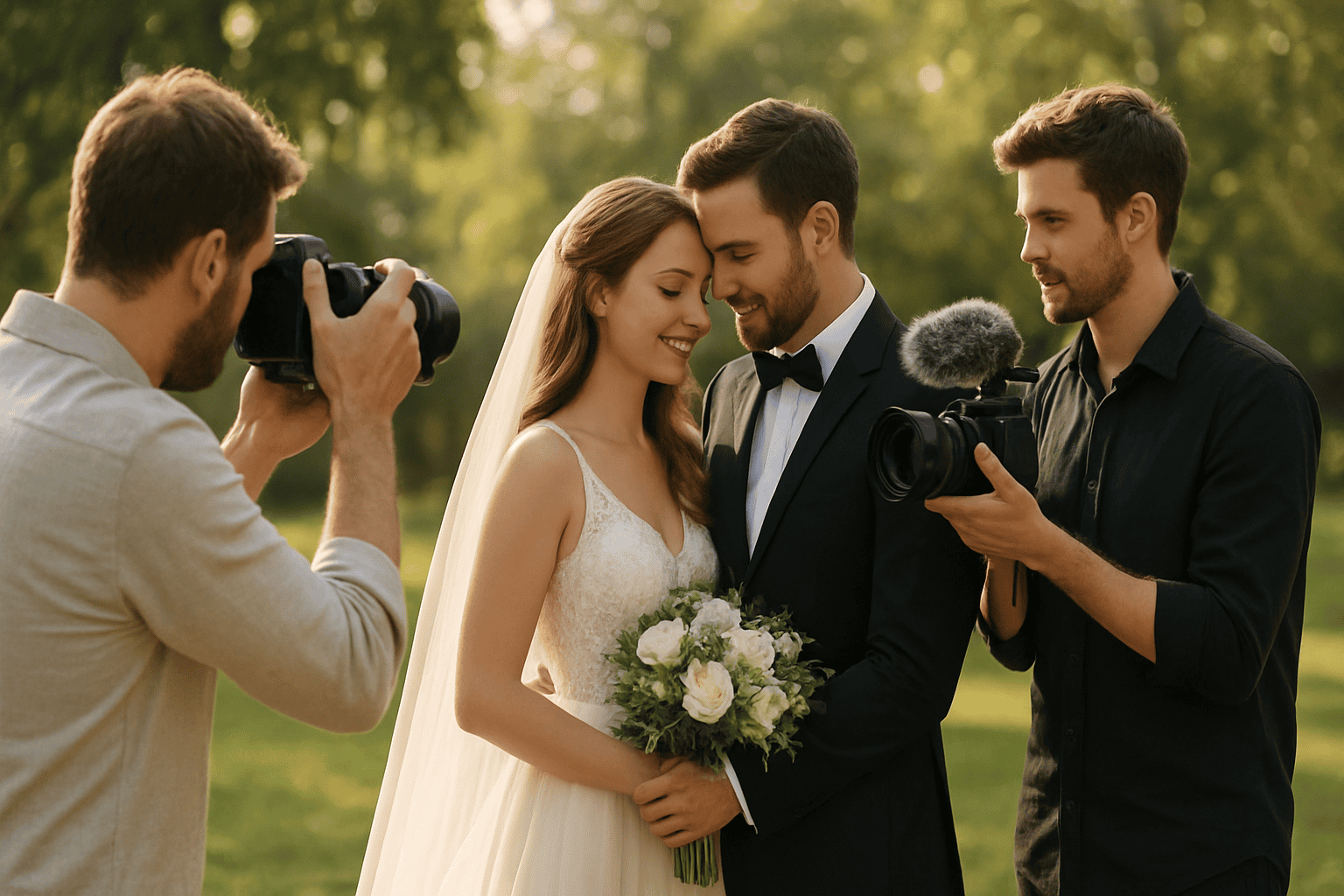
Photographer and videomaker: how to choose storytelling (editorial vs reportage)
Wedding photo and video storytelling: why choose between editorial and reportage
When you’re looking for a wedding photographer and a team for the wedding video, the question isn’t just “who is good?”, but above all “what story do I want to tell?”. The wedding photo video storytelling is the invisible direction that determines rhythm, atmosphere, and emotional memory: it can be more editorial (curated, iconic, constructed) or more reportage (spontaneous, observational, authentic).
This choice influences everything: how you’ll move during the day, how many directions you’ll receive, how much space you’ll have to live the moments without interruptions, and even how guests will be perceived in the images. There is no absolute “better”: there is the style most consistent with you, with the location, and with the energy of the wedding.
Goal and style: luxury, intimate, destination
To help you orient yourself, start with three keywords that describe your day:
- Luxury: often favors a clean aesthetic, light posing, attention to details, and a more cinematic video edit.
- Intimate: tends to highlight glances and micro-moments; it can work very well in reportage, but also with a “soft” editorial.
- Destination: requires a narrative that includes context, travel, the atmosphere of the place, and more flexible timing. If you’re planning a wedding far from home, it may also be useful to read Insight: Destination wedding (Wikipedia).
In practice: a wedding in a historic villa with important setups can pair well with a refined editorial; a ceremony in the woods with few guests might call for a discreet reportage. But these are only tendencies: the real difference is made by your personality.
What to expect in terms of timing and logistics
The chosen style affects how time and travel are distributed:
- Editorial: includes dedicated moments for portraits and details, often with guidance on posture, light, and composition. It doesn’t mean “fake”, it means guided.
- Reportage: minimizes interruptions and follows the day as it is. It does, however, require good planning so as not to miss key scenes (entrances, hugs, surprises).
If you want a fluid story but also some “cover-worthy” images, the most common solution is a hybrid approach: reportage for most of the time, editorial in strategic moments (couple portraits, setup details, golden hour).
Step-by-step planning with wedding photographer and videomaker
The quality of the result depends not only on the team’s skill, but on how much the day is designed to be tellable. Planning doesn’t mean becoming rigid: it means creating the conditions so that photos and videos can capture what matters, without stress.
Realistic timeline: from vision to details (from 12 to 2 months)
Without falling into rigid schemes, these steps help you choose and coordinate wedding photographer e wedding video consistently:
- 12–9 months before: define the atmosphere (editorial, reportage, or mix) and gather visual references. Share them with the team: not to “copy”, but to align language and expectations.
- 8–6 months before: check the location logistics (spaces, light, distances). If the day includes transfers, decide how to tell them: they can become part of the story, not just “dead time”.
- 5–3 months before: build a draft timeline with emotional priorities (not just times). Example: “before going in I want 5 minutes with my father”, “after the ceremony I want to greet everyone without endless group photos”.
- 2 months before: alignment call with the photographer and videomaker: lighting points, unmissable moments, any surprises, ceremony rules (if there are constraints on movement or positioning, they must be clarified beforehand).
A practical tip: always include buffers between one block and the next. Storytelling suffers when the day is a rush: reportage loses depth, editorial loses calm.
Essential vendor checklist (for coherent storytelling)
Photos and videos don’t live in isolation: they interact with setups, music, lighting, and kitchen timing. To avoid inconsistencies, align these vendors:
- Wedding planner / coordination: manages timing and unforeseen events, protecting the narrative moments.
- Location: access, “backstage” areas, any limitations on candles, drones, or movements (if planned, check in advance with the venue).
- Flowers and table setting: details are visual “chapters”. If you want an editorial approach, it’s worth planning a moment when the room is ready and still empty.
- Music / entertainment: sets the rhythm of the video edit and the energy of the scenes (entrance, toasts, party).
- Lights: often underestimated. Good lighting enhances reportage (readable faces, atmosphere) and makes editorial cleaner.
Guest management and transfers: how not to “break” the story
If guests move between multiple places, storytelling risks fragmenting. Some choices help:
- Clear transfers: simple times, intuitive meeting points, communications in advance.
- Bridge moments: a welcome drink, a mini aperitif, live music. They’re also useful scenes for the wedding video, because they create continuity.
- Space to breathe: a shaded corner, seating, water available. Guests at ease = better expressions in photos and videos.
Budget and priorities: where to invest for wedding photos and video
You don’t need to get into numbers to reason well: what matters is setting narrative priorities. In other words: what do you want to remember in ten years? Your budget should support that answer.
Main expense items that impact storytelling
Some choices directly affect the outcome of photos and video:
- Coverage time: the more complete the day, the more coherent the story (getting ready, ceremony, party). If you have to choose, protect the moments that mean the most to you.
- Quality of light: it’s not just “aesthetics”: it’s readability, atmosphere, skin, colors. If the party is in the dark, consider lighting that preserves mood and faces.
- Setup and styling: well-cared-for details help the editorial look, but they also improve the reportage because they make every shot richer.
- Logistics: long and complicated transfers consume narrative time. Sometimes simplifying is worth more than adding.
Where to invest to maximize the scenic effect (without distorting the day)
If you want an elegant and natural result, these priorities are often winners:
- A breathable timeline: it’s the “invisible” investment that makes everything better.
- A well-placed portrait moment: it doesn’t have to be long, it has to be at the right point (favorable light, little rush, privacy).
- A well-oriented ceremony area: when possible, consider light and background. Even reportage benefits from a clean context.
- Well-managed audio for the video: vows, speeches, voices. If you want the wedding video whether emotional, audio is part of the story, not a technical detail.
Mistakes that increase costs (and worsen the storytelling)
- Too many moves between preparations, ceremony and reception: they steal time from the real moments.
- “Forced” portraits amid unexpected events: they turn into stress and it shows in the images.
- Late communications on surprises and special moments: if the team doesn’t know, they risk not being in the right place.
- Too dense program: if everything is “unmissable”, nothing can breathe. Storytelling needs pauses.
Plan B and risk management: protecting wedding photos and videos from the unexpected
A good story isn’t one without unexpected events: it’s one where unexpected events don’t steal the scene (unless they become a beautiful moment). Plan B is used to maintain visual consistency and serenity.
An effective Plan B is not “just any room”: it is an alternative that maintains aesthetic coherence and flow.
If the weather changes, the difference is made by the quality of the alternative. Some useful questions:
- Does the indoor solution have light and space to move?
- Is it possible to maintain a clean background for the ceremony (even with a simple, well-thought-out setup)?
- Are there covered areas for portraits and couple moments?
For an editorial style, rain can become a scenic element if handled calmly. For reportage, it can bring spontaneity and complicity. In both cases, a clear plan is needed so you don’t improvise in panic.
Permissions and constraints of the location: what to ask before
Every venue has different rules. Before deciding the direction of photos and video, clarify:
- Access and entry times for vendors
- Restricted areas or limitations during the ceremony
- Possibility of using music, additional lights or particular equipment (if planned, check with the venue)
This information helps the team choose discreet positions and movements, especially if you want an “invisible” reportage or an editorial with precise sets.
Contracts and deposits: clarity on deliveries and usage
Without going into legal or numerical aspects, it’s important that everything is clear in writing: what the service includes, how any date changes are handled, and how the photographer and videomaker coordinate with each other (especially if they are different professionals). If a detail isn’t explicitly stated, ask to check it in the contract or in the service sheet.
Guest experience: the key to authentic reportage and natural editorial
The most beautiful images come when people feel good. The guest experience is not an “extra”: it’s an accelerator of real emotions, and therefore of storytelling.
Welcome moment, activities and hospitality: creating real scenes
Some simple ideas (and very effective in photos and video):
- Welcome moment with drinks and music: it breaks the tension and creates spontaneous interactions.
- Experiential corners consistent with the location (tasting, creative guestbook, small thoughtful touches): they become micro-stories in the edit.
- Human rhythms: pauses between courses, space to talk, lounge areas. Reportage thrives on natural gestures.
If you love editorial but fear stiff poses, this is the solution: build a context so pleasant that even guided portraits turn out soft and believable.
Transportation, shuttles, parking: less friction, more smiles
Logistics influence mood. When guests are confused or late, the energy drops and the storytelling loses pace. To avoid it:
- Define easy-to-understand arrival and departure points
- If you plan shuttles, communicate schedules and rules in advance
- Clearly indicate where to park and how to reach the main areas
This care shows in the wedding video: fewer interruptions, more emotional continuity.
Clear directions and a wedding website: the direction before the day
A simple communication system reduces last-minute questions and helps everyone enjoy the day more. You can use a wedding website or a single well-structured message with:
- Essential timeline (without too many details)
- Dress code (if any) explained clearly
- Information about weather and alternatives
- Reference contacts (not necessarily the couple)
If you’re at the stage where you’re building the entire project, the guide may be useful to you How to organise a wedding, to line up priorities, suppliers, and timings without losing the big picture.
How to tell if you’re more editorial or reportage: questions to ask the team
To truly choose, don’t stop at the portfolio: ask how they work. Here are practical questions that unlock the decision:
- “How much will you guide us during the day?” (you understand the level of direction)
- “How do you handle portraits if we’re shy?” (you understand whether an editorial style can still feel natural)
- “What do you do when the timeline slips?” (you understand their ability to adapt, essential in reportage)
- “How do you coordinate photo and video?” (avoids overlaps and moments being crowded)
- “Which moments are non-negotiable for you?” (you understand what they consider narratively important)
Listen to the language too: those who talk about “scenes,” “rhythm,” “chapters,” “atmosphere” are thinking in terms of storytelling, not just shots or footage.
A hybrid approach: when editorial and reportage work well together
Many couples don’t see themselves in just one style, and that’s perfectly fine. A well-designed hybrid can give you:
- Reportage for the ceremony, aperitif, party: real emotions, interactions, spontaneity.
- Editorial for details, couple portraits, and a few family shots: order, elegance, iconic images.
The key is to decide early where to put the energy. If you try to do “all editorial” without time, it becomes stressful. If you do “all reportage” but also want very polished images, you risk being left with the feeling that something is incomplete.
Do you want a story that truly feels like you?
If you’re building your vision and want photos and video to be consistent in style, timing, and atmosphere, rely on a clear organization method: on ChiaraB Events you’ll find resources and inspiration to plan every detail with balance, without losing the emotion of the day.
FAQ
What is the difference between editorial storytelling and reportage in weddings?
Editorial is more directed: portraits and details are crafted with careful attention to posing, light, and composition. Reportage is observational: it follows real moments with minimal intervention, focusing on spontaneity and authentic interactions.
Is it possible to have both reportage-style photos and a cinematic wedding video?
Yes, we often work in a hybrid way: reportage for most of the day and targeted, more “cinematic” moments (portraits, golden hour, details). The important thing is to agree beforehand on priorities and timing, so the story remains fluid.
How much time is needed for couple portraits without interrupting the party?
It depends on the logistics and the desired level of direction. In general, it works best to plan a short but well-timed moment (favorable light and no rush), rather than squeezing it in between travel or unexpected events.
How to choose a wedding photographer if we're not used to posing?
Ask how they handle shy couples and how much guidance they provide. A professional can suggest simple, natural directions (micro-actions and interactions) to get polished images without stiff poses.
What should you communicate to the photographer and videographer before the wedding for coherent storytelling?
Share emotional priorities (unmissable moments), style references, logistics (travel, timing), any surprises and ceremony/venue constraints. If a detail is not clear, check it in the contract or in the service sheet.
How to manage the weather Plan B without ruining wedding photos and videos?
Define in advance an indoor or covered alternative with good light and space to move, keeping a tidy background for the ceremony. A clear Plan B reduces stress and allows the team to tell the story of the day with continuity.