
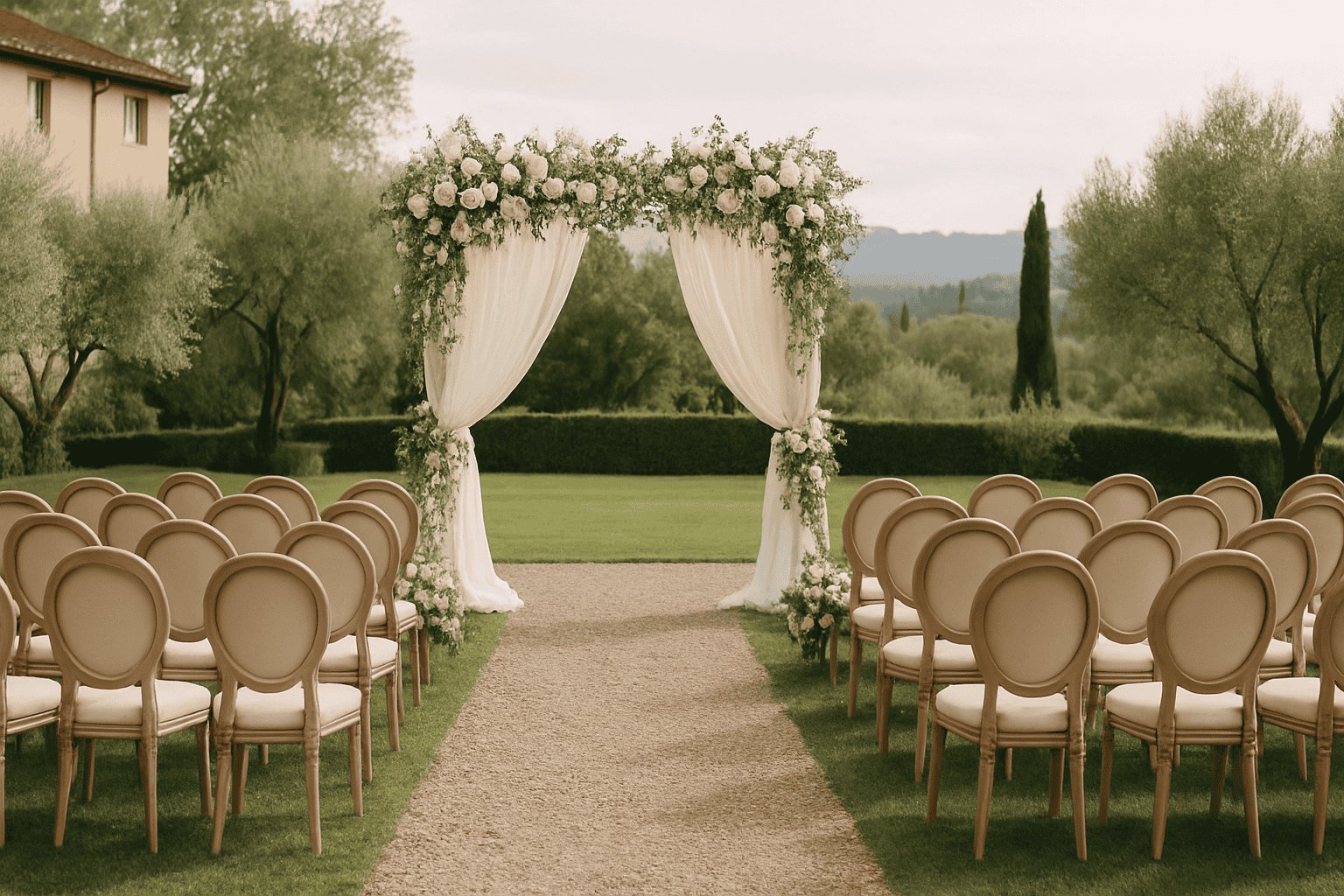
Star locations for your wedding: ChiaraB Events' exclusive selection
There are venues that “work” and venues that tell a story. For a truly memorable wedding, the difference often lies in the details: the light that comes in at a certain time, the way the spaces guide guests, the feeling you get when you pass through a gate or climb a staircase. ChiaraB Events’ exclusive selection is born precisely from this: identifying star-worthy venues capable of enhancing the couple’s style and turning every moment into a cinematic memory.
In this article you’ll find a practical and inspirational guide to help you navigate atmospheres, settings, and selection criteria, with a professional approach: no generic promises, but concrete guidance to understand which venue is right for your wedding and how to make it perfect with a coherent event design.
Star-worthy wedding venues: what it really means
“Star-worthy” is not synonymous with excess. It’s a concept that combines scenic impact e organizational flow. A star-worthy venue is one that, even before any styling, has a strong, photogenic identity; at the same time, it can support the direction of the day without creating friction.
In practice, a star-worthy venue tends to have:
- Spaces with character: architecture, gardens, courtyards, halls, or terraces that become part of the story.
- Natural “wow points”: views for the ceremony, for the cake cutting, for a sunset toast, or for a theatrical entrance.
- Versatility: different areas for the various moments (welcome, ceremony, aperitif, dinner, party), without repetition.
- Atmosphere: a recognizable personality, consistent with the desired style (classic, contemporary, romantic, minimal, Mediterranean).
If you want to explore how a bespoke event is built, you can take a look at ChiaraB Events and at the design philosophy that guides every choice.
ChiaraB Events’ exclusive selection: a method, not a list
An exclusive selection doesn’t mean “few options”: it means curated choices, designed to reduce uncertainty and increase the quality of the experience. The point isn’t to offer an endless list of venues, but to identify those that can support a wedding elegantly, with a coherent aesthetic result and a natural guest journey.
The selection method generally starts with three key questions:
- What kind of story do you want to tell? A intimate wedding and sophisticated requires different spaces compared to a dynamic and scenic party.
- What is the pace of the day? Ceremony, aperitif, dinner, and party must flow without “gaps” or confusing moves.
- What is your aesthetic? Palette, materials, floral style, and table setting converse with the venue: some architectures enhance minimalism, others call for a more classic touch.
To understand how all this translates into a concrete project, you can explore the section wedding planning services and discover how a personalized journey is built.
Villas, castles, masserie, and historic residences: iconic settings for a wedding
When it comes to star-worthy venues, people often immediately think of great classics: villas with gardens, historic residences, castles, masserie, or charming estates. It’s not just a matter of “beauty”: these places offer a natural narrative structure, with grand entrances, reception rooms, and outdoor areas perfect for golden hour.
Villas with gardens: elegance and breathing room
Villas are ideal if you want a wedding with fluid rhythm between indoors and outdoors. The garden becomes a stage for the ceremony or the aperitif, while the interiors can host dinner in a more intimate atmosphere. A often decisive plus is the presence of multiple perspectives: avenues, terraces, staircases, porticos.
Castles and period residences: immediate visual impact
If you dream of a theatrical entrance and an atmosphere that evokes cinema or grand tradition, a castle or a historic residence can offer that sense of an “once-in-a-lifetime event”. In these settings, it is essential to design setups that dialogue with the architecture, avoiding overload: often the venue is already the protagonist.
Masserie and estates: contemporary authenticity
Masserie and charming estates are perfect for those who want a more natural elegance: stone, courtyards, olive trees, warm lights. Here, “star quality” comes from the whole: materiality, conviviality, open spaces, and hospitality that invites you to stay. If the venue provides different areas for the various moments, the result can be extremely dynamic.
Do you want more targeted inspiration on style? In the section wedding ideas and inspiration you’ll find useful ideas to define mood and details.
How to choose the perfect venue: practical criteria that make the difference
The “perfect” venue doesn’t exist in absolute terms: there is the one that’s perfect for you. And to understand that, it’s worth reasoning through concrete criteria, which affect both the guests’ experience and the aesthetic result.
1) Consistency between spaces and wedding style
A highly decorated, historic venue requires different design choices compared to a contemporary, streamlined structure. The goal is to create harmony: when venue and setup speak the same language, everything looks natural and “expensive” in the best sense of the word, without ostentation.
2) A credible (and beautiful) Plan B
It’s not just a weather issue: a well-thought-out Plan B is part of the project. Ask yourself: if we had to move the ceremony or the aperitif, is the alternative solution just as scenic? If you’re not sure what the venue includes, check the product sheet or in the information provided by the partner.
3) Guest flow and invisible logistics
A successful day is one in which guests don’t perceive complicated “scene changes.” Evaluate:
- how you access the venue and how you are welcomed;
- whether the spaces allow natural transitions between moments;
- whether there are areas suitable for the party without interrupting dinner or vice versa.
4) Natural light and photo timing
Light is an incredibly powerful ally. A garden oriented favorably, a terrace at sunset, a room with large windows: these are details that change how photos turn out and the perception of the event. Including a moment dedicated to golden hour in the schedule can enhance the entire visual story.
5) Identity of the place and privacy
A star venue often offers a feeling of a “world apart”: gates, avenues, inner courtyards, private spaces. This doesn’t mean isolation, but intimacy. If it’s important for you to avoid interference and maintain an exclusive atmosphere, consider how well the place can protect the experience.
Setups and styling: making the venue shine without distorting it
An iconic venue shouldn’t be “covered up”: it should be interpreted. The most effective styling work is the kind that amplifies what the place already offers, adding a layer of personality.
Palette and materials: the rule of visual echo
Choosing palettes and materials that echo elements of the venue (stone, wood, iron, stucco, greenery, water) creates an elegant visual echo. Contrasts work too, but they must be intentional: contemporary minimalism in a historic residence can be extraordinary if designed with balance.
Flowers, lighting and table: three levers for a “cinema” effect
- Flowers: not just centerpieces; arches, installations and “site-specific” arrangements can guide the eye and define focal points.
- Lights: candles, chandeliers, string lights, discreet light points. Light builds atmosphere and makes the evening memorable.
- Table: mise en place, textiles, place cards and graphic details. This is where the care is felt.
If you want to understand how the aesthetic direction is curated, visit portfolio and real weddings to see how different venues can become coherent settings with even very different styles.
Guest experience: the real “star” is the atmosphere
A spectacular venue impresses at first glance, but what remains is how you felt. For this reason, designing the experience is an integral part of choosing the venue: some spaces encourage conviviality, others contemplation, and others an energetic party.
To increase comfort and the “well-curated event” effect, consider these elements:
- Welcome: a clearly defined welcome point, with a small ritual (drink, music, graphic details).
- Rhythm: alternate emotional moments and social moments, avoiding prolonged waits.
- Breathing spaces: lounge corners or outdoor areas where you can chat without moving away from the party.
- Memorable finale: the cake cutting or the last toast should have a dedicated set, even simple, but thought out.
Venue and season: how scenery and sensations change
The same venue can transform completely depending on the season. It’s not just a matter of temperature: colors, light, scents, even the sound of outdoor spaces change. Thinking “by season” helps you choose a place that performs at its best in the desired period.
Spring: freshness and blooms
Ideal for gardens, courtyards and terraces: spring enhances light floral arrangements and bright palettes. If the venue includes significant outdoor spaces, this period can highlight them naturally.
Summer: long light and a party under the stars
Summer is perfect for those who dream of a wedding that moves outdoors and continues into the evening. Here the difference is made by shade, light points and areas dedicated to different moments, to avoid everything being concentrated in a single area.
Autumn: intense colors and a enveloping atmosphere
In autumn, a historic residence or an estate with warm interiors can become incredibly scenic. Nature’s colors and softer lights create a sophisticated mood, perfect for those who love deep tones and tactile details.
Winter: intimacy and glamour
In winter, the ideal venue is one that offers interiors with character: grand rooms, fireplaces, warm lighting, welcoming spaces. With a well-designed lighting plan, the glamour effect can be surprising. If you want to know what is included in a specific proposal, check the product sheet.
Questions to ask during the visit: checklist to choose with confidence
During the visit, emotion is important, but you also need a set of questions that helps you evaluate the venue objectively. Here is an essential checklist:
- Which spaces are actually available for the ceremony, aperitif, dinner and party?
- What is the plan B and what does it look like, aesthetically?
- What are the times and areas in which the different moments take place?
- Are there setup constraints (hanging items, candles, music, etc.)? If it’s not clear, check the product sheet.
- Where do the scene changes happen and how are they managed without interrupting the experience?
- Which spaces are most photogenic at different times of day?
For support with planning and strategic choices, you can contact the team via information request: an initial conversation often helps clarify priorities and style.
Useful links to design a cohesive wedding
If you are building your journey, these in-depth resources can help you bring order to ideas and decisions:
- Wedding consulting and planning to define style, timing and priorities.
- Inspiration for setups and design to create a clear and shared vision.
Contact ChiaraB Events to find your star-worthy venue
If you want a venue that combines scenic impact, atmosphere and smooth day management, rely on the exclusive selection by ChiaraB Events: a journey designed to transform your wedding into an elegant, authentic, and memorable experience. Discover the dedicated category and let yourself be guided toward the setting that truly represents you.
FAQ
What makes a location “star-worthy” for a wedding?
A star-worthy venue combines visual impact and functionality: spaces with character, natural photo spots, smooth transitions between the moments of the event, and an atmosphere consistent with the couple’s style.
How can I tell if a venue is suitable for my wedding style?
Evaluate the architectural identity of the venue and ask yourself whether the palette, flowers, lights, and table setting can harmonize with the spaces without forcing it. If needed, create a moodboard and compare it with the real environments during the visit.
Why is plan B so important when choosing the venue?
Because it’s not just an emergency solution: it must be aesthetically pleasing and support the direction of the day. Ask to see the alternative spaces and, if some details are not clear, check the product sheet.
What questions should I ask during the venue visit?
Ask which areas are available for the ceremony, aperitif, dinner and party; how Plan B works; where the scene changes take place; which are the most photogenic spots at different times; and whether there are setup constraints (if not specified, check the product sheet).
Is it better to choose the venue first or define the wedding style first?
Ideally, you proceed in parallel: an initial style idea helps select consistent locations, while the chosen location can suggest a palette, materials, and type of setup. Wedding planning support makes it easier to align vision and feasibility.
From the blog
 Wedding
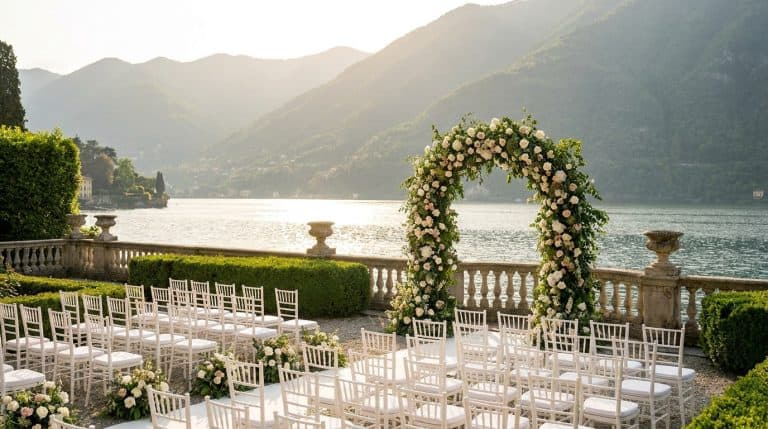
Dream Wedding on Lake Como - The Most Exclusive Locations
A wedding on Lake Como is an idea that combines iconic scenery, top-level hospitality, and a naturally cinematic atmosphere. […]
Read more Tips
Tips
Wedding Ideas: Trends and Tips for a Perfect Wedding
Organizing a wedding today means choosing among endless possibilities without losing sight of what really matters: telling your […]
Read more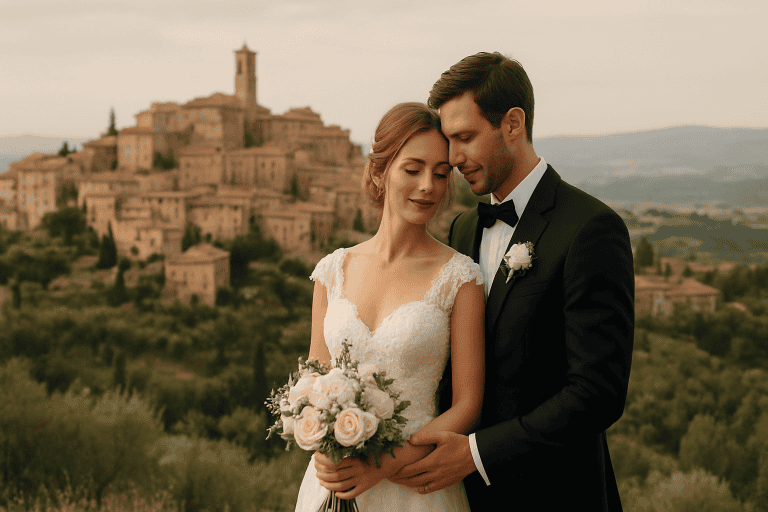 Wedding
Luxury Wedding in Montepulciano - History and Romantic Atmosphere
Luxury wedding in Montepulciano: Tuscan elegance between history and romantic atmosphere Montepulciano is one of those places that seem born […]
Read more