
The importance of a distinctive concept in luxury events - the ChiaraB Events approach
In the world of luxury events, impact doesn’t come from excess, but from consistency. An impeccable setup, an iconic venue and flawless service can certainly impress, but what makes an event truly memorable is the presence of a distinctive concept: a recognizable, elegant guiding idea, capable of holding together aesthetics, storytelling and hospitality in a single experience.
When the concept is strong, every detail stops being “decoration” and becomes language. This is where ChiaraB Events’ approach finds its signature: designing events that speak with a unique voice, without overloading, and without losing the identity of the brand or the person behind them.
A distinctive concept in luxury events: definition and strategic role
A concept is not a generic theme (“gold & white”, “garden party”, “black tie”). It is a creative vision that translates an identity into concrete choices: palette, materials, the rhythm of the day, the tone of communication, the gestures of welcome, sound design, scents, lighting, mise en place.
In luxury events, the concept has a strategic role because:
- it helps create recognizability (the event is “remembered” and talked about);
- it guarantees consistency across all touchpoints, from the invitation to the set design;
- it guides choices, avoiding disconnected “wow effects”;
- it enhances the guests’ experience with a continuous sensory narrative
.
In other words: the concept is what transforms a set of premium elements into an experience with a precise identity.
Luxury event design: from the guiding idea to the direction of details Designing a luxury event requires direction capable of maintaining the same quality at every step. A distinctive concept works when it is translated into a system of choices: not only “what you see”, but.
Some examples of translating the concept into direction (without getting into standard solutions):
- Welcome: timing, gestures, micro-rituals and the flow of entrances.
- Scenography: proportions, solids/voids, focal points, layering of materials.
- Lighting: atmosphere, depth, perception of volumes, “moments” of light.
- Sound: not just a playlist, but sonic identity and dynamics between moments.
- Table: textures, heights, visual rhythm, dialogue between elements.
When everything responds to the same guiding idea, the event feels natural, never forced, and above all credible: an essential quality for an audience accustomed to excellence.
The ChiaraB Events approach: bespoke concepts, not replicable formats
A luxury event should never look “already seen”. ChiaraB Events’ approach starts from one assumption: the concept must be custom-madeunique. It’s not about applying a format, but about building a temporary identity that exists only for that occasion.
This means working on three levels, in an integrated way:
- Identity: values, personality, tone of the brand or the celebrants.
- Context: location, season, audience, event objectives.
- Experience: what guests should feel, how they should remember the event.
The result is a concept that doesn’t just “look good in photos”, but holds up live: in the timing, in the transitions, in the overall perception.
If you want to explore the design philosophy and services, you can consult ChiaraB Events and the section dedicated to event planning and design.
Luxury events and storytelling: how to build an elegant narrative
Storytelling in luxury events is not a text to recite. It is a journey thread that accompanies guests discreetly. An elegant narrative doesn’t “explain” too much: it suggests, evokes, leaves room for interpretation.
To build coherent storytelling, it is useful to define:
- A central idea: a short phrase that describes the soul of the event.
- A visual lexicon: shapes, materials, color palettes, cultural or artistic references.
- A rhythm: alternation of intensity (intimate moments, scenic moments).
- A finale: the last impression is often the one that remains.
When the narrative is well constructed, every element becomes a chapter: the invitation is the incipit, the entrance is the first scene, the table is the heart, the post-event is the echo that prolongs the memory.
Brand experience in luxury events: coherence between aesthetics and identity
For a brand, a luxury event is an act of positioning. For a private client, it is a gesture of style. In both cases, the key question is: is this experience authentic?
Coherence is built by avoiding two frequent mistakes:
- Aesthetics without identity: beautiful, but interchangeable.
- Identity without direction: an interesting idea, but delivered in a confused or inconsistent way.
A well-designed brand experience brings together:
- Tone (formal, intimate, celebratory, contemporary…);
- Codes (materials, palette, photographic style, typography, details);
- Hospitality (attention to detail, timing, comfort, flow);
- Memorability (a distinctive element that leaves an impression without shouting).
For examples of identity-oriented design, it can be useful to explore real weddings and events and the section inspirations and mood.
Set design and staging for luxury events: the balance between impact and restraint
In luxury, impact does not coincide with quantity. An effective set design is born from proportions e conscious choices. The goal is not to fill, but to guide the gaze and create a recognizable atmosphere.
Some principles that help maintain balance:
- A focal point: a main element that defines the scene.
- Materials with character: few, but selected and consistent with each other.
- Controlled contrasts: glossy/matte, transparent/solid, warm/cool.
- Space to breathe: emptiness is part of the design.
In a distinctive concept, even technical details (lights, supports, structures) are integrated invisibly or transformed into part of the aesthetic language.
Guest experience in luxury events: the concept is measured on the guests
A luxury event is not just to look at: it is to move through. The guest experience is the point where the concept becomes real. If the guest perceives fluidity, attention, and comfort, then the guiding idea has worked.
To design a guest experience consistent with a distinctive concept, it helps to think about:
- Flows: intuitive routes, minimized waiting times, natural transitions.
- Micro-moments: details that surprise discreetly (without a “little theater” effect).
- Emotional accessibility: a welcoming, not intimidating atmosphere.
- Customisation: targeted attentions that make the guest feel “seen”.
A distinctive concept does not have to be understood rationally: it must be felt. And when it is felt, it becomes a spontaneous story.
From brief to moodboard: how a concept for luxury events is born
The creative phase is not improvisation: it is a process. A concept for luxury events is born from the meeting of listening and vision, between constraints and opportunities. In this phase, quality lies in the ability to select, not to add.
A typical journey includes:
- In-depth brief: objectives, audience, context, desires and non-negotiables.
- Search: aesthetic, cultural, artistic, material references.
- Moodboard: palette, textures, volumes, atmosphere, photographic style.
- Guidelines: clear rules to maintain consistency in every choice.
The moodboard is not a “pretty” collage: it is a decision-making map. It helps avoid detours and keep the event true to its identity, even when many operational figures come into play.
Mistakes that weaken a concept in luxury events (and how to avoid them)
Even with the best intentions, a concept can lose strength if some choices contradict it. In luxury events, where attention to detail is expected, these discrepancies are more noticeable.
Here are some common mistakes:
- Too many styles together: the event becomes a sum of trends.
- Uncontrolled palette: colors that are “right” individually, but inconsistent overall.
- Misaligned details: invitations, signage, mise en place and set design speak different languages.
- Disorganized timing: even beauty loses value if the experience doesn’t flow.
- No focal point: everything is important, so nothing truly is.
To avoid them, it’s useful to always return to the initial question: what is the guiding idea and how does it manifest? If an element doesn’t strengthen it, it should be reconsidered or simplified.
Useful links to explore the ChiaraB Events universe
To help you navigate projects, inspirations, and ways of working, you can also check out the contacts page e the ChiaraB Events blog, where you can find insights on aesthetics, design, and the culture of hospitality.
Key questions to ask yourself before defining the concept of a luxury event
Before choosing colors, flowers, or set designs, it’s worth pausing on a few questions that help make the concept truly distinctive:
- What is the main emotion what do we want to leave guests with?
- What are three words that describe the event’s identity?
- What is the gesture of hospitality that best represents the style of the occasion?
- Which element will be the recognizable signature (not necessarily the biggest)?
- How is the event told in a photo and in a memory?
Answering these questions precisely makes it easier to make consistent decisions and build an event that doesn’t depend on trends, but on a clear identity.
CTA: If you want to turn an idea into a truly recognizable experience, explore the ChiaraB Events universe and discover how a tailor-made concept can guide every detail of your next luxury event.
FAQ
What is the difference between theme and concept in a luxury event?
The theme is often an aesthetic label (colors or style), while the concept is the guiding idea that connects identity, storytelling, and experience. In luxury, the concept defines consistency and recognizability in every detail.
How do you create a distinctive concept without coming across as excessive?
Focusing on selective choices: a clear central idea, a few consistent visual codes, and a well-defined focal point. Elegance arises from the balance between impact and restraint.
Does the concept only concern the setup and the staging?
No. A distinctive concept also includes the event’s rhythm, welcome, lighting, sound, guest flow, and micro-moments of hospitality. It’s full direction, not just decoration.
How can you tell if a concept really works during the event?
It works when guests perceive coherence and flow: the experience runs smoothly, the details are aligned, and the event feels authentic. If the memory is clear and tellable, the concept has hit the target.
Where do you start to define the concept of a luxury event?
From the brief: objectives, audience, context, and identity. Then we move on to research and moodboard, which become a decision map to maintain consistency between invitations, set design, table setting, and atmosphere.
From the blog
 Tips
Tips
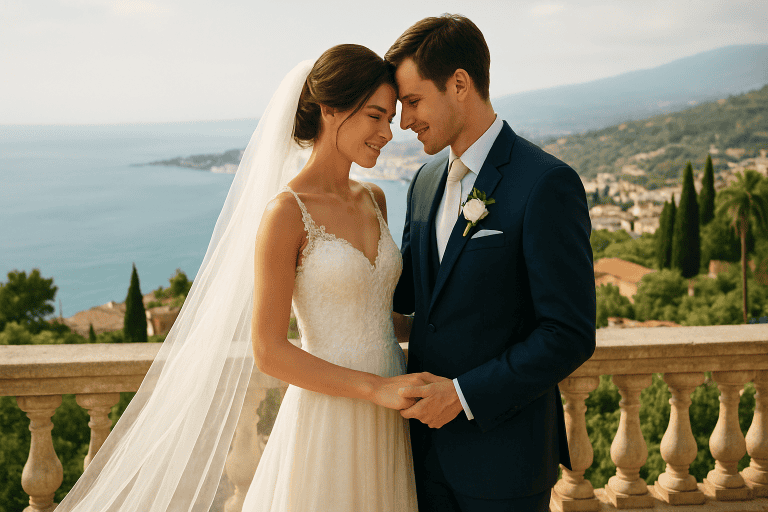
Getting married in Sicily in Summer - Pros and Cons
Getting married in Sicily in summer: what it really means (beyond the dream photos) Choosing to get married in Sicily in summer is not […]
Read more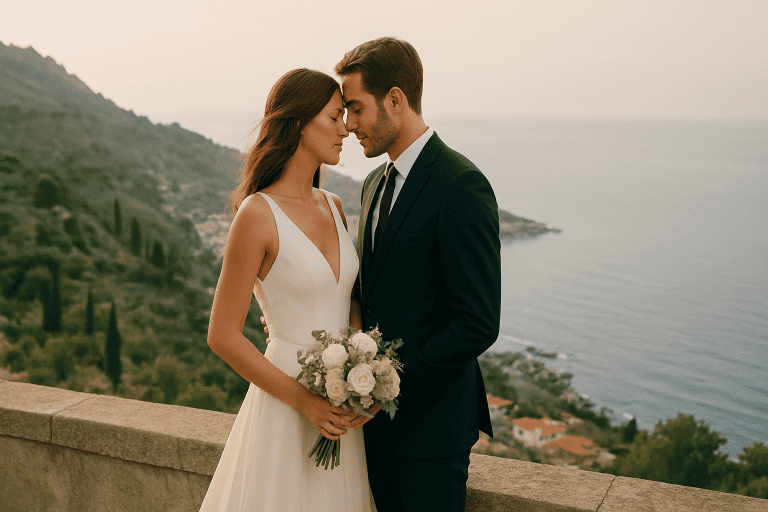 Tips
Tips
Sicily for Intimate and Micro-Weddings - Ideas and Tips
An intimate wedding is not a “reduced version” of the big day: it is a different way of experiencing it. In Sicily, the idea […]
Read more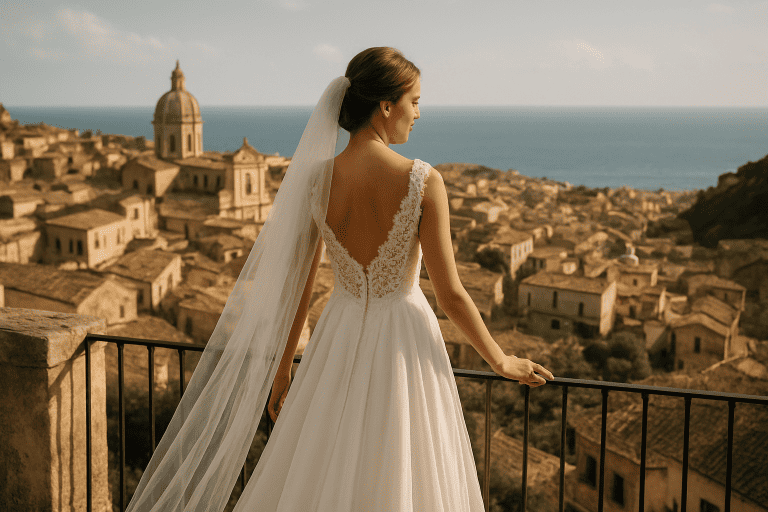 Tips
Tips
How to Organise a Wedding in Sicily from Another Region
Organizing a wedding in Sicily while living in another region is an exciting project, but it requires method: distance, response times, […]
Read more