
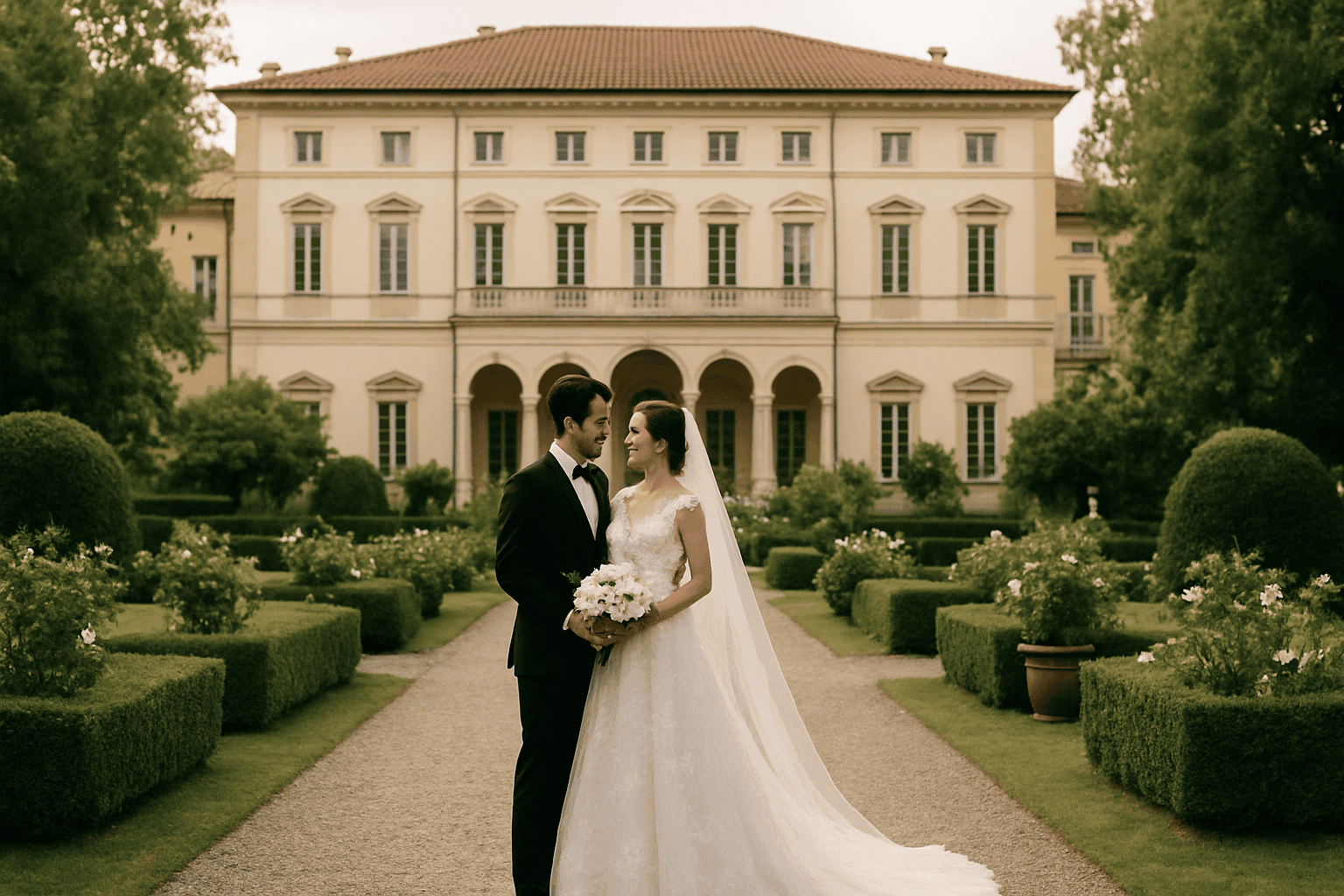
Wedding at Villa Marchese del Grillo: tradition and luxury for a special day
There are venues that don’t just “host” an event: they tell its story. A wedding at Villa Marchese del Grillo falls into this category, because it combines a historic atmosphere, timeless elegance, and that sense of welcome that makes guests feel part of a truly special day. If you’re imagining a reception that alternates scenic moments and carefully curated details, this villa can become the ideal backdrop for a celebration that speaks about you, with style.
In this guide you’ll find practical tips and setup ideas to enhance the spaces, organize the timeline, and choose the right elements (from the mise en place to the lighting), keeping a coherent common thread between tradition and luxury. For some logistical details or available services, check the product sheet or in the location’s updated information.
Wedding at Villa Marchese del Grillo: the balance between tradition and luxury
When it comes to a historic villa, the risk is twofold: overdoing the opulence and “covering up” the authentic charm, or staying too minimal and not doing justice to the solemnity of the setting. The key is a conscious balance: let the architecture speak and use the setups as a frame, not as a disguise.
A wedding here can be interpreted in many ways, but it works particularly well when:
- you choose a elegant palette (neutrals, ivory, sage green, subtle metallic touches);
- you work with noble materials and textures (linen, glass, ceramics, not excessive gold or silver details);
- you create a lighting direction that enhances volumes and perspectives, especially from sunset onward.
If you’re defining the overall style, it can help to explore inspirations and related services in the Wedding & Event Designsection, where you often find ideas for coordinating setups, stationery, and decorative details.
Villa spaces and reception moments: how to build a smooth-flowing day
The success of a wedding doesn’t depend only on the beauty of the venue, but on how the day “moves.” In a villa, managing the transitions between different areas is essential: it avoids downtime, keeps the energy high, and allows you to experience each setting without rushing.
Ceremony: natural scenery and guest comfort
If the ceremony takes place on site (check the product sheet), the advice is to aim for a clean scene: a floral arch or an asymmetrical arrangement, orderly seating, and an aisle that guides without weighing things down. Comfort is part of luxury: plan for shade, water available, and careful seat management, especially for elderly guests or families with children.
Aperitif: the perfect moment to let the villa “breathe”
The aperitif is often the most photographed segment after the ceremony. Here, a setup that encourages socializing works well: well-distributed food stations, small resting spots, and music that supports the atmosphere without taking over. A detail that makes the difference is the visual consistency: if you choose a floral theme, echo it in micro-details (place cards, menus, seating chart) without duplicating everything redundantly.
Dinner and party: from classic to contemporary, without abrupt breaks
For dinner, the villa calls for a well-curated mise en place: not necessarily complex, but harmonized with the spaces. The transition to the party should be natural: warmer lights, a corner dedicated to toasts, and a layout that invites movement. If you plan a change of setting between dinner and dancing, plan a “bridge” (a scenic cake cutting or a musical moment) to accompany guests.
For ideas on how to set the direction of the day, you can take a look at Wedding planning, useful for coordinating timings, vendors, and key moments in an orderly way.
Setups for Villa Marchese del Grillo: colors, flowers, and details that elevate the experience
In a villa with a strong character, the setup must be designed like a story: every element has a role and a reason. The goal is not to fill, but to enhance.
Color palette: elegance that doesn’t tire
The most effective combinations are those that dialogue with the materials and the light. Some winning choices:
- Ivory and green with gold or champagne accents for a classic, luminous feel;
- White and nude with transparent glassware for an airy, refined effect;
- Dusty tones (blush pink, mauve, sage) for contemporary romance.
Flowers and arrangements: less repetition, more focal points
Better a few well-thought-out arrangements than many copies of the same element. In particular:
- a route with shelters iconic focal point (ceremony or cake cutting) that becomes “the photo” of the day;
- well-balanced centerpieces: elegant, but not too tall if you want to encourage conversation;
- floral micro-details on the tableau, welcome and guestbook area for continuity.
Textiles, seating and place setting: the feeling of luxury passes through your hands
Luxury isn’t only what you see: it’s what you perceive. Linen, well-draping tablecloths, napkins with crisp folds, coordinated charger plates and glasses that reflect the light are details that build an experience. If you want to explore coordinated solutions, you can consult Wedding setups and decorations.
Lights, music and evening atmosphere: how to make the after-dinner memorable
The evening is the moment when a villa can transform. The difference between “beautiful” and “unforgettable” often lies in the light: warm, layered, designed to create depth. No need to overdo it: you need to design it.
Lighting: levels and points of interest
Good direction includes:
- ambient lighting to make pathways welcoming;
- accents on architectural elements or trees (if present);
- scenic focal points for cake cutting, toasts and photo opportunities.
Music: from the ceremony to the party with a single identity
Whether you choose live music or a DJ set, what matters is consistency: a selection that accompanies the moments without “jolts”. A practical tip: define 3–4 signature songs (entrance, exit, first dance, cake cutting) and leave the rest to the musical direction, sharing tastes and boundaries with whoever manages the entertainment.
If you’re building a complete project, you may find the page useful Event services, where you often find support to coordinate atmosphere, scenography and timing.
Photo and video in a villa: how to get elegant shots without losing time with guests
Historic villas offer perfect natural backdrops, but the photo session must be planned so it doesn’t “steal” the party. The best solution is to plan short, targeted windows, making use of the right light.
- Before the ceremony: details (dress, accessories, stationery) and quick portraits;
- Golden hour: 15–20 minutes as a couple for soft, romantic shots;
- After dinner: 5 minutes for a scenic night photo with lights and the villa in the background.
A very helpful tip: define a “photo-friendly” spot with flattering light and a clean background, so guests can take beautiful photos too without encroaching on the spaces.
Guest welcome: luxury is also organization
A wedding perceived as “high-end” is often the result of invisible logistics. Guests should feel guided, never lost. That’s why signage and micro-services matter as much as the flowers.
Welcome and routes
A clearly defined area with a welcome sign, the day’s schedule, and directions for the various moments makes everything flow more smoothly. If the villa has multiple entrances or areas, elegant signage prevents confusion and preserves the atmosphere.
Seating chart and place cards: clarity first
The seating chart must be legible and consistent with the style. Avoid overly “creative” solutions if they compromise functionality. The place card, on the other hand, is the detail guests touch and often take home: here you can include a personal element, as long as it stays within the palette.
Time management
Punctuality is a form of respect. A realistic timeline (with buffers) prevents cascading delays and makes it possible to enjoy every moment. If you rely on professional coordination, define in advance who gives cues to vendors and who handles unexpected issues.
For inspiration on stationery suites and welcome details, you can visit Wedding ideas and inspiration.
Plan B at a villa: how to stay elegant even with uncertain weather
You can’t control the weather, but you can manage it with style. A well-thought-out Plan B shouldn’t look like a fallback: it should be a second set design, ready to step on stage without stress.
- Same visual identity: flowers and palette must work both outdoors and indoors;
- “Modular” spaces: elements that are easy to move without losing aesthetics;
- Clear communication: guests must know where to go, without unnecessary waiting.
To understand which indoor areas or coverings are available, check the product sheet or in the location’s updated information.
Dress code and the couple’s style: how to harmonize with a historic villa
In such a setting, even the couple’s personal style can “resonate” more strongly. That doesn’t mean being rigid, but coherent. A classic look is perfect, but a modern cut can also work if paired with refined details.
For her and for him: clean lines and quality materials
Outfits with essential lines, structured fabrics, accessories chosen with restraint: these are elements that photograph well in historic settings. If you love a more contemporary touch, focus on a single distinctive element (a special veil, a statement jewelry accessory, an iconic shoe) and keep the rest balanced.
Guest dress code: simple guidance, impeccable result
If you want a harmonious overall look, suggest a “soft” dress code (for example: elegant cocktail, neutral colors, no overly bright shades). Avoid overly complex rules: guests should feel comfortable.
Useful links for planning an elegant villa wedding
- Wedding & Event Design to coordinate style, palette, and set design.
- Wedding planning to set up a solid, stress-free timeline.
- Wedding setups and decorations for ideas on table settings and details.
- Event services to build a complete and coherent project.
- Wedding ideas and inspiration to find the right mood and personalize it.
Do you want to turn the idea into a complete project? Discover the ChiaraB Events brand selection dedicated to villa weddings: choose the style, define the details, and create a coherent setup from the welcome to the party, with support designed for an elegant result without improvisation.
FAQ
Is Villa Marchese del Grillo suitable for an elegant and traditional wedding?
Yes, a historic villa lends itself very well to an elegant style: the architecture creates a natural setting and the details (palette, flowers, lights) can be calibrated to maintain a balance between tradition and luxury.
Which setups work best in a historic villa?
Setups that enhance the spaces without covering them work well: neutral or muted palettes, refined materials, floral arrangements with few focal points, and a mise en place consistent with the atmosphere of the venue.
How to organize the timeline of a wedding in a villa without downtime?
It is useful to distribute the moments (ceremony, aperitif, dinner, party) in different areas with clear transitions, plan a scenic “bridge” between dinner and dancing, and include time buffers for photos and travel, so guests always stay engaged.
Is it important to have a plan B for the weather?
Yes: a well-designed Plan B maintains the event’s style even in case of uncertain weather. Ideally, prepare a second coherent and modular setup. For availability of covered spaces or alternatives, check the product sheet.
How to choose lighting and ambiance for an evening in a villa?
The best solution is a layered direction: ambient lighting for the pathways, accents on architectural elements, and a scenic focal point for the cake cutting or toast. The music should follow the same identity, accompanying the moments without abrupt breaks.
From the blog
 Wedding
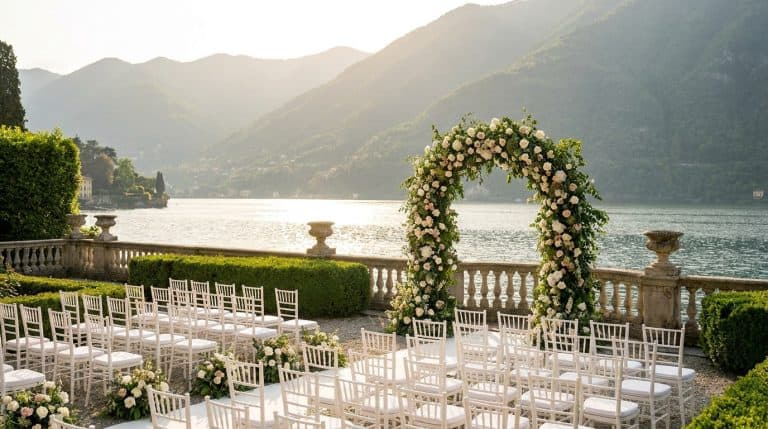
Dream Wedding on Lake Como - The Most Exclusive Locations
A wedding on Lake Como is an idea that combines iconic scenery, top-level hospitality, and a naturally cinematic atmosphere. […]
Read more Tips
Tips
Wedding Ideas: Trends and Tips for a Perfect Wedding
Organizing a wedding today means choosing among endless possibilities without losing sight of what really matters: telling your […]
Read more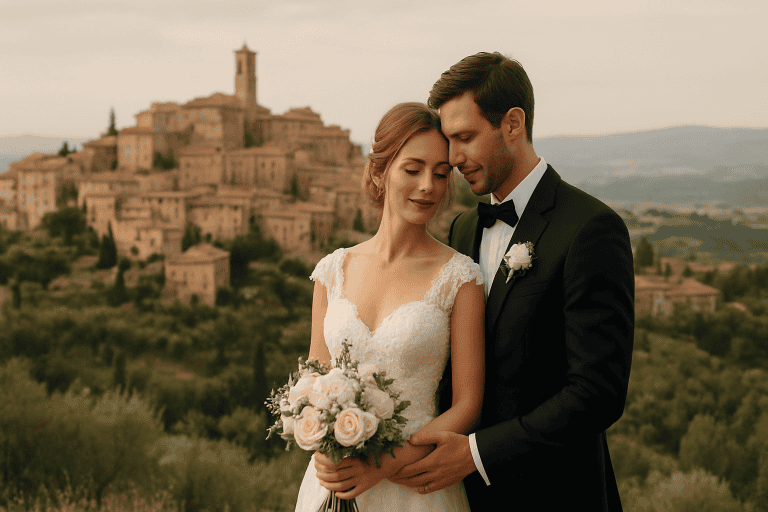 Wedding
Luxury Wedding in Montepulciano - History and Romantic Atmosphere
Luxury wedding in Montepulciano: Tuscan elegance between history and romantic atmosphere Montepulciano is one of those places that seem born […]
Read more