

Wedding Planning - Checklist by Wedding Planner ChiaraB Events
Wedding planning: the checklist that saves you stress and forgetfulness
Organizing a wedding doesn’t just mean “choosing a date” and booking a venue: it’s a journey made of decisions, priorities, deadlines, and details that fit together. A wedding planning well built allows you to experience the preparations with more peace of mind, reducing unforeseen events and maintaining consistency between style, budget, and timing.
In this guide you’ll find a checklist inspired by ChiaraB Events’ working method: a practical, organized, and flexible approach, designed to accompany you from the first idea to the wedding day. If you want to explore the professional organization of the event, you can start with Wedding Planner ChiaraB Events and understand how to set up a tailored path.
First of all: define the vision, priorities, and style of the wedding
Before opening a thousand tabs and asking for quotes, stop on three pillars. They are the basis of every subsequent choice (vendors, palette, setups, invitations, schedule).
1) The “why” and the atmosphere you want to create
Ask yourself what kind of day you want: intimate or festive, elegant or informal, traditional or contemporary. You don’t need to have everything clear right away, but it’s useful to set some keywords (for example: bright, natural, refined, convivial).
2) The couple’s priorities
Every couple has different “non-negotiables.” For some, the food is essential; for others, the music; for others still, the photography or the ceremony. Write a top 3: it will help you allocate energy and resources without regrets.
3) The budget framework (with a margin)
You don’t need perfect numbers: you need a realistic picture. Also include an “extra” item for last-minute variables. If a detail depends on a service or a specific element, check the product sheet or in the supplier's proposal.
Wedding timeline: what to do and when (without rigidity)
An effective timeline is not a cage: it’s a map. Here you’ll find an indicative breakdown, useful for understanding the correct order of activities and not finding yourself chasing deadlines.
12–10 months before: foundations and strategic choices
- Define the date (or range of dates) and type of ceremony.
- Choose the venue and check availability.
- Key supplier block: catering/banqueting (if separate), photo/video, music, officiant (if planned), floral designer.
- First draft of the guest list (even approximate).
- Moodboard setup: palette, materials, inspirations.
If you're starting from scratch, an orientation page like tips for organizing the wedding, can be useful to understand which decisions unlock all the others.
9–7 months before: aesthetic concept and logistics
- Defining the setup style: ceremony, tables, cake area, special corners.
- Choosing outfits (start of the search and fittings).
- Lighting study and plan B (especially if there are outdoor spaces).
- Save the date (if necessary) and coordinated graphic design setup.
- First draft of the timeline: key moments and duration.
6–4 months before: details that make the difference
- Invitations and invites: wording, style, address management.
- Choosing favors/gifts and packaging (if planned).
- Defining entertainment: band/DJ, animation, special moments.
- Menu tasting and defining beverages (if included in the chosen service).
- Transport plan: arrivals, transfers, parking, shuttles (if needed).
3–2 months before: confirmations and coordination
- Vendor confirmation and alignment on schedules, access, setup.
- Defining the table plan (first version) and assignment criteria.
- Choosing songs and musical moments (entrances, cake cutting, party).
- Beauty trials: makeup and hairstyle.
- Check ceremony details: readings, vows, rituals, entrances.
Last 4 weeks: finishing touches and peace of mind
- RSVP and guest confirmation (including any dietary preferences).
- Print final items: menus, place cards, seating chart, signs.
- Deliver the final schedule to vendors and venue.
- Prepare the emergency kit and the “direction” kit (documents, contacts, backups).
- Final briefing with whoever is managing the day (wedding planner or point person).
Wedding planner checklist: documents, contacts, and files that make everything easier
The difference between “organized” and “in control” often lies in the working materials. Having everything in order saves you from scattered messages, unfindable screenshots, and duplicated decisions.
- Vendor contact list: names, roles, contacts, point people, availability hours.
- Contracts and confirmations folder: in one single place (digital or physical).
- Master file with: budget, deadlines, guest list, RSVP, preferences.
- Moodboard updated: palette, flowers, table setting, materials.
- Day-of timeline: with realistic times and buffer between moments.
- Plan B: alternatives for weather and logistical unforeseen events.
If you want more structured support, you can explore wedding planning services to understand how the complete direction of the event is built.
Choosing wedding vendors: how to evaluate without getting confused
Choosing vendors is one of the most delicate steps: it’s not just about “who you like”, but also compatibility, communication, and reliability. To avoid impulsive decisions, use clear criteria.
Consistency with the style and the venue
A vendor can be excellent, but not suitable for your project. Evaluate portfolios and proposals with the real context in mind: spaces, light, season, logistics. If a service includes specific elements, check the product sheet or in the detailed proposal what is included.
Clarity in communication
Quality also shows in how information is handled: response times, accuracy, ability to guide you. A wedding requires coordination: choosing someone who communicates well reduces friction and misunderstandings.
Operational plan and handling of unforeseen events
Always ask how the event day is managed: setup times, teardown, access, backups. You don’t need to foresee everything, but you do need to understand whether there is a method.
Setups and design: turning the idea into a coherent project
Wedding design is not a sum of “cute” details: it’s a system. When everything speaks the same language, the event feels harmonious and memorable.
Color palette and materials
Choose a palette that works with the venue and the season. Then work on materials: fabrics, glass, metals, paper, natural elements. Even small choices (type of ribbon, font, texture) convey coherence.
Mise en place and tables
The table is one of the most photographed and experienced elements. Define: style of plates, glasses, cutlery, linens, centerpiece, place cards. If some elements depend on a specific assortment, check the product sheet availability and variations.
Experiential corners
A well-thought-out corner (welcome, guestbook, photo moment, confetti table or alternatives) is not “just decoration”: it guides guests and creates rhythm. The important thing is not to add just to fill space, but to design to give meaning.
Guest management: list, RSVP, tables and communications
The “social” part of planning is often the most demanding. An orderly management of guests avoids tension and saves you time in the final weeks.
Guest list: from the total to the circles
Divide into groups (family, friends, colleagues, plus one) and add useful notes: delicate relationships, needs, children. This will help you when it’s time for the table plan.
RSVP: make it simple
Whatever method you choose, the goal is one: to receive clear responses. Prepare short messages, a deadline, and a gentle reminder. Also collect intolerances or dietary preferences, if required by the planning.
Table plan: criteria first, aesthetics after
First define the criteria (affinities, age, groups, dynamics), then move on to the format (round tables, long tables, mixed). Aesthetics work when the layout is comfortable and guests feel at ease.
Wedding day timeline: the direction that keeps everything flowing
Your wedding day shouldn’t be a marathon. A well-built timeline leaves room to breathe, enjoy the moments, and handle any delays without panic.
- Preparation: realistic timings, room for the unexpected, deliveries.
- Guests’ arrival: welcome, directions, parking management.
- Ceremony: entrances, music, readings, exit, group photo.
- Aperitif: flow, service points, light entertainment.
- Reception: entrances, courses, speeches, special moments.
- Cake cutting and party: lights, music, any surprises.
To understand how the full direction is managed, you can take a look at wedding portfolio and inspirations and see how moments are built naturally.
Final details: what to check in the week before
In the last few days, the goal is not to add things: it is to confirm, simplify e secure. Here is an essential checklist.
- Confirm times and access with the venue and suppliers.
- Summary of contacts in a single sheet (also printed).
- Check deliveries: setups, graphics, any personal elements.
- Define “who does what”: witnesses, family, venue contact person.
- Prepare an emergency kit (small essentials, without excess).
- Backup: music, graphic files, contacts, schedule.
If you are looking for a guided approach, you can also explore the page ChiaraB Events contacts to evaluate tailored support.
Questions to ask yourself before confirming the most important choices
When you have many options in front of you, a good question is worth more than ten quotes. Keep these points in mind every time you are about to say “yes”.
- Does this choice support our top priority?
- Is it consistent with the real context (spaces, schedules, season)?
- Is it easy to manage on the day of the event?
- Who handles it operationally and within what timeframes?
- What happens if a variable changes (weather, delays, absences)?
CTA: take your wedding planning to a professional level
If you want to turn the checklist into a complete, coherent project without last-minute rushing, discover the ChiaraB Events universe: get inspired and choose wedding planning support designed to guide you through every phase, from the initial vision to the direction of your wedding day.
FAQ
When should you start planning your wedding so you don't end up rushed?
First define the date (or period), the couple's style and priorities, then lock in the venue and key vendors. A timeline with realistic deadlines helps you spread out decisions without concentrating everything in the last few months.
What are the most common mistakes in the wedding planning checklist?
Skipping the order of choices (for example, designing setups before having defined spaces and logistics), not allowing time buffers, managing files in a scattered way, and not clarifying who will handle the operational details on the day of the event.
How to choose wedding vendors without being too influenced by trends?
Assess consistency with the style and the location, clarity in communication, and the soundness of the operational plan. If a service includes specific elements, check in the product sheet or in the proposal what is included and how the day is managed.
How to build a wedding day timeline that really works?
Start with the fixed moments (ceremony, reception) and insert buffers between one step and the next. Consider travel, photos, guest welcome, and technical setup times. A schedule shared with vendors reduces delays and misunderstandings.
What to do if it rains or a detail changes at the last minute?
Prepare a realistic Plan B: alternatives for the ceremony, aperitif, and photos, plus a list of quick decisions (who decides what and when). With aligned vendors and clear coordination, unexpected issues can be handled without disrupting the experience.
From the blog
 Tips
Tips
Wedding Ideas: Trends and Tips for a Perfect Wedding
Organizing a wedding today means choosing among endless possibilities without losing sight of what really matters: telling your […]
Read more Tips
Tips
Getting married on Lake Garda: the perfect wedding between water and mountains
Between luminous shores, stone villages, and mountain profiles that change color with the sun, getting married on Lake Garda […]
Read more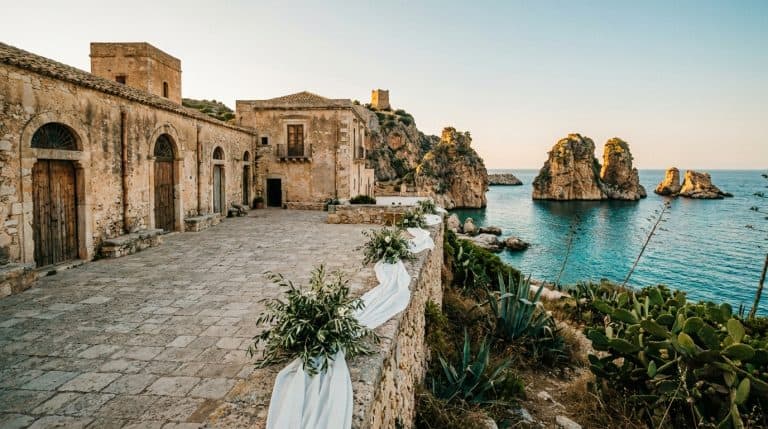 Tips
Tips
Getting married at the Tonnara di Scopello - History and Charm of a Unique Location
Tonnara di Scopello: a wedding venue between history, sea, and stone Choosing to get married at the Tonnara di Scopello means […]
Read more