

Wedding weekend: how to build a 3-day schedule without tiring the guests
A well-designed wedding weekend is not “a longer wedding”: it’s a complete experience, built with rhythm, breaks, and moments of freedom. The goal is to give guests three memorable days without turning it into a marathon. In this guide you’ll find a practical method to create a 3-day wedding weekend program balanced, with concrete ideas for welcome dinner brunch, logistics and guest activities, while maintaining a style consistent with the type of event (intimate, destination, elegant).
Wedding weekend: why this format works for guests and the couple
Goal and style: luxury, intimate, destination (without excess)
A wedding weekend works when it has a clear idea: not to fill every hour, but to create a narrative arc in three acts. The first day welcomes and puts everyone at ease, the second celebrates, the third wraps up lightly. This structure is ideal if:
- guests are coming from far away and you want to reduce the stress of “everything in one day”;
- you want a more intimate atmosphere, with time to really talk with each person;
- you’re organizing a destination-style event (even without calling it that).
If you want to explore the concept through the lens of travel and hospitality, you’ll find a useful reference here: Insight: Destination wedding (Wikipedia).
What to expect in terms of timing and logistics
Three days don’t mean three days of a “full schedule.” The golden rule is to alternate guided moments (where everyone knows where to be) with free windows (where guests can rest, explore, or simply breathe). In practice:
- 1 main event per day (e.g., welcome dinner, wedding day, farewell brunch);
- optional low-intensity activities (short, nearby, with no obligation to participate);
- “invisible” logistics: clear transfers, realistic timings, simple directions.
The result is a smooth experience: guests feel cared for, not dragged along.
Step-by-step planning of the 3-day wedding weekend program
Realistic timeline: from 12 to 2 months before
To build a solid program, work in blocks. You don’t need to do everything at once: you need to do things in the right order.
12–9 months before
- Define the vision: number of guests, style, level of formality, emotional priorities.
- Select the location and dates: assess indoor/outdoor spaces and weather alternatives.
- Set a draft weekend schedule: arrivals, ceremony, party, brunch.
8–6 months before
- Book key vendors (catering, photo/video, music, floral design).
- Start the logistics map: airports/stations, travel times, parking, shuttles.
- Define the hospitality setup: suggested hotels, check-in, meeting points.
5–3 months before
- Finalize the “rhythm”: realistic timings, breaks, decompression moments.
- Design optional activities: few, well chosen, consistent with the place.
- Prepare the communication: wedding website or info page with FAQs and maps.
2 months – 2 weeks before
- Confirm headcount, intolerances and preferences (without overcomplicating the menu).
- Refine transfers and timings: who arrives when, who leaves when.
- Share a concise program: what is “must”, what is “optional”.
Checklist of essential vendors (for a weekend, not just for one day)
A wedding weekend requires direction that holds multiple moments together. Beyond the typical wedding vendors, consider what makes the experience easy for guests:
- Coordination (wedding planner or coordinator): essential to manage timing and scene changes.
- Transfers and welcome: shuttles, drivers, hostesses or an info point.
- Modular setups: elements that adapt to the welcome dinner, ceremony and brunch without redoing everything from scratch.
- “Soft” entertainment: background music, short live moments, without saturating the day.
If you are setting up the entire organizational journey, a general overview of How to organise a wedding, may be useful so you can integrate the weekend into a complete plan.
Guest and transfer management: the point that makes the difference
Guest fatigue rarely comes from the events themselves: it comes from waiting, confusing travel, and incomplete information. To avoid it, set three levels of clarity:
- Before the weekend: how to get there, where to sleep, dress code for each moment, useful contacts.
- : define when it will open (right after the ceremony? after the cake cutting?) and how long it will remain active.: a single meeting point, clear times, directions repeated kindly (without bombarding).
- After: info on check-out, shuttles for returns, possible luggage storage.
A strategic choice is to reduce the number of locations: fewer changes, higher perceived quality. If the context allows, prioritize a “hub” (hotel or main venue) from which only a few movements branch out.
Budget and priorities for a wedding weekend: where to put energy (and where not to)
Main items to consider
A weekend spreads the experience across multiple moments, so the budget should be read by “chapters,” not by a single day. In general, the areas that weigh the most are:
- Location and spaces: availability of different areas (dinner, party, brunch) and backup plans.
- Food & beverage: welcome dinner, wedding day, brunch; pay attention to quantities and service timing.
- Guest logistics: shuttles, transfers, managing arrivals/departures.
- Setup and atmosphere: lighting, flowers, place settings, coherent scenic elements.
- Music and entertainment: calibrated to energy and moments (not always “more” is “better”).
The key is to avoid duplication: what you build for the wedding day can also “live” in the welcome dinner or brunch, with light variations.
Where to invest to maximize the visual impact without tiring guests
For an elegant, smooth weekend, the smartest investment often isn’t adding activities, but improving the quality of the inevitable moments. Some examples:
- Welcome: a well-curated welcome moment (even a simple one) makes guests feel immediately “arrived”.
- Comfort: shade, seating, reduced waiting times, water available during hot moments.
- Lights: they transform spaces and help mark the phases (aperitif, dinner, party).
- Time direction: a realistic schedule is a perceived luxury.
If your weekend is in an iconic destination, the natural scenery already does a lot: in these cases it’s better to focus on coherent details and impeccable service, rather than an excess of “content”.
Mistakes that increase costs (and fatigue)
- Too many moves: every transfer adds complexity and dead time.
- Schedule without breaks: if you don’t leave free windows, guests will “disconnect” anyway, but with frustration.
- Mandatory activities: they turn the weekend into a rigid, inelegant schedule.
- Overly optimistic timings: underestimating check-in, traffic, and service times leads to cascading delays.
A good rule of thumb: if something requires long explanations to work, it probably needs to be simplified.
Plan B and risk management: weather, location, and agreements
Weather and alternative solutions (without losing style)
Plan B must not feel like a fallback. It must be a second setup, designed with the same care as the first. To do that:
- choose indoor spaces with character (not just “an emergency room”);
- design adaptable setups (ceremony and dinner that can move without being turned upside down);
- define a decision threshold: when you decide to activate Plan B and who communicates it.
For outdoor activities, plan “light” indoor versions: tastings, musical moments, welcome corners. If the venue offers specific amenities, check the product sheet or in the venue documentation.
Permissions and constraints of the location: what to clarify immediately
Every place has its own rules: hours, music, access, usable areas, setup limits. There’s no need to get into technicalities, but it’s essential to clarify in advance:
- which spaces are available for the welcome dinner, ceremony, party, and brunch;
- how to manage parking and arrivals (cars, buses, shuttles);
- setup/teardown times and technical routes for suppliers.
When the weekend takes place in a highly sought-after destination, what makes the difference is flow planning: orderly access and a schedule that respects the place.
Agreements, deposits, and operational clarity
In a weekend with multiple events, contractual clarity prevents misunderstandings: what is included in each moment, what is extra, what the change policies are. There’s no need to weigh down the guests’ experience, but you do need a direction that knows exactly what happens and when. If a service or an option isn’t explicitly stated, check the product sheet or in the supplier's quote.
Guest experience: welcome dinner, brunch, activities, and hospitality without stress
Welcome moment: the welcome that sets the tone
The first impression determines how guests will experience the rest. An effective welcome moment is brief, clear, and warm. It can be a meeting point at the hotel or at the venue, with a simple gesture: a welcome drink, a small snack, someone who answers practical questions.
The most important thing is that guests immediately understand:
- where they need to be and at what time;
- how they will get around the next day;
- that they don’t have to “rush” so as not to miss anything.
Welcome dinner: how to make it elegant and light
The welcome dinner is not a second “big wedding dinner”. It’s a moment of connection, ideal for bringing groups together and breaking the ice. To avoid tiring people out:
- keep it short: better to end with energy than to drag on;
- convivial format: social tables or islands that encourage conversation;
- clear dress code: elegant but not demanding, consistent with the location;
- micro emotional moment: a toast, a few words, a musical detail.
If you want to add a local touch, do it in a “curated” way: an ingredient, a ritual, a small story. There’s no need to turn the evening into a guided tour.
Wedding day: building energy with smart breaks
The wedding day is the emotional peak. To protect your guests (and you), work on two levers: comfort e times. Some practical tips:
- avoid long waits between the ceremony and the reception;
- provide shaded or sheltered areas and enough seating;
- if there are transfers, make them predictable (fixed times, simple meeting points);
- organize an after party only if it makes sense: better a shorter but high-quality party.
A well-thought-out weekend doesn’t “steal” energy from the wedding day: it distributes it. Guests arrive already connected thanks to the welcome dinner, and therefore experience the wedding with more participation.
Farewell brunch: the perfect ending (without obligations)
The welcome dinner brunch it is often sought as a pair of key moments of the weekend: the welcome dinner opens, the brunch closes. Brunch works when it’s relaxed, with a wide time window and an informal but well-curated atmosphere.
To make it truly “anti-fatigue”:
- long window: not a single rigid time, but an interval during which to drop by;
- simple, well-made food: comfort food, light options, attention to those leaving again;
- easy greetings: a photo corner, a guestbook, a short moment of thanks.
If many guests have long journeys, consider an elegant “grab & go” for those who have to leave early: it’s a caring gesture that people remember.
Guest activities: optional ideas that don’t take up time
Le guest activities the best ones are those that can be skipped without guilt. The secret is to propose, not impose. Some options that usually work well:
- short guided walk in the city center or in a nearby village;
- tasting or a light food experience;
- wellness moment (spa, relaxation, gentle yoga), if consistent with the mood;
- mini scenic tour with photo stops, without tight schedules.
To avoid fatigue, apply three filters:
- duration short;
- distance short from the base (hotel/venue);
- clarity: meeting point, what to bring, level of commitment.
If you’re organizing in a scenic area, a useful guide to orient yourself on the context and location choices is Wedding on Lake Como: guide, with coherent ideas for managing guests and atmosphere.
Transport, shuttles and parking: how to avoid chaos
Logistics are part of hospitality. When it works, no one notices; when it doesn’t, it ruins the rhythm. For a smooth weekend:
- reduce the variations: few transfer options, clearly communicated;
- create a “single point”: a lobby, a parking area, a recognizable entrance;
- organize the returns: after the party, guests must feel safe and guided.
If some guests prefer to get around independently, provide clear directions on parking and timing, without making them feel “outside the group”.
Clear directions and wedding website: fewer messages, more precision
To avoid tiring guests, avoid sending a thousand different communications. Better a single information hub (wedding website or a well-made PDF) with:
- a concise three-day schedule (what is essential and what is optional);
- clickable addresses and maps;
- dress code for each moment;
- useful contacts (coordination, transfers, emergencies);
- practical FAQs: weather, recommended shoes, travel times.
A detail that changes perception: write times in a “human” way, including buffers. For example, instead of setting everything to the minute, communicate windows and actual start times.
An example of a 3-day wedding weekend schedule (balanced and realistic)
Below is a template outline to adapt to destination, season, and style. The idea is to show how to distribute energy and socializing without overloading.
Day 1: arrivals + welcome moment + welcome dinner
- Afternoon: staggered arrivals, check-in, free time.
- Late afternoon: welcome moment in a convenient spot (hotel/venue), essential information.
- Evening: convivial welcome dinner, not too late a finish.
Day 2: wedding day (ceremony + reception + party)
- Morning: free time or getting ready; optional activities only if very light.
- Afternoon: ceremony and reception with smooth transitions.
- Evening/night: party with organized returns.
Day 3: farewell brunch + departures
- Morning: brunch with a long window; farewells and thank-yous.
- Midday/afternoon: staggered departures, transfers on request or time slots.
This schedule leaves room for rest, reduces pressure, and makes every moment more desirable. This is where the weekend truly becomes “luxury”: not through excess, but through care for time.
Do you want to design a tailor-made wedding weekend for your guests?
If you want a three-day program that is coherent, elegant, and easy to experience (for you and for those joining you), ChiaraB Events can help you build the complete direction: from the timeline to logistics, all the way to the welcome experience. Explore the section How to organise a wedding to start setting the path with a clear, guest-oriented method.
FAQ
How long should a 3-day wedding weekend last so as not to tire the guests?
It works best when it includes only one “main” moment per day (welcome dinner, wedding day, brunch) and leaves free windows between one appointment and the next. Extra activities should be optional, short, and close to the base (hotel/venue).
Are the welcome dinner and brunch mandatory in a wedding weekend?
No. They are two very effective moments because they naturally open and close the experience, but they are not mandatory. If you include them, keep them light: the welcome dinner should encourage socializing, the brunch should be relaxed and with flexible hours.
What guest activities work best for a wedding weekend?
The best guest activities are the ones you can skip without embarrassment: short walks, light tastings, gentle wellness moments, or mini scenic tours. They should have a limited duration, simple logistics, and very clear communication (meeting point, what to bring, level of commitment).
How to avoid confusion with transfers and shuttles during the wedding weekend?
Reduce the options, define a single meeting point, and communicate times and addresses concisely (ideally a single wedding website or a clear document). Carefully organize the returns after the party: it’s the moment when guests most need simple directions.
Do you need a plan B for every moment of the wedding weekend?
It is advisable at least for the main events (ceremony and reception) and for any outdoor moment. Plan B must be designed with the same care as Plan A, with suitable indoor spaces and adaptable setups. If the venue offers specific options, check the product sheet or the venue documentation.
From the blog
 Guests
Dress code: how to communicate it elegantly (with text examples)
How to communicate the dress code to guests without embarrassing anyone The guest dress code is one of the details […]
Read more Guests
RSVP for international guests: how to increase confirmations and reduce no-shows
RSVP for international guests: what really changes (and why no-shows increase) When talking about RSVP for international wedding guests, […]
Read more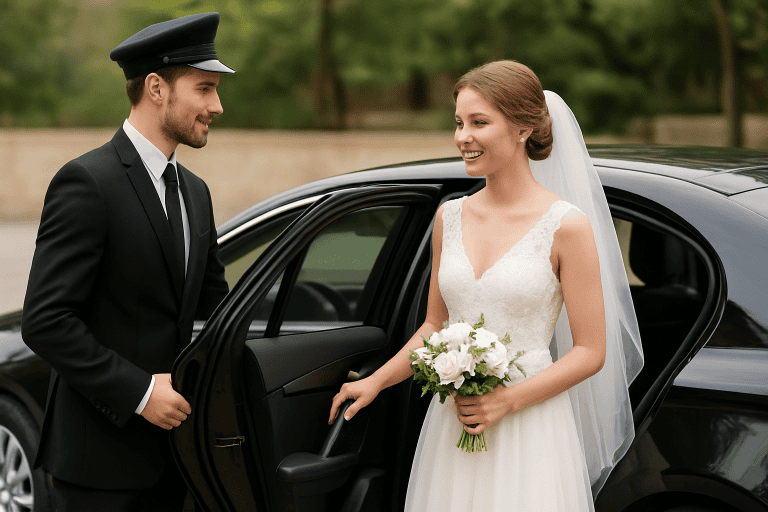 Guests
Guest transportation: how to create an effective shuttle plan between hotel, ceremony, and venue
Guest transportation between hotel, ceremony, and venue: why a plan is needed (and what to expect) When guests move around in […]
Read more