
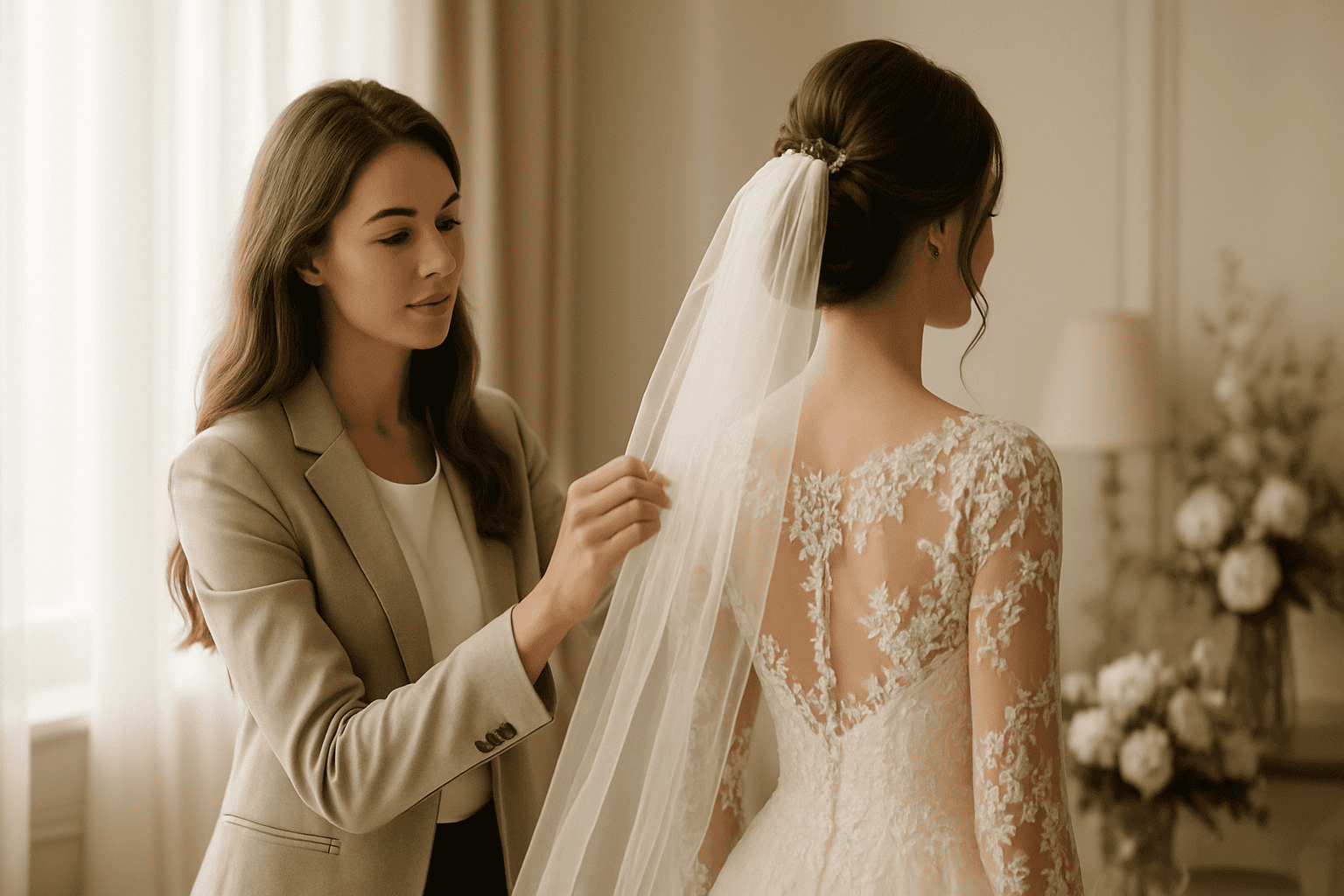
Why the Wedding Planner is Essential for a Luxury Wedding
Luxury wedding planner: the invisible director of an impeccable experience
A luxury wedding it’s not “just” beautiful: it’s coherent, seamless, surprising and, above all, frictionless. Every detail must speak to the other: venue, flowers, lighting, music, mise en place, timing, guest welcome. In this complex ecosystem, the wedding planner is the figure who transforms an idea into a complete experience, maintaining creative and operational control from start to finish.
Its value is not measured in individual tasks, but in the ability to combine aesthetics, logistics and management with an overall perspective. It’s what allows the couple to live the day with peace of mind, knowing that every step has been thought through, tested and coordinated.
From concept to stylistic signature: how a truly bespoke luxury wedding is born
In the luxury segment, the goal is not to replicate a format, but to create a personal narrative. The wedding planner works like a creative director: listens, interprets and translates desires that are often difficult to put into words. It’s not about choosing “a theme”, but about building a stylistic signature that is recognizable and coherent.
This process includes:
- Defining the atmosphere: romantic, contemporary, minimal, grand, artistic, inspired by a place or a memory.
- Color palette and materials: colors, textures, transparencies, metals, fabrics, paper, glass, ceramics.
- Floral and scenic design: volumes, perspectives, focal points, visual pathways.
- Guest experience: welcome, comfort, surprises, the rhythm of the day.
When everything is aligned, the result is a wedding in which every element seems “inevitable”: nothing appears random, nothing is out of tune.
Selection and coordination of vendors: quality, reliability and aesthetic coherence
A luxury wedding requires vendors capable of working at a high level, often with tight timelines and high standards. The wedding planner doesn’t just “suggest names”: she builds a team in which every professional contributes to the same goal, avoiding overlaps and inconsistencies.
The difference shows in aspects such as:
- Consistency between design and execution: what is imagined must be concretely achievable.
- Centralized communication: a single direction reduces misunderstandings and information ping-pong.
- Priority management: when everything is important, you need someone who knows what comes first.
- Attention to detail: finishes, proportions, alignments, perceived quality.
In addition, the wedding planner ensures continuity between the various moments of the day: ceremony, cocktail, dinner, party. Each setting must have its own identity, yet remain part of the same story.
Timeline and direction on the wedding day: the luxury of peace of mind
True elegance is the feeling that everything happens naturally. Behind this naturalness there is precise direction: timing, entrances, scene changes, space management and staff coordination.
An experienced wedding planner builds a realistic timeline and adapts it to the characteristics of the venue and the style of the event. It is not a static document: it is a map that allows quick decisions without losing the overall vision.
During the event, the wedding planner:
- coordinates vendors and staff discreetly;
- handles unexpected issues without involving the couple;
- ensures that every moment starts and ends with the right pace;
- protects the guests’ experience (waiting times, movements, comfort).
The result is an “invisible luxury”: the freedom to live the day without having to think about anything.
Managing the unexpected: prevention, backup plans, and quick decisions
In high-end wedding planning, the key word is ". Unexpected issues can happen, but what changes everything is preparation: alternatives already ready, room to maneuver, solutions compatible with the style of the event. preventionA wedding planner works on multiple levels:
Analysis of critical points
- : logistics, weather, setup times, guest flow.: not “just any solution”, but an alternative that maintains the visual impact.
- Piano B coerente: non “una soluzione qualsiasi”, ma un’alternativa che mantenga l’effetto scenico.
- Decision making: quick and informed choices, without burdening the couple.
This approach protects the emotional and creative investment: the event remains beautiful and harmonious even when something changes at the last minute.
Luxury destination wedding: logistics, guests, and details that make the difference
When the wedding takes place far from home, the experience expands: it is no longer just “one day”, but a journey. In a destination wedding luxury, the wedding planner becomes the point of reference for the couple and guests, ensuring consistency across different moments and managing more complex logistics.
The most delicate aspects include:
- Coordination of arrivals and guests’ needs (schedules, transfers, welcome).
- Management of multiple locations (ceremony, reception, after party, any side events).
- Clear communication to avoid confusion and make everything easy to follow.
In these contexts, elegance is also functionality: the guest must feel naturally guided, without perceiving complexity.
Wedding design and staging: when aesthetics become an experience
Luxury is not just “visual richness”: it is attention to the project, harmony of proportions, quality of materials, and the ability to create wonder without excess. The wedding planner, often together with design specialists, oversees the whole to ensure a coherent and sophisticated result.
Among the elements that most affect the premium perception:
- Lighting: lighting defines atmosphere, depth, and the photogenic quality of spaces.
- Floral arrangements: not just quantity, but composition, movement, color choice.
- Mise en place: balance among table setting, seating, textiles, menus, place cards.
- Sound design: music and volume that accompany, without intruding.
A well-directed project avoids the “collage” effect and creates environments that seem born to exist that way.
Protocol, hospitality, and guest experience: elegance lies in making everyone feel at ease
In a luxury wedding, attention to guests is an integral part of the project. It’s not about rigid formalities, but about impeccable hospitality: clear routes, well-calibrated timing, comfort and small touches that elevate the experience.
The wedding planner takes care of the guest experience also through:
- Welcome arrival and flow management (parking, entrances, cloakroom, directions).
- Event pace: alternating between emotional moments and convivial moments.
- Courtesy details: elements that make the experience more comfortable and memorable.
When guests feel guided with discretion, the event appears natural, smooth and of a higher level.
Communication with the couple: listening, discretion and decision management
Organizing an important wedding can be emotionally intense. The wedding planner becomes a balancing figure: she helps make decisions, clarify priorities and stay the course when doubts or external pressures arise.
Her support translates into:
- Clarity: what is really needed, what is superfluous, what is consistent with the chosen style.
- Mediation: between different wishes, family expectations and practical constraints.
- Discretion: elegant handling of requests, changes and delicate moments.
This type of relationship is often what makes the whole journey lighter and more enjoyable, not just the day of the event.
How to choose a wedding planner for a luxury wedding: practical criteria
Choosing the wedding planner is one of the most strategic decisions. Beyond style, the working method matters: a luxury wedding requires aesthetic sensitivity, organizational skills and constant presence.
Here are some useful criteria:
- Creative vision: can she build a coherent project or does she only propose standard solutions?
- Directing approach: how does she manage the timeline, suppliers and key moments?
- Customisation capabilities: how much space does she give to your story and your preferences?
- Communication: is she clear, timely, solution-oriented?
- Portfolio and style: look for consistency and quality; for specific details, check the service sheet.
A wedding planner suited to luxury doesn’t impose a taste: they refine it, make it achievable, and bring it to the highest level.
Useful links for inspiration and organization of a luxury wedding
To explore ideas, style, and organizational approach in more depth, you can also explore these internal resources:
- Inspiration for elegant setups and scenography
- Guide to choosing the location for exclusive events
- Tips for the color palette and wedding design
- Ideas for impeccable guest welcome
- In-depth look at wedding planning services
Frequently asked questions about wedding planners and luxury weddings
Answers to the most common questions help you clarify what to expect and how to set the path in a calm and organized way.
Entrust your luxury wedding to ChiaraB Events
If you want an event that brings together refinement, aesthetic consistency, and impeccable direction, discover the world of ChiaraB Events: a bespoke approach to wedding planning, designed to transform your vision into a memorable experience for you and your guests.
FAQ
What is the difference between a wedding planner and a wedding designer in a luxury wedding?
The wedding planner coordinates the entire project (organization, vendors, timeline, and direction of the day), while the wedding designer focuses mainly on aesthetics and set design. In many cases the skills complement each other: the important thing is that there is a single, consistent direction.
Does the wedding planner also assist on the wedding day?
Yes, normally the wedding planner handles the direction of the event: they supervise the setups, coordinate the vendors, manage the timing, and deal with any unexpected issues without involving the couple, so the experience remains smooth and serene.
Can a wedding planner organize a luxury destination wedding?
Yes, it’s often one of the situations where the wedding planner becomes more essential: they manage logistics, communications, and consistency across multiple moments and locations. For operational details and service coverage, check the service sheet.
How to tell if a wedding planner is suitable for a luxury wedding?
Evaluate the ability to create a bespoke concept, the quality and consistency of the portfolio, the working method (timeline, coordination, priority management), and clarity in communication. A luxury professional combines aesthetics and organization without losing the overall vision.
Does the wedding planner also manage the guests' experience?
Yes, the guest experience is central: welcome, flows, comfort, the pace of the day, and courtesy details. The goal is to let guests experience an elegant and natural event, without waits or confusing moments.
From the blog
 Tips
Tips
Wedding Ideas: Trends and Tips for a Perfect Wedding
Organizing a wedding today means choosing among endless possibilities without losing sight of what really matters: telling your […]
Read more Tips
Tips
Getting married on Lake Garda: the perfect wedding between water and mountains
Between luminous shores, stone villages, and mountain profiles that change color with the sun, getting married on Lake Garda […]
Read more Tips
Tips
Getting married at the Tonnara di Scopello - History and Charm of a Unique Location
Tonnara di Scopello: a wedding venue between history, sea, and stone Choosing to get married at the Tonnara di Scopello means […]
Read more