
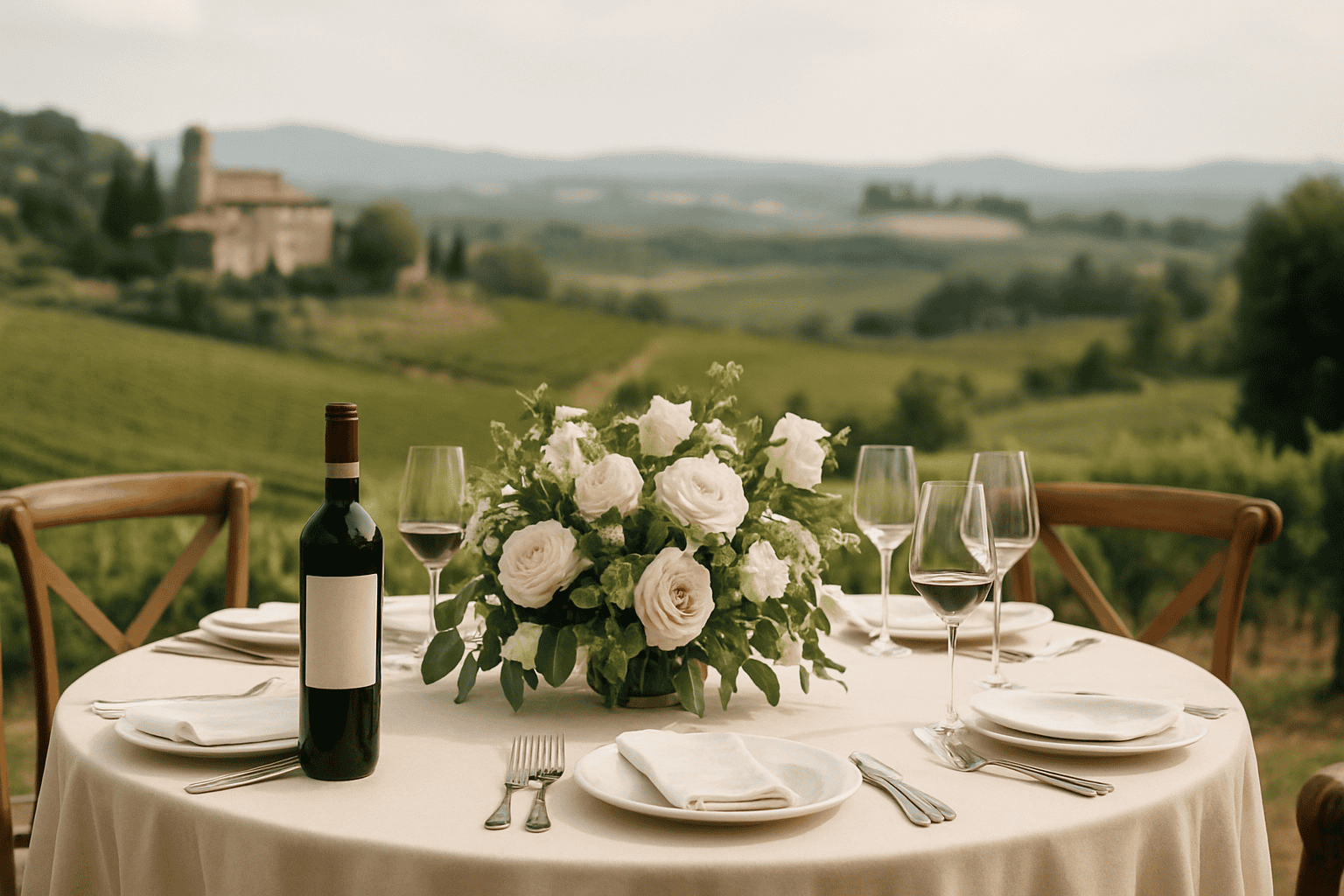
Chianti Wedding: how to build a wine-paired menu and a gourmet guest experience
Chianti wedding menu wine paired: why it really works in Tuscany
A wedding Chianti it's not just a choice of location: it's a way of telling the story Tuscany through landscapes, slow rhythms, and a gastronomic culture that guests recognize as authentic. The format of the chianti wedding menu wine paired works because it brings together three elements that, together, elevate the experience: cuisine consistent with the territory, a wine selection designed to accompany each course, and event direction that turns dinner into a sensory journey.
In a luxury key (even when the atmosphere is intimate), the value is not in excess, but in the care of transitions: from the first welcome glass to dessert, every moment has a reason and a timing. And when the tasting is designed with criteria, the wedding wine tasting becomes a shared experience, not a “lesson” for connoisseurs.
Goal and style: destination, intimate, gourmet
In Tuscany, especially among the hills and villages of Chianti, the most requested formula is destination wedding: guests who come from outside the region (or from abroad), often with a weekend of events. The wine-paired menu is perfect because:
- creates a narrative thread between territory, cuisine, and mise en place;
- encourages conversation and conviviality without forcing it;
- allows you to personalize the evening even with simple but impeccable choices.
The style can be contemporary, classic, or refined country-chic: what matters is consistency among dishes, wines, service, and scenography (lighting, table setting, rhythm of the moments).
Timing and logistics: what to expect
A menu paired with wines requires more precise planning than a standard offering. It doesn’t mean making life more complicated: it means deciding beforehand and coordinating well. In practice, you’ll need to consider:
- number of courses and overall duration of the dinner (to avoid dead time);
- sequence of glasses (quantity and type) and the rhythm of service;
- support spaces for service and temperatures (especially if the dinner is outdoors);
- any “extra” moments (tasting corner, cigar bar, after party) that change the flow.
The golden rule: the tasting must be integrated in the evening, not overlapping. If you want a more in-depth story about the wines, it’s often more elegant to include it in a dedicated moment (welcome or pre-dinner) and keep the dinner flowing.
Step-by-step planning for a Chianti wedding with wine tasting
To build a gourmet experience in Chianti you need a realistic timeline. The advantage is that, once the structure is set, many choices become a natural consequence: if you define style, pace and spaces, the menu and pairing fit together precisely.
Realistic timeline (from 12 to 2 months)
- 12–10 months: choosing the venue and date, defining the concept (style, palette, mood), first draft of the guest journey (arrival, welcome, wedding day, possible brunch).
- 10–8 months: selecting the catering/chef and setting the culinary direction; first draft of the wine journey; logistical planning (transfer plan, accommodations, schedules).
- 8–6 months: trial tasting (dishes and glasses), choosing mise en place and lighting; defining entertainment and the timing of the ceremony and dinner.
- 6–4 months: vendor confirmations, table and space layout; planning the weather Plan B; defining communications to guests (save the date, travel info).
- 4–2 months: finalizing the menu and pairing, flow run-throughs (aperitif, dinner, cake cutting); details of signage, welcome kit and wedding website; collecting dietary requirements.
Practical note: if you want a more “guided” tasting, decide in advance who will lead it (sommelier or waiting staff) and how: micro-interventions between courses, or an opening story that prepares guests and then leaves space for dinner.
Checklist of essential vendors (wine-pairing focus)
Beyond the classic wedding vendors, a wine-paired menu requires attention to certain roles and operational details:
- Catering/chef: must know how to create dishes that support the pairing without “covering” the wine.
- Sommelier or beverage manager: essential to balance intensity, progression and serving temperatures.
- Waiting staff: the quality of the pairing is also felt in the timing (glass served at the right moment, essential explanation, smooth pace).
- Set-ups and lighting: lighting and table settings enhance the wine’s colors and the atmosphere; in Chianti, evening changes quickly and lighting makes the difference.
- Logistics: guest transportation, parking management, any venue permits (check the product sheet or the estate’s internal regulations).
To keep everything under control, a structured operational list can help: you’ll find a useful reference in Organizing a wedding: checklist, to adapt to the Tuscan context and the food-and-wine focus.
Guest and transfer management
In Chianti distances aren’t long, but times can stretch: scenic roads, hilly stretches, villages with limited access. A gourmet experience works when guests arrive relaxed, not rushed. Plan:
- shuttles with clear schedules (and a plan for post-party returns);
- meeting points that are simple and recognizable;
- a “jet lag-proof” communication for those arriving from abroad.
If you expect a wedding wine tasting with more glasses, the shuttle isn’t just comfort: it’s an integral part of guests’ safety and peace of mind.
Budget and priorities for a Chianti wedding menu with wine pairing
A wedding in Chianti can be tailored to different scales and styles, but a wine-paired menu has one characteristic: it makes it clear where quality really matters. There’s no need to “include everything”: you need to choose priorities well and build an overall harmonious effect.
Main items to consider (without surprises)
The areas that most affect a gourmet event are typically:
- food & beverage: menu, pairing, any stations (always with coherence);
- service: adequate waitstaff, timing management and presentation;
- table setting and lighting: in a wine-paired dinner, the stage is the table;
- guest logistics: transfers, signage, welcome;
- entertainment: it must support the atmosphere without stealing space from the gastronomic moment.
: transfers, welcome, any pre/post wedding moments.
If the goal is a memorable gourmet guest experience, the most effective choices are those that improve perception and comfort:
- a pairing with a clear progression: from fresher, more immediate glasses to more structured ones, without abrupt jumps;
- consistent mise en place: appropriate glassware, linens and details that don’t “shout” but define the level;
- warm, layered lighting: candles, light points, enhancement of the landscape; Tuscany at night is magic, but it must be designed;
- a service that tells the story without weighing it down: few words, precise, at the right moment.
When these elements are aligned, even an essential menu feels top-tier in guests’ perception.
Mistakes that increase costs (and lower elegance)
- too many courses: it stretches the timing and reduces attention; better fewer, but perfect.
- “encyclopedic” pairing: too many glasses confuse and weigh things down; the selection must be narrative.
- untested layout: if the kitchen is far away or the support surfaces are insufficient, the service becomes more complicated.
- late floor-plan changes: last-minute changes to the menu and logistics create inefficiencies and stress.
Plan B and risk management in Tuscany: weather, constraints, and contracts
Chianti offers extraordinary scenery, but like any hilly destination it requires a credible Plan B. A wine-paired menu, with precise service and correct temperatures, is particularly sensitive to weather and logistics: anticipating risks means protecting the experience.
An effective Plan B is not “just any room”: it is an alternative that maintains aesthetic coherence and flow.
Plan B should not be a “fallback”, but a second set ready to step on stage. Some strategies:
- indoor spaces with identity: rooms with character, cellars, lemon houses, settings with interesting light and volumes.
- elegant coverings and dry pathways for guests (check with the venue what is allowed).
- adaptable lighting plan: the same atmosphere must work outdoors and indoors.
From a gastronomic point of view, evaluate with the caterer and sommelier how to maintain service quality in case of a change of spaces: temperatures, timing, pouring stations and staff flow.
Permissions and constraints of the location
Each estate or villa has different rules on music, hours, use of certain areas, access and vehicle movement. Don’t take anything for granted: check the product sheet or in the venue’s regulations. In a wedding with tasting and pairing, some typical constraints may concern:
- bar or corner placement;
- use of candles or scenic elements;
- access for catering vehicles and setup/teardown times.
Contracts and deposits: clarity above all
To avoid misunderstandings, it’s useful for agreements with suppliers to clearly describe what the service includes: number of beverage moments, management of the pairing during dinner, any presence of dedicated staff, and what happens in case of a plan change due to weather. Contractual clarity is not bureaucracy: it is protection of the experience.
Guest experience in Chianti: from the welcome moment to the wedding website
The difference between a beautiful wedding and a memorable event often lies in the hospitality details. In Tuscany guests expect warmth, beauty and good food: a wine-paired menu can become the heart of a broader journey, made of welcome, activities and impeccable communication.
Welcome moment, activities and hospitality
If your Chianti wedding is a destination wedding, consider a welcome moment that introduces the territory without weighing down the program. Ideas consistent with a gourmet approach:
- welcome aperitif with local tastings and an “opening” glass;
- light activities (walk among the vineyards, visit to the village, a relaxation moment at the estate) without turning the weekend into a marathon;
- welcome kit essential but well curated: map, timing, useful contacts, clear dress code.
A detail often underestimated: always provide high-quality non-alcoholic alternatives, so the experience remains inclusive and consistent even for those who don’t drink wine.
Transport, shuttles, parking: comfort first and foremost
Managing transfers is part of the direction. For a well-executed wedding wine tasting, logistical comfort becomes an element of style:
- shuttles in time slots (arrival and return) with simple communication;
- clearly marked parking and support staff if the location is complex;
- a plan for guests with specific needs (families, reduced mobility, arrivals at different times).
When guests don’t have to “figure out where to go,” they can focus on what matters: celebrating, tasting, toasting.
Clear directions and a wedding website: the most elegant form of care
A well-made wedding website isn’t just a whim: it’s a discreet way to reduce questions, delays, and confusion. Include:
- how to get there and how to get around the area;
- official times and recommended timing;
- dress code and practical notes (shoes, possible lawn, cooler evening);
- information on the menu and dietary preferences (collected in advance).
If you want to add a cultural touch, you can dedicate a section to the area and the denomination: In-depth: Chianti (Wikipedia). It’s neutral and useful content for international guests or for those who want to put into context what they will taste.
Location and staging: choosing the right setting in the Tuscany cluster
In Chianti, the location isn’t a backdrop: it’s part of the story. A panoramic villa, an estate among the rows of vines, or a private hamlet completely change the pace and perception of the wine-paired menu. That’s why the choice should be made with these in mind:
- flow of spaces: welcome, ceremony, aperitif, dinner, after party;
- lighting plan and evening yield (terraces and gardens are splendid, but they need to be “designed”);
- service logistics: distances, access, technical areas;
- weather plan with consistent alternatives.
If you are considering exclusive villas and estates, it may be useful to explore a selection dedicated to Luxury weddings in Tuscany, so you can orient yourself toward settings capable of supporting a complete gourmet experience.
CTA: let's design a gourmet Chianti Wedding together
If you want a chianti wedding menu wine paired tailor-made, with direction that brings together cuisine, wine, scenography and hospitality without stress for you and your guests, ChiaraB Events can support you in designing the entire experience in Tuscany: from choosing the perfect setting to managing the timing and the details that make the difference.
FAQ
How many wines should you plan for in a Chianti wedding menu with wine pairing without weighing down the guests?
In general, an essential and well-calibrated progression works: a few glasses, chosen to truly accompany the courses and keep the dinner flowing. The ideal quantity depends on the number of courses, the duration of the event, and the style of service: agree on it with the sommelier and catering during the menu tasting.
How to make the wedding wine tasting inclusive even for those who don't drink alcohol?
Provide a well-curated non-alcoholic pairing (not a “fallback”) with alternatives consistent in intensity and matching to the courses. Communicate it naturally in the planning and ensure the service presents it with the same attention as the traditional pairing.
What is the most common mistake in the logistics of a Chianti wedding with wine pairing?
Underestimating times and distances: hilly roads, limited access, and location changes can create delays that impact service and wine temperatures. A realistic timeline and a clear shuttle plan help protect the experience.
Is it better to do the wine storytelling during dinner or at a separate time?
It depends on the tone of the event. For an elegant, smooth dinner, a short, introductory story during the welcome or pre-dinner is often preferable, leaving only essential micro-explanations for the dinner itself. If you want a more educational approach, consider a dedicated tasting at a specific moment during the weekend.
How to manage the weather Plan B without losing the Tuscan atmosphere?
Plan B must be designed like a second set: indoor spaces with identity, an adaptable lighting plan, and comfortable routes for guests. Check with the venue what is allowed and align catering and service to maintain pace and quality even in case of a change of spaces.
From the blog
 Tuscany
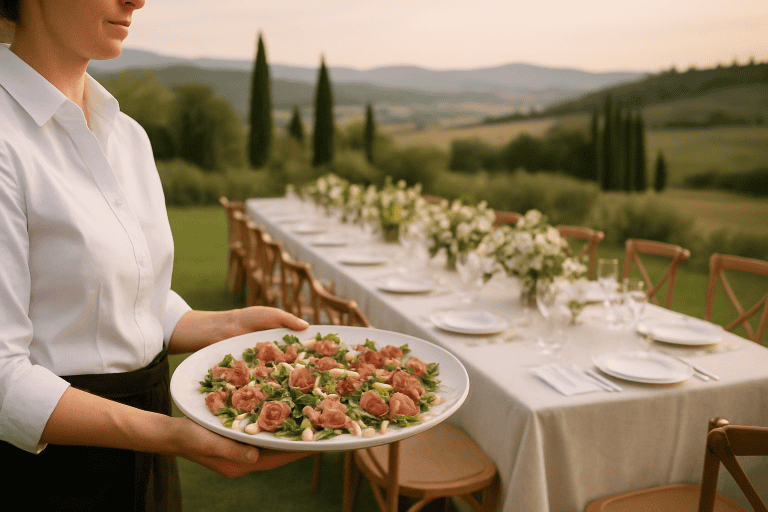
How to choose catering in Tuscany: tasting, seasonality, and allergies
Choosing catering in Tuscany for a wedding: what really matters (besides the menu) When you start choosing catering […]
Read more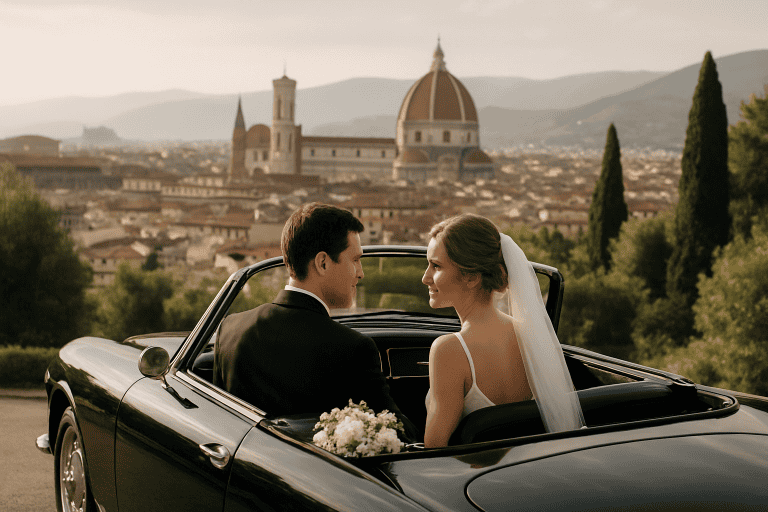 Tuscany
Florence: civil ceremony in the city and reception in the villa (timeline and transportation)
Organizing a civil ceremony in Florence with a reception in a villa is one of the most requested formats in Tuscany: it combines the […]
Read more Tuscany
Wedding weekend in Tuscany: welcome dinner, pool party, and farewell brunch
Wedding weekend Tuscany: why choose welcome dinner, pool party, and wedding brunch A wedding weekend in Tuscany is not “just” a […]
Read more