
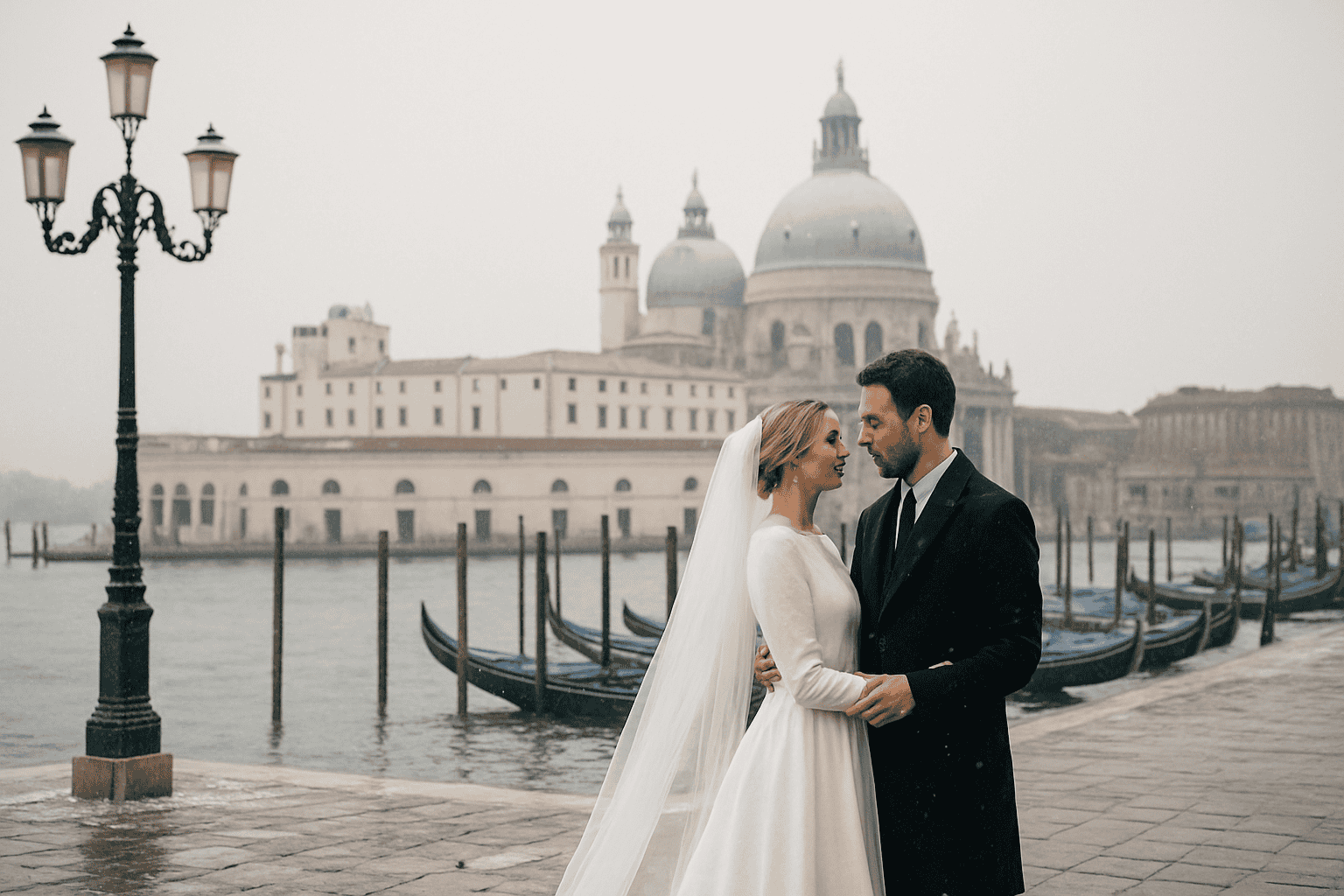
Venice in winter: why it can be the most elegant choice for a destination wedding
Venice in winter for a destination wedding: elegance, intimacy and atmosphere
Choose Venice when the temperatures drop and the city slows down it can turn a wedding into a stylish experience: more intimate, more cinematic, often easier for guests to enjoy. A destination wedding winter here is not “just” a different date than usual: it’s a way to build a story made of soft light, quiet calli, palaces that seem even more theatrical, and shared moments without the frenzy of peak season.
If you are considering a winter wedding in Venice, the key idea is this: it’s not about replicating a summer wedding by “moving it” to another month, but about designing an event consistent with the season. Winter becomes an aesthetic and logistical choice: less dispersion, more attention to detail, greater control of the day’s pace.
In this guide you’ll find a clear structure to plan, set priorities, manage risks and create an impeccable guest experience, with an approach suited to a off-season wedding at a professional level.
Wedding in Venice in winter: goal, style, and real logistics
Goal and style: understated luxury, intimate, destination
Winter in Venice invites a less “showy” and more sensory kind of luxury: materials, lighting, music, scents, comfort. It’s the perfect season if you want a wedding that focuses on atmosphere e tailor-made care rather than big numbers or an overly scattered program.
Some elements that work particularly well in an off-season Venetian wedding:
- Warm, deep palettes (ivory, champagne, burgundy, forest green, soft gold) with texture accents.
- Scenographic lighting: candles, lanterns, diffused light points, reflections on the water.
- More intimate pace: fewer moves, more “quality” time between ceremony, toast and dinner.
- Memorable indoor experiences: live music, tasting moments, welcome corners.
If you want a complete overview of the context and options in the city, you can start with Wedding in Venice: guide, useful to help you navigate styles, areas and overall setup.
What to expect in terms of timing and logistics
Venice in winter requires planning that takes three aspects into account: travel times, guest comfort e weather plan. Even when the city is less crowded, transfers must be planned precisely: calli, bridges, water access and arrival points must be clear and well communicated.
From an operational standpoint, the best choice is to build a day with few steps and realistic time buffers. A winter destination wedding works when every moment is designed to flow: arrival, ceremony, toast, dinner, party (even in a more “lounge” version if you wish).
Step-by-step planning for a winter destination wedding in Venice
Realistic timeline: from 12 to 2 months
The ideal timeline depends on complexity, number of guests and level of customization. Here you’ll find a practical outline (adapt it based on your project and supplier availability):
- 12–10 months before: defining the vision (style, mood, number of guests), choosing the period and location, initial logistical checks (access, indoor spaces, any water transfers).
- 9–7 months before: selecting the team (planner, photo/video, floral design, catering/banqueting if planned), draft of the day’s timeline and transfers.
- 6–4 months before: detailed design (mise en place, lighting, setups), definition of entertainment, first version of the wedding website and guest communications.
- 3 months before: operational confirmations, site inspections if possible, complete weather Plan B, music schedule, coordination of timings with all vendors.
- 2 months before: finalization of guest management (arrivals/departures), seating plan, final timing, final briefing and production documents.
To avoid missing important steps, it’s helpful to work with a structured list: Organizing a wedding: checklist it helps keep order among priorities, deadlines, and confirmations.
Essential vendor checklist (with a winter focus)
In a winter wedding in Venice, some vendors become even more strategic because they affect comfort and the aesthetic result:
- Venue with quality indoor spaces: not just “a fallback”, but settings that can hold the scene even without outdoor areas.
- Lighting: light is a true directing tool; in winter it makes the difference between “beautiful” and “unforgettable”.
- Photo & video: shorter days and softer light require specific experience; always ask for a style consistent with the desired atmosphere.
- Floral & decor: more texture, more targeted volume, less dispersion. The goal is to create visual warmth.
- Transport: management of arrivals, transfers, and returns; essential for a winter destination wedding.
A practical tip: during the selection phase, ask vendors how they handle weather plan e short natural-light timeframes. If a detail isn’t certain, ask them to check the product sheet or in the technical proposal, to avoid misaligned expectations.
Guest and transfer management
The real “luxury” for guests, in winter, is the feeling of being guided naturally. The journey must be simple: from the arrival point to check-in, all the way through transfers for the event.
For effective management:
- Define a hub (or two) where you concentrate guests and key moments, reducing transfers.
- Prepare clear instructions for arrivals and luggage, with alternatives in case of delays.
- Coordinate timings with realistic buffers: Venice should be experienced without anxiety, especially in an off-season wedding.
Budget and priorities for an off-season wedding: where to really invest
Main items to consider
In a winter destination wedding, the items that weigh most are not necessarily “more” than in summer: the priorities change. In general, evaluate carefully:
- Location and spaces: quality of the interiors, transitional areas (entrances, staircases, halls), any areas for welcome and after dinner.
- Set-ups and lighting: in winter the atmosphere is built with light and material.
- Guest experience: hospitality, transfers, communications, comfort.
- Photo/video: the final result depends on how the season is interpreted.
Where to invest to maximize the scenic effect
If the goal is an elegant and memorable wedding, the scenic effect does not come from accumulation, but from direction. Some high-impact choices (without going into price details):
- A lighting journey (entrance, corridors, tables): makes the entire experience coherent.
- A focal point (ceremony or sweetheart table): by concentrating the design, the result appears more sophisticated.
- Materials and fabrics: in winter they are “felt” more; visual comfort becomes real comfort.
- Music: an acoustic set or an ensemble can give an incredibly refined tone to welcome and dinner.
In other words: for a winter wedding in Venice that looks natural and not “forced”, it’s worth focusing on what builds atmosphere and flow.
Mistakes that increase costs (and stress)
- Too many locations in a single day: even if the city is quieter, every move adds complexity.
- Design not consistent with the season: chasing a summer aesthetic in winter often leads to last-minute corrections.
- Late guest communications: increases requests, uncertainties, and schedule changes.
- A “theoretical” Plan B: it must be as beautiful as Plan A, not a compromise.
Plan B and risk management in Venice in winter: weather, constraints, and contracts
Weather and credible alternative solutions
Winter weather should not be “feared”: it should be planned for. The key is to set up alternatives that maintain the same tone as the event. Some guidelines:
- Photogenic indoor spaces for ceremony and toast, with a layout already planned.
- Flexible timing: windows for photos and small outdoor moments when possible.
- Warm welcome: cloakroom areas, hospitality corners, refreshment points consistent with the style.
When Plan B is designed with the same care, guests perceive only one thing: that everything is under control.
Permissions and constraints of the location
Each venue has its own rules on schedules, music, setups, access and logistics. In a unique city like Venice, these aspects are an integral part of the project. Take nothing for granted: always ask for written confirmations and, if a detail is not certain, check the product sheet or in the venue proposal.
To put the city and its urban structure into context (also useful to understand why logistics are so specific), you can read Further reading: Venice (Wikipedia).
Contracts and deposits: clarity above all
In a winter destination wedding, contractual clarity is a form of elegance: it avoids misunderstandings and protects the quality of the project. Make sure the following are defined:
- Timings access and event end times, including any extra-time.
- Change conditions (schedule shifts, layout changes, weather).
- Operational responsibilities (who coordinates what, who manages suppliers on site).
Good direction reduces the need to “fix” things on the fly: in winter, this is even more important.
Guest experience: how to make a winter destination wedding truly memorable
Welcome moment, activities and hospitality
An off-season wedding in Venice can become a small journey curated down to the details. The goal is to make guests feel guided, without overloading them with activities. Short but intense moments work well, enhancing the city and the season.
Setup ideas (adaptable to your style):
- Welcome moment indoor in a warm, scenic setting, with a welcome toast.
- Recommended self-guided itineraries (not “forced tours”), with guidance on areas, timing and returns.
- Small in-room details and personalized messages: in winter they convey immediate care.
The secret is balance: leaving room for Venice’s spontaneous magic, but with an impeccable organizational framework.
Transport, shuttles, parking: clarity and simplicity
Guests remember how they felt, not how many things they did. And they feel good when they always know “what happens next”. That’s why transfers should be designed as part of the experience, not as a technical detail.
- Arrival directions: specify meeting point and recommended times.
- Returns: provide clear options at the end of the event, especially if the day ends late.
- Accessibility: flag in advance any walking stretches or passages with stairs/bridges, so everyone can plan accordingly.
If some guests arrive by car, clearly communicate where to leave the vehicle and how to continue. Venice requires simple language and essential instructions: little information, but the right ones.
Clear directions and a wedding website: your silent direction
For a winter destination wedding, a wedding website (or a well-made digital document) is a tool of elegance: it reduces repeated messages and increases guests’ peace of mind. Include:
- Program with times and addresses (also in a “soft” format, without excessive rigidity).
- Dress code consistent with the season, with practical suggestions.
- How to get around between hotels and the venue, with clear reference points.
- Useful contacts for assistance on the day of the event.
This type of communication is particularly important when you choose an off-season wedding: guests may not expect different weather or different light, and they will appreciate discreet but precise guidance.
Venice or winter alternatives: how to choose the right destination
Venice in winter is perfect if you’re looking for sophisticated romance, iconic scenery and a more intimate pace. If instead you want a different atmosphere (more “villa & panorama”, with another type of landscape), it can be useful to compare Italian destinations with an equally strong personality. For example, you can take a look at Wedding on Lake Como: guide to understand differences in style, logistics and overall mood.
The best choice isn’t “the most famous”, but the one that supports your story: number of guests, desire for intimacy, importance of interiors, and the type of experience you want to create.
Consulting and direction: when the off-season becomes an advantage
A winter destination wedding in Venice works when every detail is conceived as part of a whole: the light, the timing, the distances, the welcome, the plan B. The off-season can become a real advantage if you turn the season into an element of style, not an obstacle.
If you want a bespoke project, with direction capable of enhancing Venice in an elegant and coherent way, discover how we work in the section Wedding in Venice: guide: it will be the starting point to imagine together a refined, intimate and perfectly organized winter wedding.
FAQ
Is Venice in winter suitable for an elegant destination wedding?
Yes, because winter enhances a more intimate and sophisticated aesthetic: soft light, less frantic rhythms, and greater attention to detail. The key is to design the event in a way that is consistent with the season, focusing on scenic interiors, lighting, and guest comfort.
How is the weather managed at a wedding in Venice in winter?
A complete plan B is needed, and “as beautiful as plan A”: indoor spaces already designed for the ceremony and toast, flexible timing for any outdoor moments, and a reception direction (cloakroom, hospitality corner) that keeps the experience warm and smooth.
What are the budget priorities for an off-season wedding in Venice?
In general, it’s worth prioritizing venues with quality interiors, lighting and setups that create atmosphere, transport management, and impeccable guest communication. The overall result depends more on direction and consistency than on the quantity of elements.
How many trips is it best to plan during the day?
Better fewer and well planned. In winter, a “concentrated” day that reduces transfers and waiting works well, so guests experience the experience with serenity and without getting scattered among calli, bridges, and boarding points.
Is a wedding website useful for a winter destination wedding?
Yes, it’s a fundamental tool: it gathers the schedule, addresses, directions on how to get around, season-appropriate dress code, and useful contacts. It reduces last-minute questions and makes the experience more elegant and organized.
From the blog
 Venice
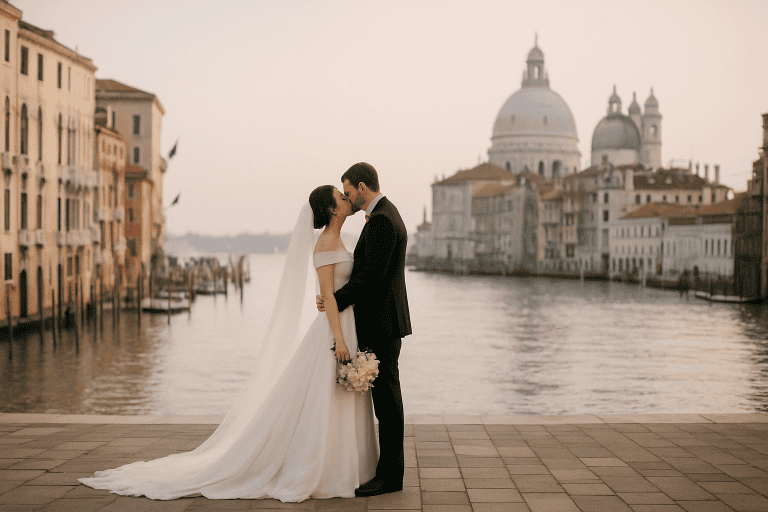
Wedding photos in Venice without crowds: schedules, itineraries and permits
Wedding photos in Venice without crowds: why focus on times and itineraries Venice is a natural setting: narrow alleys, bridges, reflections […]
Read more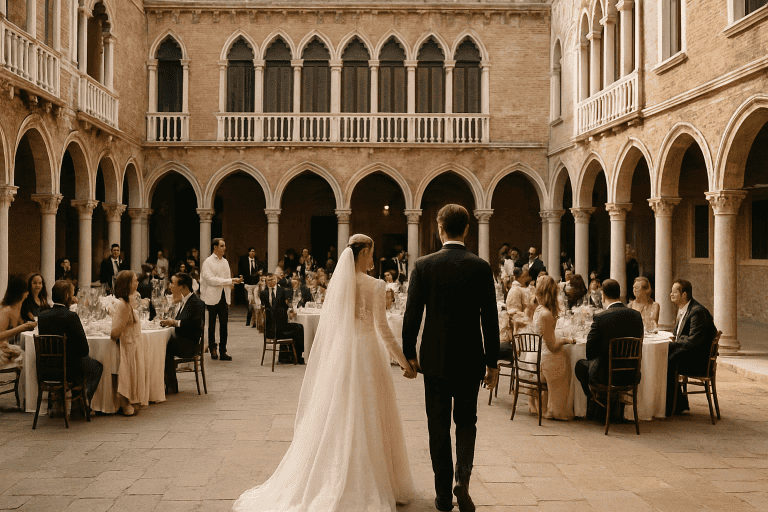 Venice
Reception in a Venetian palace: how it works between access, catering, and constraints
Venetian palace reception: why it is a choice that requires method A Venetian palace reception has an immediate charm: frescoed halls, […]
Read more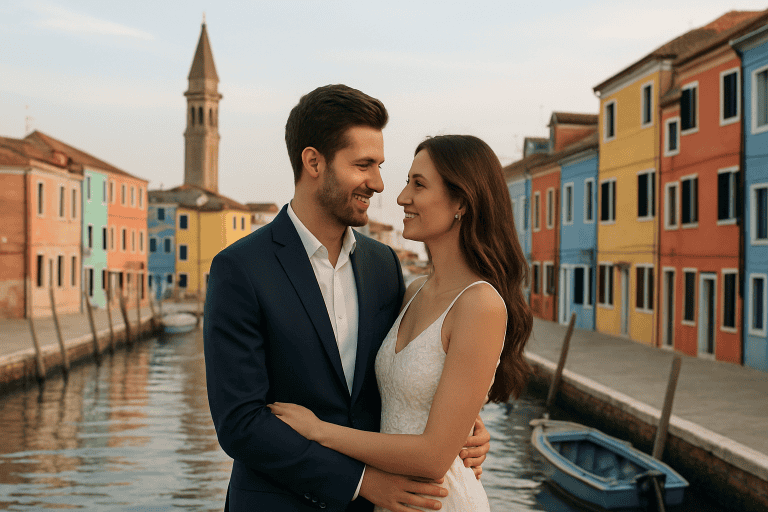 Venice
Murano and Burano for the pre-wedding: ideas for welcome tour and aperitif
Murano and Burano for the pre-wedding: why choose a welcome tour among islands and aperitif A pre-wedding in the lagoon does not […]
Read more