
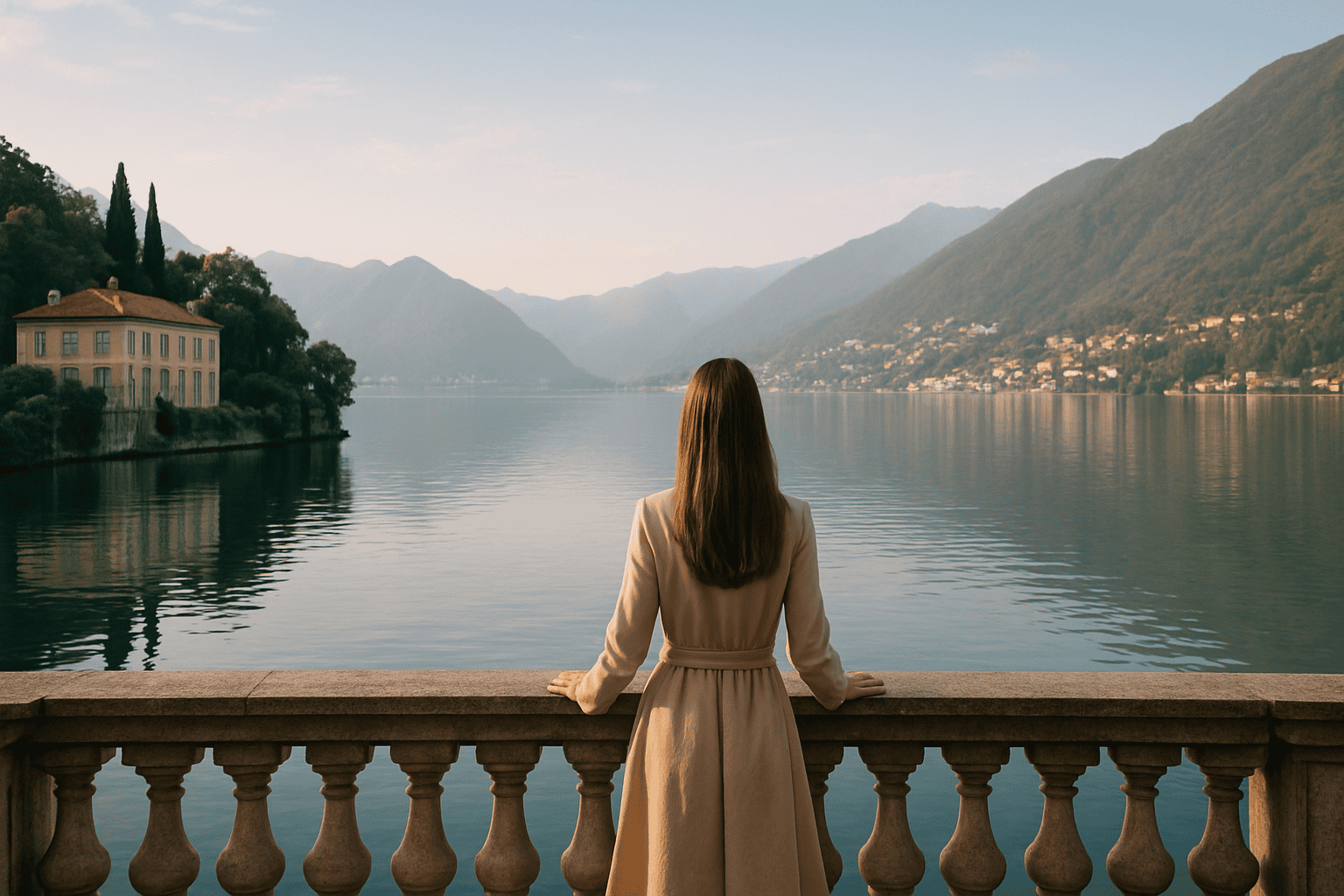
Editorial photos on Lake Como: best times, spots, and permits
Lake Como editorial photos: why choose this format
Le Lake Como editorial photos they are not “just beautiful shots”: they are images built with a precise visual language, designed to convey an atmosphere and an identity. On Lake Como this approach works particularly well because the territory offers a rare combination of historic architecture, manicured gardens, scenic viewpoints, and a light that changes quickly between mountains and water.
In practice, an editorial is ideal when you want a result refined, intimate and destination-like, with attention to detail (styling, palette, props, composition) and a coherent narrative from start to finish. It doesn’t necessarily mean “posed”: it means creative direction and conscious choices.
Goal and style: luxury, intimate, destination
Before choosing spots and times, clarify the goal: are you creating content for a brand, for a portfolio, for a publication, or for a personal project? On Lake Como, editorials work best when the style is defined in advance, for example:
- Classic luxury: historic villas, statement floral arrangements, structured outfits, neutral palettes.
- Contemporary intimate: clean lines, few elements, focus on gestures and micro-details, minimal locations or panoramic terraces.
- Romantic destination: boat, lake views, walks along the waterfront, sunsets and outdoor dinners.
This choice guides everything: from selecting the villa (if planned) to managing permits, all the way to the most suitable time window.
What to expect in terms of timing and logistics
An editorial on Lake Como requires more “set-like” logistics than a standard shoot: moving between spots, regulated access, limited parking, waiting times for boats or ferries, and possible restrictions in very busy areas. It’s useful to allow margins for unexpected issues and a simple movement plan, with few stops but well chosen.
If you want a general overview of the geographic and cultural context, you can consult Insight: Lake Como (Wikipedia).
Best times for shooting on Lake Como: light, crowds and seasons
Timing is the difference between a “correct” shot and a shot that looks like it came out of a magazine. On the lake, the light can be harsh at midday and softer in the morning or late afternoon. Also, some areas get very crowded: choosing the right time also means reducing unintended extras and simplifying permit management.
Golden hour and blue hour: when to aim for an editorial effect
- Dawn / early morning: ideal for lakeside promenades, little squares, and panoramic viewpoints. Fewer people, clearer air, intimate atmosphere.
- Late afternoon: perfect for terraces, gardens, and boats, with warmer light and less harsh shadows.
- Blue hour: great for elegant, cinematic images, especially with ambient lights (lanterns, candles, lamps). Always check that the location allows the use of additional lights.
Midday: how to handle it without losing quality
If the only available window is in the middle of the day, you can still achieve an editorial result by working on:
- Open shade (porticoes, pergolas, trees, loggias) for a more even light.
- Bright interiors with large windows and light curtains.
- Styling and palette that can handle the contrast (light tones, textures, controlled glossy details).
In these cases, creative direction becomes even more important: decide in advance which scenes to shoot in full light and which to move to sheltered areas.
Seasons and microclimates: what really changes
Lake Como has a particular microclimate: the perceived temperature and the quality of the light can change quickly between the shore, hills, and more exposed areas. In spring and early autumn it is often easier to achieve a natural and “clean” look. In summer, on the other hand, crowds increase and managing spaces requires more advance planning (especially if you expect a shooting villa Como with regulated access).
Spots for editorial photos on Lake Como: practical ideas and scenarios
When it comes to spots, the most common mistake is wanting to “do everything”: too many places in a single day, with long transfers and tight timing. For an effective editorial, it’s better to choose 2–3 coherent scenarios and build a continuous visual story.
Villas, gardens, and terraces: the iconic setting
Villas are the quintessential imagery of Lake Como. If your project calls for staircases, historic facades, geometric gardens, and scenic overlooks, a villa is often the right choice. Two key aspects come into play here:
- Access and rules: each property may have different procedures for filming and photography.
- Stylistic consistency: choose a villa that “speaks” the same language as your concept (classic, contemporary, romantic).
If you are planning a project related to an event or a wedding, it may also be useful to read Wedding on Lake Como: guide to help you navigate scenarios, logistics, and atmosphere.
Lakeside promenade, piers, and urban glimpses: effortless elegance
For a more dynamic editorial, urban glimpses and lakeside promenades work really well: stone paving, railings, piers, boats in the background, cafés and hotels with vintage details. The key here is to choose times with less foot traffic and define in advance:
- “clean” and alternative framing,
- support points for outfit changes or touch-ups,
- a very simple walking movement plan.
Boat and water: the set in motion
The boat is one of the most powerful sets for editorial photos: it creates depth, movement, and an immediately recognizable aesthetic. However, it requires careful management of timing, wind, hair, and accessories, as well as clear communication with whoever is operating the boat. Check in advance what is allowed on board (for example outfit changes, props, stops at specific points) and whether additional permits are needed depending on the type of shoot.
Interiors: when the weather changes or you want a more fashion-forward look
Interiors (halls, corridors, staircases, greenhouses, verandas) are perfect for a more fashion-forward and controlled editorial approach. They also help manage light during the middle hours and create a complete narrative sequence. If the location is private or a hospitality venue, always ask in advance which areas are available and at what times.
Photo permits on Lake Como: how to find your way without stress
The theme photo permits this is what most often gets underestimated. On Lake Como, between heavily frequented public spaces, private property, and hospitality facilities, the rules can vary quite a bit. The safest approach is to treat each spot as a “micro-project” with a clear sheet: where you shoot, with whom, for how long, with what equipment, and for what purpose.
Public spaces vs private property: what changes
In general, shooting in public places can be easier, but it doesn’t always mean “free of constraints.” Private properties (villas, hotels, internal gardens) almost always require explicit authorization and often a reservation. To avoid misunderstandings:
- Always ask in writing the location’s conditions and limitations.
- Specify whether it is editorial content, brand, portfolio, or personal use.
- Share a mini call sheet with times, team, and requested areas.
If a detail isn’t certain, use a cautious criterion: check the product sheet either on the location/service information page, or ask the contact person for confirmation.
Permits and typical constraints during a villa Como shoot
During a shooting villa Como there may be constraints on access, number of people, unusable areas, setup times, and rules about props. To manage them well:
- prepare a list of priority scenes (must-have) and a list of “nice-to-have” scenes;
- define an internal route (entrance, staircases, garden, terrace) to avoid continuous back and forth;
- keep the team essential and coordinated, with clear roles.
Documents and communications: what to prepare beforehand
To make the permit request smoother, it’s useful to have ready:
- creative brief (mood, style, content objective);
- alternative dates and time slots;
- team list and contacts;
- equipment indication (without excesses: only what’s really needed);
- space-respect plan (cleanliness, discretion, timing).
Well-crafted communication is often worth more than a thousand details: it shows professionalism and reduces the chances of refusal or last-minute restrictions.
Step-by-step planning for an editorial on Lake Como
Effective planning doesn’t make the project rigid: it makes it feasible. On Lake Como, where logistics and access can be delicate, a simple but complete plan is what allows you to focus on creativity on the day of the shoot.
Realistic timeline (from 12 to 2 months before)
- 12–8 weeks before: concept definition, moodboard, selection of main spots, initial location and boat availability.
- 8–6 weeks before: team confirmation (photo/video, styling, hair & make-up), outfit and props definition, permit and authorization requests.
- 6–4 weeks before: site visit (if possible) or detailed call with whoever manages the location, call sheet definition, travel and parking plan.
- 4–2 weeks before: final confirmations, weather plan B, backup spots, final schedule and sharing with the whole team.
Checklist of essential suppliers (without complicating the set)
For an editorial, fewer people doesn’t mean less quality: it often means more control. Depending on the concept, consider:
- Photographer (and a videomaker if you need a coherent motion output).
- Stylist or a dedicated outfit person (even just for quick changes and consistency).
- Hair & make-up with availability for touch-ups on location.
- Coordination (someone to manage timing, access, contacts, and minor unexpected issues).
If your editorial is connected to a broader event, an organizational structure like the one described in Organizing a wedding: checklistadapting it to your photo set.
Guest management and transfers (when the shoot isn’t “just a shoot”)
It often happens that an editorial intertwines with a trip, a proposal, an anniversary, or a private event. In these cases, managing transfers becomes part of the experience: ferry schedules, car with driver, meeting points, waiting times. The golden rule is to avoid overly tight scheduling: on the lake, a small change can ripple through the entire program.
Creative priorities and budget management: where to invest for visual impact
A successful editorial doesn’t depend on “doing a lot,” but on making the right choices. To maximize visual impact, think in terms of priorities: what must be perfect and what can be simplified without compromising the result.
Main items to consider (realistically)
Without getting into numbers, the areas that usually have the biggest impact are:
- Location (access, timing, exclusivity, available areas).
- Logistics (transfers, boat, parking, waiting times).
- Team (skills and coordination).
- Styling (outfits, accessories, color consistency).
- Setup (if planned, even minimal but well cared for).
Where to invest to maximize visual impact
If you want truly editorial images, the two most “visible” investments are often:
- a location with character (even a single well-chosen space can support the entire story);
- coherent styling (few elements, but the right ones: textures, lines, palette, details).
When location and styling are solid, post-production becomes refinement, not a rescue.
Mistakes that increase complexity and costs (without improving the photos)
- Too many spots in a single day: more time in the car, less time shooting.
- Vague call sheet: delays, confusing outfit changes, skipped scenes.
- Permits requested late: forced alternatives and compromises.
- Excessive equipment: slows things down, attracts attention, and can create additional constraints.
Weather plan B and risk management: permits, constraints, and agreements
Lake Como is spectacular precisely because it is “alive”: clouds, wind, light rain, and changes in light are part of the game. A plan B must not be a fallback: it must be an alternative version of the concept, already designed to work.
Weather: alternative solutions that remain editorial
- Interiors with natural light: corridors, halls, verandas, staircases.
- Porticoes and loggias: protection without losing the architectural context.
- “Close-up” scenes: hands, outfit details, accessories, floral textures, stationery (if present).
If you’re planning a boat, consider a rescheduling window or a land-based alternative that maintains the mood.
Permits and location constraints: how to avoid surprises
Many constraints emerge only when you get into the details: inaccessible areas, quiet hours, passages shared with other guests, limits on setups or objects. Before confirming, ask:
- which spaces are included and which are excluded;
- whether other activities are planned at the same time;
- how to handle any outfit changes and touch-ups;
- whether location staff need to be present during the shoot.
This is the heart of the photo permits: not just “can I shoot?”, but “can I shoot like this, in these spaces, with these timings?”.
Agreements, deposits and conditions: clarity before you start
Without going into regulatory aspects, it is essential that the conditions are clear: what is included, what is not, cancellation or rescheduling policies, liability for any damages, access methods. If something is not explicitly stated, ask for written confirmation: it is the simplest way to protect the team's work and the project's peace of mind.
Experience and discretion: how to make the shoot enjoyable (even for those in front of the camera)
An editorial works when the person posing feels comfortable. On Lake Como, between tourism and prestigious locations, discretion is part of elegance. Taking care of the experience also means getting more natural expressions and a more relaxed posture, therefore better images.
Welcome moment, activities and hospitality
If the shoot involves a couple or a small group, a simple welcome moment helps everyone “get into the mood”: a short break, a change in a comfortable environment, time to adjust styling and touch-ups. Even a micro-activity (walk, coffee, boat) can become part of the narrative, without forcing it.
Transport, shuttles and parking: the invisible logistics that save the set
Many spots have limited parking or not-immediate access. To avoid delays:
- define a meeting point keep it simple and share it with clear maps;
- allow extra time for traffic and finding parking;
- reduce the number of cars, if possible;
- organize a compact “set kit” (touch-ups, water, light weather protection).
Clear directions and a wedding website (even for non-wedding projects)
A single document with schedules, contacts and directions avoids dozens of messages and misunderstandings. If the project is tied to an event, the wedding website approach can be extremely useful: essential information, dress code, meeting points, weather plan. If instead the editorial is tied to a ceremony or a civil event, you may also find a guide like Civil wedding: requirements and timing useful to understand how to correctly fit together moments, transfers and formalities (when present).
How to achieve a truly editorial result: creative direction, posing and pacing
The secret of editorial photos isn’t “posing a lot”: it’s building a rhythm. Alternate wide scenes and details, movement and stillness, looking into the camera and candid moments. Before the shoot, define 6–10 key shots you absolutely want to bring home, for example:
- a panoramic image that contextualizes Lake Como;
- a clean portrait without distractions;
- a detail of hands/accessories;
- a moving scene (walking, going up stairs, getting into a boat);
- an “intimate” scene with soft light indoors or in open shade.
With this base, you can improvise safely: if the weather changes or a spot isn’t available, the story remains coherent.
Useful links for those organizing a project on Lake Como
Do you want to turn an idea into a curated editorial, with coherent spots, realistic timing and smooth permit management? Discover ChiaraB Events' approach in the dedicated section on Wedding on Lake Como: guide and contact us to build a tailor-made, elegant, and stress-free project.
FAQ
What is the best time to take editorial photos on Lake Como?
Usually the early morning and late afternoon are the most effective windows: softer light, fewer crowds, and greater ease in keeping clean compositions. If you have to shoot in the middle of the day, aim for open shade (loggias, pergolas) or bright interiors to control contrast.
Which locations work best for an editorial on Lake Como?
The most in-demand sets are villas with gardens and terraces, lakeside promenades with piers and elegant urban views, and the boat for a dynamic, cinematic look. The best choice is the one consistent with the concept: a few well-selected spots make the visual story stronger than a long list of stops.
Do you need photo permits to shoot on Lake Como?
It depends on the space and the purpose. On private property (villas, hotels, internal gardens) it is prudent to always request written authorization with conditions and available areas. Even in public spaces there may be constraints related to hours, crowding, or site management: before planning, clarify with the local contact what is allowed.
How do you manage a villa photoshoot on Lake Como without stress?
A “set-style” plan works: a call sheet with times and priority scenes, a defined internal route (to avoid continuous moving around), an essential team with clear roles and time buffers for unforeseen issues. It’s useful to have a must-have shot list and a secondary list, so you don’t lose focus if conditions or access change.
What to include in the permit request for a villa photoshoot in Como?
Help prepare a concise creative brief, alternative dates and time slots, a team list with contacts, an indication of essential equipment, and a plan for respecting the spaces (discretion, cleanliness, timing). If a detail is not certain, ask the contact person for confirmation or check the information sheet for the location/service.
What is a good weather plan B for editorial photos on Lake Como?
An effective Plan B keeps the same mood but changes the setting: interiors with natural light, porticoes and loggias, and a sequence of close-ups on details and textures. If you had planned the boat, consider a coherent land-based alternative or a rescheduling window agreed in advance.
From the blog
 Lake Como
Floral arrangements on Lake Como: elegant palettes and seasonality
Floral arrangements Lake Como: why elegant palettes and seasonality really matter When talking about floral arrangements Lake of […]
Read more Lake Como
How to manage a wedding weekend on Lake Como: welcome dinner and brunch
Wedding weekend Lake Como: why welcome dinner and farewell brunch are the right choice A wedding weekend lake […]
Read more Lake Como
Historic villa vs luxury hotel on Lake Como: which choice is really worth it?
Historic villa vs luxury hotel on Lake Como: how to really choose the right venue Choosing between historic villa […]
Read more